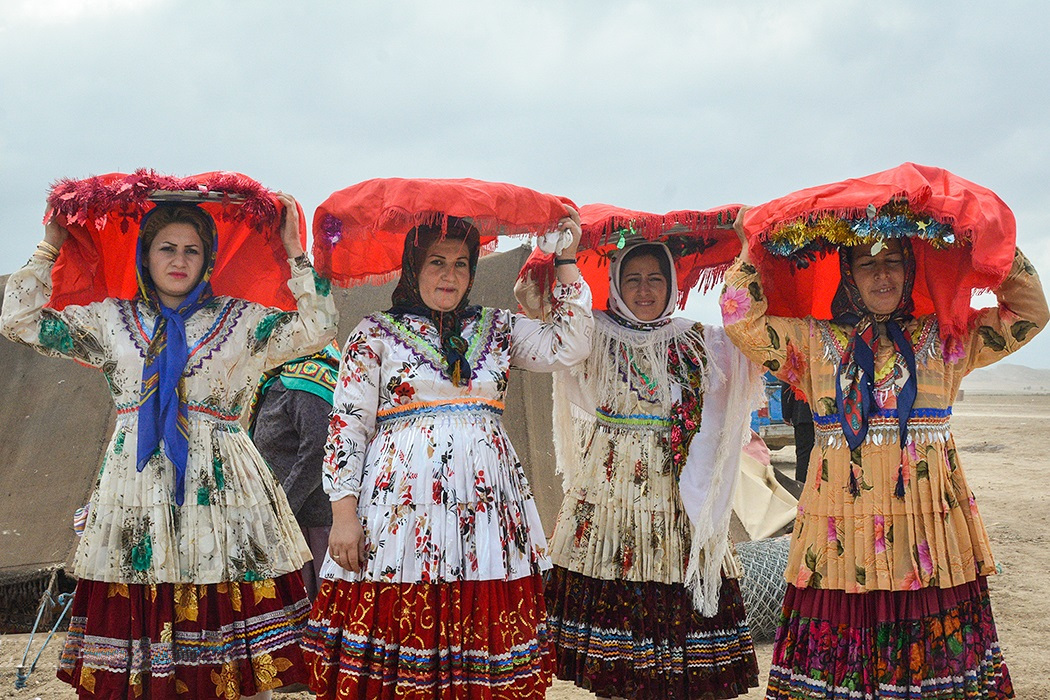
- Population
- 24,000,000-27,000,000
- Language
- Arabic, Mesopotamian
- Religion
- Islam - Shia
- Location
- Baghdad and the nine southern governorates (Babil, Wasit, Qadisiyyah, Najaf, Karbala, Muthanna, Dhi Qar, Maysan, Basra)
Iraq's Shia Arabs are the country's largest people, about half of all Iraqis, living in Baghdad and across the southern plain of the Tigris and Euphrates down to Basra. They follow Twelver Shia Islam, and Iraq holds its holiest places outside Arabia: the shrine of Imam Ali in Najaf, seat of the leading Shia clergy, and the shrines of Imam Hussein and his brother Abbas in Karbala. Each year more than 20 million pilgrims walk to Karbala for Arbaeen, fed and sheltered for free by roadside tents run by local families and tribes. Most southern tribes, such as the Muntafiq, became Shia only in the 18th and 19th centuries, and tribal sheikhs still settle feuds alongside the state. Since 2003 Shia Arab parties have led the government, but drought, unemployment, corruption and armed militias weigh heavily on the south.
Read more- Population
- 5,000,000-6,000,000
- Language
- Mesopotamian Arabic
- Religion
- Islam - Sunni
- Location
- Anbar, Salahuddin, Diyala, Hawija (Kirkuk), rural Nineveh and western and northern Baghdad
Iraq's Sunni Arabs are the tribal Arabs of the Euphrates valley of Anbar, the middle Tigris, Diyala and the Jazira plains, and of western Baghdad, organised in great confederations such as the Dulaim, Jubur and Ubaid. They follow the Hanafi school of Sunni Islam inherited from Ottoman times, when they formed Iraq's ruling and officer class, a position they kept until 2003. Since then they have lived through civil war, the rule of ISIS over their cities in 2014-2017 and the destruction of Ramadi, Fallujah and many towns in the war to retake them. Hospitality in the tribal guest hall, with bitter coffee poured for every visitor, and the authority of the sheikh still shape daily life. Many families still carry the stigma of ISIS, with relatives detained, missing or returning from camps in Syria.
Read more- Population
- ~4,500,000-5,200,000
- Language
- Central Kurdish
- Religion
- Islam - Sunni
- Location
- Sulaymaniyah, Erbil and Halabja governorates of the Kurdistan Region, the Garmiyan district, Kirkuk, and Kurdish towns of Diyala and eastern Salahuddin
Sorani-speaking Kurds are the largest people of Iraq's Kurdistan Region, filling the mountains and plains from Rawanduz and Ranya south through Erbil, Koya and Sulaymaniyah to Halabja, Garmiyan and the contested city of Kirkuk. Their Central Kurdish is the language of the regional government, its schools, television and universities, and Sulaymaniyah is the region's literary and political capital, home to poets such as Nali, Mahwi and Piramerd. Unlike the Shia Arabs to their south they are Sunni Muslims of the Shafi'i school, with old Qadiri and Naqshbandi Sufi lineages, though Kurdish identity is lived more through nationalism than through religion. Their recent history is marked by the Anfal campaign of 1986-89 and the poison-gas attack on Halabja in 1988, and since 1991 by self-rule that has made the region safer and richer than the rest of Iraq, yet unable to keep many young people from leaving for Europe.
Read more- Population
- 2,000,000-3,000,000
- Language
- Arabic, North Mesopotamian
- Religion
- Islam
- Location
- Mosul and nearby villages (Nineveh), Tikrit (Salahuddin), and Anah, Rawa, Haditha and Hit on the upper Euphrates (Anbar)
The North Iraqi Arabs are the Sunni Arab townspeople of Mosul, Tikrit and the old towns of the upper Euphrates, who speak qeltu, the old urban Arabic of upper Mesopotamia, recognisable by its preserved q sound that other Iraqis drop. Mosul's people, the Maslawis, have a proud city identity built on centuries of trade, scholarship and fine stone architecture, and their kubba Maslawiya and alabaster carving are known across Iraq. Their city was the capital of ISIS from 2014 to 2017, and the battle to retake it destroyed most of the Old City. In September 2025 the rebuilt al-Nuri mosque and its leaning al-Hadba minaret reopened, a symbol of the city's recovery, though its Christian neighbours have almost all gone.
Read more- Population
- ~2,000,000-2,500,000
- Language
- Northern Kurdish
- Religion
- Islam
- Location
- Duhok governorate (Duhok, Zakho, Amedi, Simele, Bardarash), Akre and Sheikhan, Barzan and Mergasur in northern Erbil, Kurmanji villages of northern Nineveh, Syrian Kurdish refugee camps and Makhmour camp
The Behdini (Badini) Kurds are the Kurmanji-speaking Kurds of Iraq's far north, living in the mountain country of Duhok, Zakho, Amedi and Akre that once formed the Bahdinan emirate, ruled for five centuries from the clifftop town of Amedi. They speak the same Northern Kurdish as the Kurds of Hakkari and Sirnak across the Turkish border, but write it in Arabic script, and look to the Barzani family of Barzan, whose Kurdistan Democratic Party governs the area. They are Sunni Muslims of the Shafi'i school living alongside Yazidi and Assyrian Christian neighbours, and their villages along the Turkish border have been emptied by fighting between the Turkish army and the PKK. Since 2012 more than 200,000 Kurmanji-speaking Kurds fleeing the Syrian war have settled among them, in camps such as Domiz and in the towns.
Read more- Population
- ~1,000,000-2,000,000
- Language
- South Azerbaijani
- Religion
- Islam - Sunni (60%), Shia (40%)
- Location
- The Turkmeneli arc: Tal Afar and Mosul (Nineveh), Erbil and Altun Kupri, Kirkuk, Taza, Daquq and Tuz Khurmatu (Kirkuk and Salahuddin), Amirli, Kifri, Khanaqin and Mandali (Diyala), and Baghdad
The Turkmen are Iraq's third-largest people, Turkic-speaking descendants of Seljuk and Ottoman soldiers and settlers who live along a crescent from Tal Afar near the Syrian border through Erbil and Kirkuk to Mandali on the Iranian frontier. They speak a Turkish dialect close to Azerbaijani, are divided between Sunni and Shia Islam, and look to Turkey as a cultural homeland, sending their children to Turkish-medium schools and universities. Kirkuk, whose citadel and bazaars were once mainly Turkmen, remains the heart of their identity and the centre of a long contest with Kurds and Arabs over the city. Under Saddam Hussein they were forced to register as Arabs and many were expelled, and in 2014 the Islamic State overran Tal Afar and besieged the Shia Turkmen town of Amirli. Kirkuk's Turkmen are known for khoyrat, mournful improvised quatrains sung at gatherings and on the radio.
Read more- Population
- ~500,000-1,500,000
- Language
- Southern Kurdish
- Religion
- Islam - Shia
- Location
- Baghdad (Bab al-Sheikh, Kifah and other old Feyli quarters), Khanaqin, Mandali and Jalawla in Diyala, Badra, Jassan and Kut in Wasit, Ali al-Gharbi in Maysan, and Kalar and Sulaymaniyah in the Kurdistan Region
The Feyli Kurds are Iraq's Shia Kurds, a people of the Iranian border country of Khanaqin, Mandali and Badra who from the 19th century also became a merchant community of Baghdad, dominating the Shorja and Jamila bazaars. They speak Southern Kurdish, closer to the speech of Ilam and Kermanshah than to the Kurdish of Erbil, though in Baghdad many families now speak mainly Arabic. Their faith set them apart from the Sunni Kurds of the north and their Kurdishness from the Shia Arabs around them, and in 1980 Saddam Hussein's government branded them Iranians, stripped them of citizenship and property, and drove several hundred thousand across the border, while thousands of their young men disappeared. Iraq recognised this as genocide in 2010, and each 4 April Feylis gather to remember their missing, yet many families are still waiting for their citizenship records and homes to be restored.
Read more- Population
- 450,000-550,000
- Language
- Northern Kurdish
- Religion
- Yazidism
- Location
- Sinjar (Shingal) district and Mount Sinjar, the Sheikhan district around Lalish, Bashiqa and Bahzani, and displacement camps in Duhok and Erbil governorates
The Yazidis are an ancient Kurmanji-speaking people with a faith of their own, centred on the shrine of Sheikh Adi in the wooded valley of Lalish, where pilgrims walk barefoot and tie knots of silk to make wishes. Their homeland is Mount Sinjar on the Syrian border and the Sheikhan villages north of Mosul, and membership comes only by birth into one of three castes of sheikhs, pirs and lay followers. In August 2014 the Islamic State overran Sinjar, killed thousands of Yazidi men and enslaved thousands of women and children in what Iraq and the United Nations recognise as genocide. More than a decade later, about 2,600 are still missing and tens of thousands of families still live in tents and caravans in camps around Duhok, held back from Sinjar by destroyed homes, rival armed groups and scarce services.
Read more- Population
- 250,000-400,000
- Language
- Arabic, Mesopotamian
- Religion
- Islam
- Location
- Al-Zubair and Basra city, with smaller communities in Amarah, Nasiriyah, Samawah, Kut and Baghdad
Afro-Iraqis are the descendants of East Africans brought to southern Iraq as slaves over more than a thousand years, from the Zanj who rose in a great revolt near Basra in the ninth century to captives of the Ottoman-era Gulf trade. They are Arabic-speaking Muslims, mostly Shia, concentrated in al-Zubair and Basra, yet many are still called 'abeed' (slaves) and kept out of good jobs, public office and mixed marriages. In the mekayyad houses of Zubair they keep healing ceremonies of drums, the tambura lyre and songs partly in Swahili, marked by a coloured flag on the roof. Most live in poor neighbourhoods near dumps and refineries, and their leaders campaign to be recognised as a minority with a seat in parliament.
Read more- Population
- ~250,000-400,000
- Language
- Shabak
- Religion
- Shia Islam (70-75%), Sunni (25-30%)
- Location
- Villages and towns of the Nineveh Plains east of Mosul (al-Hamdaniya, Bashiqa and Bartella sub-districts) and the eastern suburbs of Mosul; smaller communities in Erbil and Baghdad
The Shabak are a people of the Nineveh Plains east of Mosul who speak Shabaki, a Gorani language related to Kurdish and laced with Turkish and Persian words. Most are Shia Muslims, but their older faith blended Islam with the Safavid Sufi tradition: they honoured Allah, Muhammad and Ali together, sang the poems of Shah Ismail, confessed to hereditary spiritual guides called pirs, and kept close ties with their Yazidi neighbours. Most Shabak regard themselves as neither Arab nor Kurd, and rival governments have tried to claim them as Arabs, Kurds or Turkmen. They lost villages in the 1988 Anfal campaign, hundreds of people to sectarian killings after 2003, and their homes in 2014, when the Islamic State marked Shabak houses for seizure. Since returning they have gained a quota seat in parliament and their own militia brigade in Bartella.
Read more- Population
- ~100,000-200,000
- Language
- Chaldean Neo-Aramaic
- Religion
- Christianity - Catholic (Chaldean, Eastern Catholic)
- Location
- Erbil (Ankawa), Baghdad, Nineveh Plains (Alqosh, Tesqopa, Batnaya, Tel Keppe, Karamles), Duhok and Zakho villages, Kirkuk, Basra
Chaldeans are Iraq's largest Christian community: Aramaic-speaking Christians of the Nineveh Plains and Kurdish mountains whose church, the Chaldean Catholic Church, has been united with Rome since the 16th century while keeping its ancient Syriac liturgy and its own patriarch in Baghdad. Their ancestral towns north of Mosul, such as Alqosh, the burial place of the prophet Nahum, and Tel Keppe, were emptied when the Islamic State overran the plain in 2014, and many families never returned. Today most live in Ankawa, the Christian quarter of Erbil, in Baghdad and in the villages of Duhok, while far more Chaldeans now live in Michigan than in any Iraqi city. In April 2026 the church chose a new patriarch, Paul III Nona, a son of Alqosh who was Archbishop of Mosul when the Islamic State took the city.
Read more- Population
- ~100,000-170,000
- Language
- Arabic, Najdi
- Religion
- Islam - Sunni
- Location
- Western Desert of Anbar (Rutba, Nukhaib), the Jazira of Nineveh (Rabia, Ba'aj) and the Southern Desert of Muthanna and Najaf (Salman, Busayya)
Iraq's Bedouin are the herding sections of the great Arabian confederations whose ranges cross Iraq's borders: the Shammar of the Jazira plains west of Mosul, the Anizah of the Western Desert and the Dhafir of the Southern Desert. They have lived in Iraq's deserts for centuries, and most of their kin have long since settled as ordinary tribal Arabs, but some 100,000 or more still move with camels and sheep between winter pastures and summer wells, living in black goat-hair tents. Coffee poured from the brass dallah, Nabati poetry and tribal law remain at the heart of camp life. Drought, dry wells and closed borders are pushing many to sell their herds and settle on the edges of towns.
Read more- Population
- 50,000-200,000
- Language
- Domari
- Religion
- Islam - Sunni
- Location
- Al-Zuhur (Fawwar) near Diwaniyah, Abu Ghraib and Kamaliya (Baghdad), Basra, Mosul, Kirkuk and towns of the Kurdistan Region
Iraq's Gypsies, known as Kawliya, Ghajar or Zott, and in the north as Qarach, descend from Indian peripatetic groups who reached Mesopotamia over many centuries. Famous for generations as the musicians and dancers of Iraqi weddings and festivals, they now speak Arabic or Kurdish, and only older people keep a secret argot of mixed Persian, Kurdish, Turkish and Indic words. After 2003 Islamist militias attacked them as immoral, destroying the Gypsy village of al-Zuhur near Diwaniyah in 2004, and ISIS persecuted those of Mosul. Most live in poor clusters on the edges of cities, many still without identity papers, schooling or regular work, and they survive by begging, scrap collection and casual labour.
Read more- Population
- ~100,000-120,000
- Language
- Gurani
- Religion
- Sunni Islam; Yarsan
- Location
- Iraqi Hawraman in Halabja governorate (Tawella, Byara and their villages); Gorani (Macho) speaking Kaka'i of Daquq and southeast Kirkuk, Khanaqin in Diyala, Erbil and Sulaymaniyah
In Iraq, Gorani is spoken by two quite different communities. The Hawrami of Tawella and Byara, mountain towns of walnut and pomegranate terraces on the Iranian border east of Halabja, are Sunni Muslims whose Naqshbandi sheikhs of Tawella and Byara shaped Sufi life across Kurdistan for two centuries. The Kaka'i, centred on Daquq south of Kirkuk and on Khanaqin near the Iranian border, speak a Gorani dialect they call Macho and follow Yarsan, a secretive faith of reincarnation, sacred hymns sung to the long-necked tanbur, and a winter fast instead of Ramadan; Kaka'i men are known by their uncut moustaches. Both communities consider themselves Kurds and also speak Sorani. The Kaka'i, whose villages lie in the territories disputed between Baghdad and the Kurdistan Region, were driven from many of them by the Islamic State and still face killings and shrine bombings.
Read more- Population
- ~80,000-120,000
- Language
- Iraqi Sign Language
- Religion
- Islam (Shia c. 70%, Sunni c. 25-28%)
- Location
- Baghdad and the governorates of federal Iraq, outside the Kurdistan Region
Deaf Iraqis, roughly 80,000 to 120,000 people who sign, form a community that crosses the lines of Iraqi society, Shia and Sunni, Arab, Turkmen and Kurd. Their Iraqi Sign Language is about a century old and is passed on through some 25 government deaf institutes from Baghdad to Basra; deaf people in the Kurdistan Region use a separate Kurdish Sign Language. With only about a hundred interpreters in the country, hospitals, courts and Friday sermons remain largely closed to them, and the law still speaks of them as 'the deaf and mute'. That is slowly changing: the Imam Hussain Shrine in Karbala runs a center that teaches sign language across the country and is compiling a dictionary of Islamic signs.
Read more- Population
- ~60,000-100,000
- Language
- Assyrian Neo-Aramaic
- Religion
- Christianity - Syriac churches and Church of the East
- Location
- Nineveh Plains (Bakhdida/Qaraqosh, Bartella, Bashiqa), Erbil and Ankawa, Duhok and its mountain villages (Simele, Zakho, Sapna, Nahla, Barwari), Baghdad, Kirkuk
Assyrians are the Aramaic-speaking Christians of northern Mesopotamia, living around the ruins of ancient Nineveh and in the mountain valleys of Duhok, where their churches and monasteries predate Islam. They speak Sureth, a living descendant of the Aramaic of the Bible, and belong to the Assyrian Church of the East, whose patriarch now resides in Erbil, the Ancient Church of the East in Baghdad, and the Syriac Orthodox and Syriac Catholic churches of the Nineveh Plains. War, the 1933 Simele massacre, sectarian violence after 2003 and the Islamic State's expulsion of every Christian from the Nineveh Plains in 2014 have reduced Iraq's Christians from about 1.5 million to perhaps 150,000 to 300,000, and many families still leave each month. Qaraqosh, the largest Christian town in Iraq, has rebuilt its burned churches and holds Palm Sunday processions of tens of thousands. Every 1 April Assyrians march through Duhok in embroidered costume to celebrate Akitu, their ancient new year.
Read more- Population
- ~50,000-100,000
- Language
- Kurdish, Northern
- Religion
- Islam
- Location
- Erbil governorate (Khabat, Harir and Shaqlawa, Soran, Mergasur and Choman) and the Akre district, with families in Erbil city
The Herki are one of the great Kurdish tribes of Iraq, a Kurmanji-speaking people who until the 20th century drove their flocks each spring from the plain west of Erbil up to the high pastures of the Iranian and Turkish borders and back down each autumn. Borders and state settlement policies ended most of that migration, and today most Herki farm villages in Khabat, Harir, Mergasur and Choman, though some families still move with sheep and goats and the tribe's rugs hang in the Kurdish Textile Museum in the Erbil citadel. They are Sunni Muslims like their Behdini and Sorani neighbours, but keep a strong tribal identity under their own aghas. In July 2025 a land dispute with the neighbouring Goran tribe in Khabat turned into a gunfight between Herki tribesmen and regional security forces, showing how much weight the tribe still carries in Kurdish politics.
Read more- Population
- 50,000-85,000
- Language
- Arabic, Mesopotamian
- Religion
- Islam - Shia
- Location
- Central (Chibayish), Hammar and Hawizeh marshes of Dhi Qar, Basra and Maysan
The Marsh Arabs, or Ahwaris, are Shia Arab tribespeople of the wetlands where the Tigris and Euphrates meet, living a way of life that echoes ancient Sumer: reed houses on floating islands, slim canoes called mashoof, and water buffalo that give milk and the thick cream geymar. Their tribal guesthouses, the vaulted reed mudhif, are among the most striking buildings in the Middle East. After the 1991 uprising Saddam Hussein drained the marshes and drove out most of their quarter of a million people, and droughts from 2021 to 2025 emptied them again. Heavy rains in 2026 refilled part of the marshes, and some herders and fishermen are returning to Chibayish and the Hawizeh marsh.
Read more- Population
- ~10,000-20,000
- Language
- Kakayi
- Religion
- Yarsanism (Kaka'i)
- Location
- Kaka'i villages of al-Hamdaniya district (Nimrud sub-district) on the Great Zab and Khazir rivers south-east of Mosul: Wardak, Sufayya, Zangel, Tulaband, Kabarli and neighbours; displaced families in Erbil
The Sarli are Kaka'i villagers of the Nineveh Plains, living in a cluster of farming villages where the Khazir river meets the Great Zab south-east of Mosul. They call themselves Ibrahimi Kaka'i and follow Yarsan, a secretive faith that honours Imam Ali, teaches the rebirth of souls and does not keep the Islamic prayers or Ramadan fast; their hymns and an annual love feast of boiled rooster and rice bind the villages together. Their language, Sarli, is a small Gorani tongue spoken by fewer than 20,000 people and closest to the speech of their Bajelani neighbours. In 2014 the Islamic State overran their villages and blew up their saints' shrines; the villages were retaken in 2016, and families have been slowly rebuilding homes, roads and farms since.
Read more- Population
- ~5,000-10,000
- Language
- Armenian
- Religion
- Christianity - Armenian Apostolic
- Location
- Duhok governorate (Zakho, Avzrog, Havresk, Duhok city), Erbil and Ankawa, Baghdad, Basra; a few families in Kirkuk and Mosul
Iraq's Armenians are mostly descendants of survivors of the 1915 Armenian Genocide who fled south from Anatolia, joining a much older merchant colony in Basra. Before 2003 there were perhaps 20,000; violence and emigration have reduced them to between 5,000 and 10,000, with the Baghdad community shrinking from thousands to a few hundred families and Mosul's almost disappearing. The Kurdistan Region has become their refuge: about 3,000 live in Zakho, Duhok, Erbil and the farming villages of Avzrog and Havresk, where many speak Kurdish at home and sermons are preached in Kurdish or Arabic. They belong to the Armenian Apostolic Church, and in 2024 a century-old Armenian church in Zakho was restored and reopened.
Read more- Population
- ~4,000 (3,000-10,000)
- Language
- Neo-Mandaic
- Religion
- Mandaeism
- Location
- Baghdad (al-Qadisiyah mandi and Tigris baptism site at al-Jadriya); Basra, Amarah (Maysan), Nasiriyah and Suq al-Shuyukh (Dhi Qar), Qurna; about 400 in Erbil and a few dozen in Sulaymaniyah and Duhok
Iraq is the ancestral heart of the Mandaeans, followers of the world's last surviving Gnostic religion, who revere John the Baptist and baptise themselves again and again in flowing river water. For centuries they lived along the Tigris and Euphrates and in the southern marshes around Amarah, Nasiriyah and Basra, famed as goldsmiths and silversmiths, and the head of the faith worldwide still lives in Baghdad. Before 2003 perhaps 60,000 to 100,000 lived in Iraq; kidnappings, murders and forced conversions after the invasion drove about nine in ten abroad, and only a few thousand remain. At the spring Creation Feast white-robed worshippers still wade into the polluted Tigris at Baghdad to be baptised, as their ancestors did.
Read more- Population
- <2,000
- Language
- Persian (Iran); Arabic, Kurdish and Turkish in Iraq, Jordan and Türkiye
- Religion
- Baha'i Faith
- Location
- Small groups scattered across Iraq, chiefly Baghdad and the Kurdistan Region (Erbil, Sulaymaniyah)
Iraq holds a special place for Baha'is: Baha'u'llah, the founder of the faith, lived in exile in Baghdad from 1853 to 1863 and declared his mission in the Garden of Ridvan on the banks of the Tigris before leaving for Istanbul. A community of Persian, Arab and Kurdish Baha'is grew up in Baghdad and was recognised under the monarchy, but a 1970 law banned the faith, and for decades its members could not obtain identity papers without denying their religion. Fewer than 2,000 remain, meeting quietly in homes; in 2013 Baha'u'llah's house in Baghdad, one of their holiest places, was demolished. In the Kurdistan Region, which recognises the faith, Baha'is in Erbil and Sulaymaniyah now hold public celebrations and book fairs.
Read more- Population
- ~700-1,000
- Language
- Koy Sanjaq Surat
- Religion
- Christianity - Orthodox
- Location
- Koy Sanjaq (Koya) town, its Harmota quarter and Armota village, Erbil governorate; some families in Ankawa
The Christians of Koya are a few hundred Chaldean Catholic families living among Kurds in the hill town of Koy Sanjaq, east of Erbil, who still speak their own Aramaic dialect at home. Their village of Armota was wholly Christian until the 1930s, and their stone church of Maryam Pakiza in the Harmota quarter dates from 1868. They speak Kurdish fluently and live on good terms with their Muslim neighbours, but Koya hosts the camps of Iranian Kurdish opposition parties, and Iranian missiles and drones aimed at those camps have repeatedly forced Armota's families to flee, as in 2018 and 2022, and struck the district again in the 2026 war.
Read more