People groups
Herki

Herki

JPGRN
Population in the Middle East and North Africa
24,000
Countries
2
Language
Kurdish, Northern
Religion
Islam
Bible status
Complete Bible

Locations

Identity

The Herki (Harki) are a large Kurmanji-speaking Kurdish tribe of the mountain borderland where Iraq, Iran and Türkiye meet. Their largest section lives in Iraqi Kurdistan (Erbil and Duhok governorates, around Soran, Mergasur, Akre and Khabat), with others in West Azerbaijan in Iran and in Hakkari and Van in Türkiye; some call them the second-largest Kurdish tribe after the Jaff. By oral tradition they descend from three ancestors, giving the three branches Mendan, Sidan and Serhati, divided into clans such as the Liasi and Mam Musa, whose khans led the tribe; society was split into notable lineages (pisaqa) and commoners. The Herki were among the last great migratory tribes of Kurdistan: in the 19th century some 3,000 nomad households wintered in the lowlands of Mosul province and summered on the Iranian and Hakkari highlands. Ottoman and British records count about 18,000 nomads in 1872, 12,270 in 1905 and about 20,000 in 1921. The borders drawn after 1918 cut their migration routes, and Reza Shah, the Iraqi monarchy and Turkey all pushed them to settle. Herki fighters were Simko Shikak's most loyal allies in his revolt of 1918-22, and the tribe joined the Kurdish Republic of Mahabad in 1946.

Culture & traditions

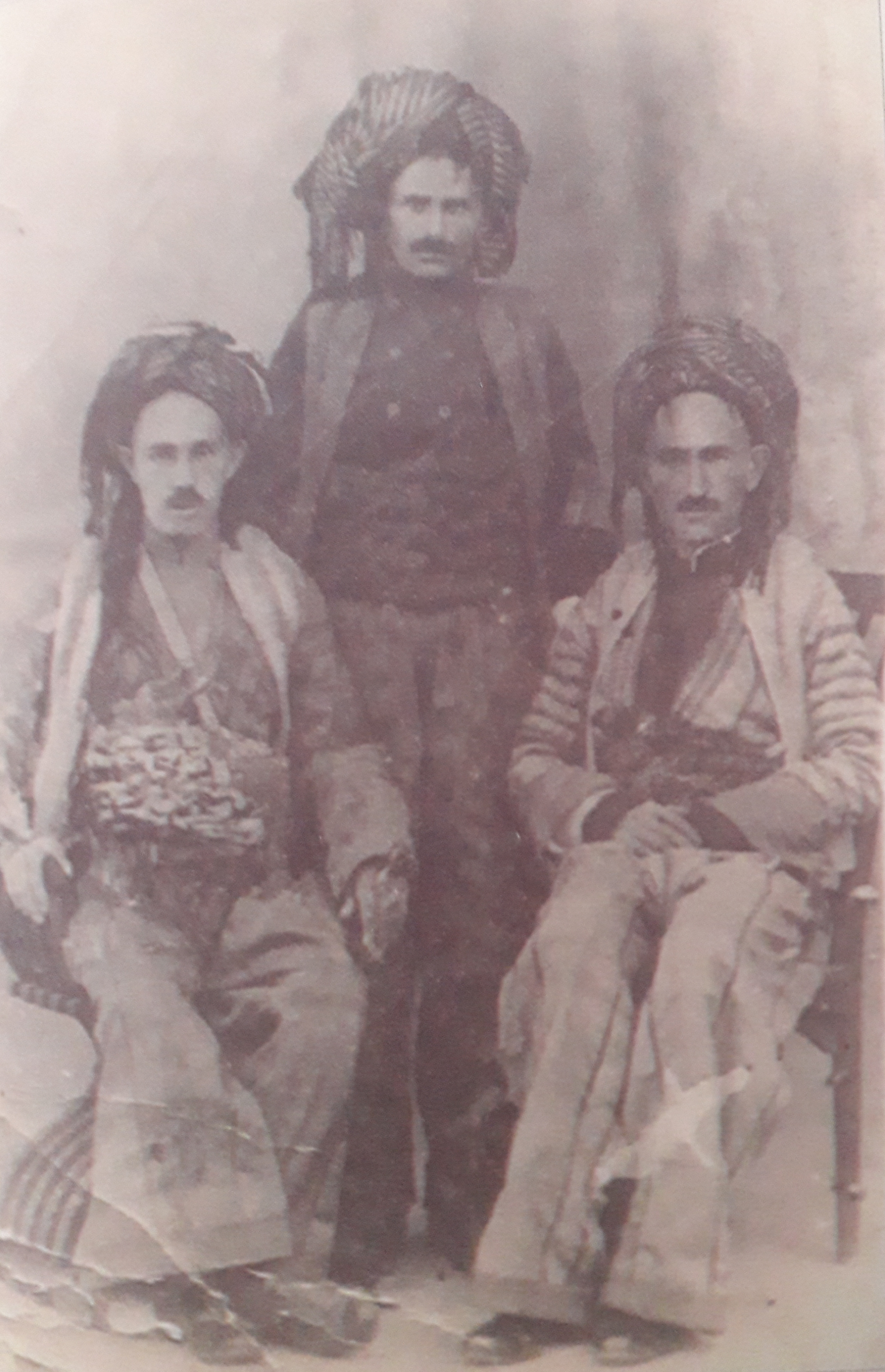
Herki life was built on long seasonal migrations with sheep and goats between lowland winter quarters and high summer pastures, living in black goat-hair tents. The tribe was famous for fine woven textiles: early 20th-century Herki rugs are displayed in the Kurdish Textile Museum in the Erbil citadel. Herki men also carried goods by caravan between countries, and British officers of the 1910s noted them as brave and well armed. The Herki costume is recognised across Kurdistan and is worn at weddings and political events as a sign of Kurdish identity. Social life follows the clan and the authority of the khans, aghas and elders; among the Kurmanji tribes of Urmia a marriage within the tribe traditionally needed the chief's consent, a custom younger urban families are abandoning. Like other Kurmanji Kurds they dance the govend at weddings and keep Newroz as the great spring festival; hospitality and honour are central values.

Religious practices

The Herki are Sunni Muslims of the Shafi'i school, like most Kurmanji Kurds. Sufi orders, especially the Qadiri and Naqshbandi, and the sheikhly (sayyid) families attached to the tribes have long given spiritual guidance and mediated disputes. Folk practice includes vows and visits to the tombs of holy men, amulets against the evil eye and the spring festival of Newroz. Religion is bound up with Kurdish and tribal identity rather than with an Islamist politics; younger urban Herki are more secular in outlook. No organised Christian community is known among them.

Gospel access

The complete Bible is available in Northern Kurdish (Kurmanji) in Latin script, with the Jesus Film, Global Recordings Network audio and Christian broadcasts and websites. Most Kurmanji Christian work is in Türkiye, northern Iraq and Europe, where small Kurmanji-speaking fellowships exist. No Herki-specific outreach is known, and in Iran the Herki live under laws that forbid evangelism.

A Tribe Divided by Borders

Until the First World War the Herki migrated each year between winter quarters in the lowlands of Mosul province (Akre, Rawanduz, the Erbil plain) and summer pastures on the Hakkari mountains and the Iranian highlands west of Urmia, crossing what were then loose Ottoman-Persian frontiers. The borders fixed after 1918 and the 1920s, and the settlement campaigns of Reza Shah in Iran and of the Iraqi and Turkish states, broke the migration into separate national sections. In 1963 the Iranian Herki were still largely nomadic, summering on the highlands of Targavar and Dasht-e Bil and wintering in the lowlands of Targavar, Dasht-e Bil and Margavar. In Iraq the tribe remains a significant political force: in July 2025 Herki fighters clashed with Peshmerga in the Khabat area of Erbil after an attempt to arrest the tribal leader Khurshid Herki.

At a glance

Language
Kurdish, Northern
Language family
Indo-European
Affinity bloc
Persian-Median
People cluster
Kurd
Primary religion
Islam
Bible status
Complete Bible
Jesus Film
Yes
Audio recordings
Yes
Gospel recordings
No
Radio broadcasts
No
Religious school
Shafi'i

Religious breakdown

Religion % DenominationNotes
Islam98%+Sunni (Shafi'i)Sufi orders (Qadiri, Naqshbandi) influential in the region
Christianity<0.1%EvangelicalJP gives 0.04% in Iraq and 0.3% Christian adherents in Türkiye

Presence by country

IranNativeVerified presence
Population
24,000
Location
Highland districts west and southwest of Urmia (Margavar, Targavar, Dasht) and Dasht-e Bil near Oshnavieh, West Azerbaijan; migrants in western Urmia

The Herki are a Kurmanji-speaking Sunni Kurdish tribe whose lands straddle the mountain border where Iran, Iraq and Türkiye meet. In Iran they hold the green border valleys of Margavar and Targavar west of Urmia and the plain of Dasht-e Bil near Oshnavieh, where they once arrived each summer with their flocks from winter grounds in Iraq. For centuries they were among the last great migratory tribes of Kurdistan, known as herders, weavers of fine rugs and caravan carriers between countries. Most are now settled villagers or city dwellers in Urmia, but many families still move their sheep between valley villages and high summer pastures, and the Herki costume is still worn as a badge of Kurdish identity. Their three branches, the Mendan, Sidan and Serhati, trace their descent to legendary ancestors.
IraqNativeVerified presence
Population
~50,000-100,000
Location
Erbil governorate (Khabat, Harir and Shaqlawa, Soran, Mergasur and Choman) and the Akre district, with families in Erbil city

The Herki are one of the great Kurdish tribes of Iraq, a Kurmanji-speaking people who until the 20th century drove their flocks each spring from the plain west of Erbil up to the high pastures of the Iranian and Turkish borders and back down each autumn. Borders and state settlement policies ended most of that migration, and today most Herki farm villages in Khabat, Harir, Mergasur and Choman, though some families still move with sheep and goats and the tribe's rugs hang in the Kurdish Textile Museum in the Erbil citadel. They are Sunni Muslims like their Behdini and Sorani neighbours, but keep a strong tribal identity under their own aghas. In July 2025 a land dispute with the neighbouring Goran tribe in Khabat turned into a gunfight between Herki tribesmen and regional security forces, showing how much weight the tribe still carries in Kurdish politics.

Photos

Herki people
Herki people
Herki notables Fattah Agha Herki, Hajji Sahe and Sayyide Agha Herki
Herki 'Nowjay' rug, early 1900s, Kurdish Textile Museum, Erbil citadel
Dizaj village in Margavar, Urmia County
Diagram of the divisions and clans of the Herki
Ottoman-era bridge over the Great Zab at Khabat-Kalak, in Herki country west of Erbil

Videos

Sources

  1. Erbil detains Harki tribal figures on murder and incitement charges — Shafaq News
  2. Harki — Encyclopaedia Iranica
  3. Hellot-Bellier, F. The resistance of Urmia Assyrians (in Let Them Not Return)
  4. Herki (tribe) - Wikipedia
  5. Joshua Project: Herki in Iran
  6. Khalili, M. 2020. Rethinking Kurdishness in an Everyday Context: A Case Study of the Kurmanji Kurds in Urmia City, Iran (Doshisha University)
  7. Memurlar.net: 470 köy korucusuna emeklilik töreni (2008)
  8. Mynet / İHA: Herki aşiretinden harekata tam destek (23 Feb 2018)
  9. Ostan-shenasi-ye Azarbayjan-e Gharbi (West Azerbaijan provincial studies schoolbook, 1402-1403)
  10. Peshmerga-Herki clash in Khabat, Erbil (ghatreh.com, July 2025)
  11. Rudaw Sorani report on the Garderash clash
  12. Silvaneh District - Wikipedia
  13. Targavar Rural District - Wikipedia
  14. Tribal loyalists clash with Kurdish security forces over land dispute in Erbil — Rudaw
  15. Tribes and Territory — GridNorth Risks
  16. van Bruinessen, M. Kurdish tribes and the State of Iran: the case of Simko's revolt (in Tapper, Tribe and State in Iran and Afghanistan)
  17. Wikipedia: Boğazköy, Şemdinli
  18. Wikipedia: Meşelik, Şemdinli
  19. ایل هرکی - Persian Wikipedia
  20. هرکی - Wikijoo (Persian encyclopedia)