People groups
Kurd, Kurmanji

Kurd, Kurmanji

JPIMBGRN
Countries
28
Language
Northern Kurdish
Religion
Islam
Bible status
Complete Bible

Locations

Identity

Kurmanji Kurds speak Northern Kurdish, the largest Kurdish language, a Northwestern Iranian tongue written in Latin script in Türkiye and Syria and in Perso-Arabic or Cyrillic script elsewhere. Their heartland is the mountain country of southeastern Anatolia around Lake Van, Hakkari, Diyarbakır and Mardin, spilling into northern Syria, northern Iraq's Badinan, and northwestern Iran. Kurmanji society was historically organised in tribes (eşîr) led by aghas, with sheikhly Sufi families holding religious authority; many tribes were nomadic or transhumant until the 20th century. Safavid and Ottoman frontier policies scattered Kurmanji communities widely: Safavid shahs deported tens of thousands of Kurdish families to Khorasan around 1600, and Soviet deportations sent Caucasian Kurds to Central Asia. The name Kurmanj (Kurmanc) is the people's own term for Kurds; Kurmanji is the name of their speech. Tribes include the Jalali, Milan, Hasanan, Za'faranlu and Shadlu; the closely related Herki and Shikak tribes have entries of their own (herki, shikaki).

Culture & traditions

Kurmanji culture centres on extended families, tribal and village solidarity, hospitality and honour. Rural households herd sheep and goats, moving to high summer pastures (zozan) and weaving rugs, saddlebags and black goat-hair tents. Oral tradition is rich: dengbêj singers recite long epics and laments unaccompanied, and Khorasani bakhshis sing to the dotar. Line and circle dances (govend, halay) mark weddings, which traditionally lasted several days. Women's dress is colourful, with long dresses, vests and headscarves; men wear the shal û şapik suit and sash in many areas. Nowruz (Newroz) on 21 March is the great communal festival and a symbol of Kurdish identity. Bride-price, cousin marriage and patrilocal residence remain common in villages, while urban and diaspora families have moved toward nuclear households.

Religious practices

Most Kurmanji Kurds are Sunni Muslims of the Shafi'i school, which sets them apart from Hanafi Turks and Arabs. Sufi orders, especially the Naqshbandi and Qadiri, have long shaped religious life through sheikhs, lodges (tekke) and shrine pilgrimage. Folk practice includes vows at saints' tombs, amulets against the evil eye and spring rites at Newroz. Shia Islam prevails among Khorasani Kurmanji in Iran, and Alevi Kurmanji live in central Anatolia; Yazidi Kurmanji speakers form a separate religious community. Political Kurdish nationalism has made many younger Kurmanji speakers secular, and small evangelical churches have grown in Türkiye and the diaspora.

Gospel access

The complete Bible is available in Kurmanji (Latin script), along with the Jesus Film, Global Recordings Network audio, and Christian radio, television and online content. Most outreach has focused on Türkiye, Syria, northern Iraq and European diaspora communities, where Kurmanji-speaking house churches exist. Few resources target Iran's Kurmanji speakers, who read Persian script and live under laws that criminalise evangelism.

The Herki and Shikak Tribes of West Azerbaijan

The Herki and the Shikak (Shekak) are Kurmanji-speaking Sunni Kurdish tribes of West Azerbaijan that are related to the surrounding Kurmanji Kurds, sharing their language, faith and culture, and that have entries of their own as separate people groups (herki, shikaki). The Herki straddle the Iran-Iraq-Türkiye border triangle and were among the last great migratory Kurdish tribes: in 1963 the Iranian Herki still summered on the highlands of Targavar and Dashtbil west of Urmia and wintered in the lowlands of Targavar, Dashtbil and Mergavar, and Targavar and villages such as Mavana are Herki today. The tribe traces itself to three legendary ancestors, Mendan, Sidan and Serhati, and was known for herding, fine textile weaving and caravan transport between countries; it numbered about 20,000 people in 1921 and again in 1989. The Shikak hold the Somay-Beradust district and the mountains west of Lake Urmia between Urmia and Salmas. Their 'Awdoi clan claims to have arrived from Diyarbakır in the 17th century, displacing the Donboli. Ismail Agha Shikak, who died in 1816 or 1820, supported Agha Mohammad Khan Qajar, and Jafar Agha was executed in Tabriz in 1905. His brother Ismail Agha, known as Simko, led a revolt from 1918 until his death in 1930; his men killed the Assyrian patriarch Mar Shimun in 1918 and attacked Assyrian and Azerbaijani towns, which still shapes Kurdish-Azerbaijani relations around Urmia and Salmas.

The Safavid Deportation to Khorasan

From the reign of Ismail I and Tahmasp I, and above all under Abbas I, the Safavid state moved Kurdish tribes from eastern Anatolia and the South Caucasus to northern Khorasan to block Uzbek and Turkmen raids; about 45,000 families were deported in 1598-1601 alone. Abbas I created five Kurdish frontier domains, and the Za'faranlu chiefs of Quchan and the Shadlu of Bojnurd ruled as hereditary ilkhans until the 20th century. Cut off from western Kurdistan for over 400 years, the Khorasani Kurds adopted Shia Islam and absorbed Turkmen and Khorasani Turkic influences, yet kept Kurmanji speech and a distinct musical tradition, including the loy, a romantic maqam that belongs to them alone.

At a glance

Language
Northern Kurdish
Language family
Indo-European
Affinity bloc
Central Asian Peoples
People cluster
Kurd
Primary religion
Islam
Bible status
Complete Bible
Jesus Film
Yes
Audio recordings
Yes
Gospel recordings
Available
Radio broadcasts
Not Available
Religious school
Shafi'i

Religious breakdown

Religion % DenominationNotes
Islam85%+ worldwideSunni (Shafi'i)Majority in Türkiye, Syria and West Azerbaijan; Qadiri and Naqshbandi Sufi orders
IslamminorityShia (Twelver)Khorasani Kurmanji in Iran and their kin in Turkmenistan
IslamminorityAleviSome Kurmanji speakers in central Anatolia
Christianity<0.1%EvangelicalSmall convert churches, mostly in Türkiye and Europe

Presence by country

IranNativeVerified presence
Population
~1,200,000-1,500,000
Location
Northern West Azerbaijan (Urmia, Salmas, Khoy, Maku, Chaldoran) and North and Razavi Khorasan (Quchan, Shirvan, Bojnurd, Esfarayen, Dargaz, Mashhad)

Iran's Kurmanji Kurds live in two blocs more than 1,000 kilometres apart. In the west, Sunni tribes such as the Shikak, Herki, Jalali and Milan hold the mountains and valleys around Urmia, Salmas, Khoy and Maku along the Turkish border. In the northeast, Shia Kurds in North and Razavi Khorasan descend from frontier guards whom the Safavid shahs deported from Anatolia around 1600. Unlike the Sorani-speaking Kurds to their south, both blocs speak Northern Kurdish, the language of most Kurds in Türkiye and Syria. The Khorasani Kurds keep a culture of their own: bards singing to the two-stringed dotar, women's pleated velvet skirts in red, orange or yellow, and wrestling in thick woollen coats at Nowruz. In the western highlands, some families still move their flocks between winter villages and summer pastures in the border valleys.

IraqNativeVerified presence
Population
~2,000,000-2,500,000
Location
Duhok governorate (Duhok, Zakho, Amedi, Simele, Bardarash), Akre and Sheikhan, Barzan and Mergasur in northern Erbil, Kurmanji villages of northern Nineveh, Syrian Kurdish refugee camps and Makhmour camp

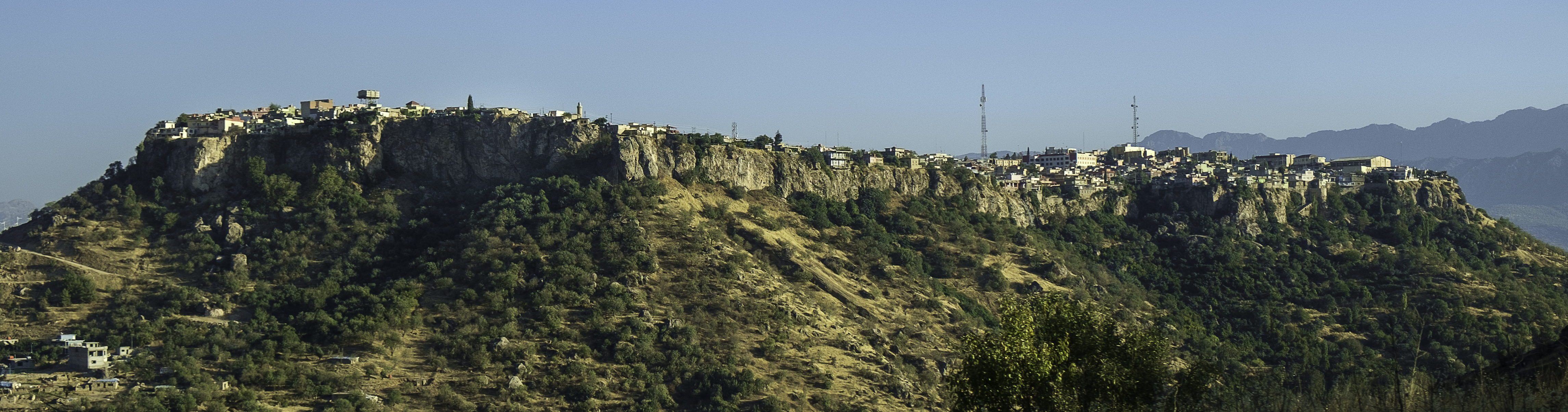
The Behdini (Badini) Kurds are the Kurmanji-speaking Kurds of Iraq's far north, living in the mountain country of Duhok, Zakho, Amedi and Akre that once formed the Bahdinan emirate, ruled for five centuries from the clifftop town of Amedi. They speak the same Northern Kurdish as the Kurds of Hakkari and Sirnak across the Turkish border, but write it in Arabic script, and look to the Barzani family of Barzan, whose Kurdistan Democratic Party governs the area. They are Sunni Muslims of the Shafi'i school living alongside Yazidi and Assyrian Christian neighbours, and their villages along the Turkish border have been emptied by fighting between the Turkish army and the PKK. Since 2012 more than 200,000 Kurmanji-speaking Kurds fleeing the Syrian war have settled among them, in camps such as Domiz and in the towns.

LebanonNativeVerified presence
Population
~50,000-90,000
Location
West Beirut (Zokak el-Blat, Basta, Burj Abi Haidar) and the southern suburbs; Bekaa (Qab Elias, Ferzol, Zahle); Tripoli and Sidon

Kurds have lived in Lebanon since Saladin's time, but most of today's community descends from Kurmanji-speaking villagers of the Mardin, Nusaybin and Midyat districts of Turkey, and from Syria's Jazira, who came to Beirut between the 1920s and the 1960s fleeing conscription, the 1925 Sheikh Said revolt and poverty. They worked as porters and builders in West Beirut quarters such as Zokak el-Blat and Basta, and for decades many lived without papers: roughly 40% still lacked Lebanese citizenship in 2012, and many were naturalised only in 1994. Most of the Lebanese-born generations now speak Arabic at home, but every 21 March the community gathers in traditional dress to dance the dabke-like govend at Newroz. Since 2011 tens of thousands of Kurds from Afrin, Kobani and Qamishli have joined them, and from these Syrian Kurds have come three Kurdish-language churches in Beirut and congregations in the Bekaa.

SyriaNativeVerified presence
Population
~1,700,000-2,200,000
Location
Jazira (Qamishli, Amuda, Derik, Darbasiyah, Hasakah), Kobani, Afrin (Kurd Dagh), Kurdish quarters of Aleppo (Sheikh Maqsoud, Ashrafiyah) and Damascus (Rukn al-Din)

The Kurds are Syria's largest minority, Kurmanji-speaking Sunni Muslims who live in three blocks along the Turkish border: the wheat plains of the Jazira around Qamishli, the Euphrates town of Kobani, and the olive-covered hills of Kurd Dagh around Afrin, with old quarters in Aleppo and Damascus. Many Jazira families came from Anatolia in the 1920s and 1930s, and the 1962 Hasakah census left more than 120,000 Kurds stateless for generations until a January 2026 decree restored their nationality, named Kurdish a national language and made Newroz a national holiday. During the war Kurdish-led forces ran their own administration in the northeast and defended Kobani against the Islamic State; in 2018 most of Afrin's Kurds were driven out, and since 2026 families have been returning to looted homes and groves. Newroz on 21 March, with bonfires on the hills outside Qamishli and Afrin and long line dances, is the great festival of their identity.

Türkiye (Turkey)NativeVerified presence
Population
~11,000,000-14,000,000
Location
South-eastern and eastern Anatolia (Diyarbakır, Van, Şanlıurfa, Mardin, Batman, Şırnak, Hakkari, Ağrı, Muş, Bitlis, Siirt), central Anatolian villages (Haymana, Cihanbeyli), and the western cities, above all Istanbul, Izmir, Mersin and Adana

Kurmanji Kurds are Türkiye's largest minority, an Iranian-speaking people whose mountain homeland stretches from Lake Van and Hakkari to Diyarbakır and Mardin, and who now live in almost every Turkish city, with Istanbul holding more Kurds than any city in the world. Unlike the Hanafi Turks around them, most follow the Shafi'i school of Sunni Islam, and Naqshbandi and Qadiri Sufi sheikhs still carry weight in the south-east. Decades of language bans, the 1984-2025 conflict and the emptying of some 3,000 villages pushed millions west, and many children of migrants now speak Turkish better than Kurdish. Each spring Newroz bonfires and line dances (govend) fill Diyarbakır and Istanbul, and dengbêj singers keep alive long unaccompanied ballads of tribal feuds and lost loves.

Also found outside the Middle East and North Africa

Azerbaijan, Australia, Austria, Belgium, Canada, Denmark, Finland, France, Georgia, Germany, Greece, Italy, Kazakhstan, Kyrgyzstan, Netherlands, Norway, Russia, Sweden, Switzerland, Turkmenistan, United Kingdom, United States, Uzbekistan

Photos

Kurmanj women in traditional dress, North Khorasan, Iran (Hossein Moammeri)
Kurmanji bride and groom beside tents, North Khorasan (Hossein Moammeri)
Kurmanji woman milking a sheep, North Khorasan (Hossein Moammeri)
Koshti-ye ba chukheh wrestling, Khorasan
Kurds of Khorasan
Kurds of Khorasan
Kurmanji Kurd
Kurmanji Kurd
Newroz festival in Akre, Kurdistan Region of Iraq (2017)
Amedi (Amadiya), seat of the Bahdinan emirate
Newroz festival in Simele, Duhok (2023)
Syrian Kurdish refugees in Domiz camp, Duhok
Newroz celebration in Istanbul
Kurdish mother and child, Van, 1973 (John Hill)
Newroz at Girê Tertebê near Qamishli, Syria, 1997
Syrian Kurds protest the Newroz ban in Damascus, 1986
Shukri al-Quwatli street, Qamishli, Syria
Kurdish tribal confederacies of Afrin and Kobani, Syria

Videos

Sources

  1. al-Hourani, M. A. (2015) Reproducing ethnic identity in Jordanian society, Jordan Journal of Social Sciences 8(3)
  2. Al Jazeera: An unexpected welcome: Syrian Kurds return to their homes in Afrin (26 Sep 2026)
  3. Al Jazeera: Syria decree grants Kurds new rights, formally recognising Kurdish language (17 Jan 2026)
  4. Al-Majalla: Kurds of Lebanon, how many are they? (28 Jan 2026)
  5. Al-Rai: Lebanon's Kurds (19 Oct 2017)
  6. Annahar: Aleppo's Sheikh Maksoud and Ashrafiyah: Inside Syria's contested Kurdish districts
  7. An-Nahar: Kurds celebrate Newroz in Lebanon (21 Mar 2025)
  8. Arta FM (May 2026): Kurds in Jordan and the Jordanian Kurdish Cultural Association
  9. Assafir Arabi (2014): Kurds of Jordan, neither a tribe nor a recognised minority
  10. At least 162 villages evacuated in Iraqi Kurdistan — bianet
  11. Badinan Language and Speech Processing group — University of Duhok
  12. Bahdinan — Encyclopaedia Iranica
  13. Bible translations into Kurdish — Wikipedia
  14. Christians in Diyarbakır celebrate Christmas with Kurdish hymns — Rudaw (2022)
  15. Danish Immigration Service: Syria - An update (June 2026)
  16. Despite PKK disarmament, Turkey maintains return restrictions — Channel8
  17. EUAA Syria Country Focus (July 2026): 2.7.1 Kurds
  18. Fanack: Lebanon's Kurds, attempts for integration without constitutional recognition (2023)
  19. Global Recordings Network: Kurdish, Northern: Afrin
  20. Haig, Northern Kurdish (Kurmanji) (2018)
  21. Hengaw: arrests in Urmia
  22. Herki — Wikipedia
  23. Hourani, The Kurds of Lebanon: Socioeconomic Mobility and Political Participation via Naturalization (LERC, NDU, 2011)
  24. Istanbul Study Estimates 13 Million Kurds in Turkey — Greek City Times (2024)
  25. Joshua Project: Kurd, Kurmanji in Bahrain
  26. Joshua Project: Kurd, Kurmanji in Jordan
  27. Khorasani Kurds — Wikipedia
  28. KHORASAN xvii. The Kurdish Communities of Khorasan — Encyclopaedia Iranica
  29. Kurdi, Kurmanji: Behdini — Global Recordings Network
  30. Kurdish Barometer: findings from Turkey (Rudaw Research Center, 2025)
  31. Kurdish seasonal workers face mob attacks in northern Turkey — bianet (2026)
  32. Kurdistan Regional Government: PM meets Bahraini delegation (Jan 2026)
  33. Kurds in Iran — Wikipedia
  34. Kurds in Istanbul — Wikipedia
  35. Kurds in Turkey — Wikipedia
  36. Kurmanj Kurds in Iran — Kurdshop
  37. Maenza and Alton, The untold story of Syrian Kurdish Christians (2020)
  38. Music of the Bakhshis of Khorasan — UNESCO
  39. New Testament (Dramatized), Northern Kurdish (Behdini) — MegaVoice
  40. Northern Kurdish — Glottolog
  41. Ozdemirci, The Mardinite Community in Lebanon, ORSAM Report 208 (2017)
  42. Population of the Kurdistan Region Reaches 6.5 Million — Peregraf
  43. Providence: The Untold Story of Syrian Kurdish Christians (2020)
  44. Rudaw (2014) Jordan's Kurds: Kurdish, Jordanian - and Proud
  45. Rudaw: Kurdish refugees stuck in Beirut after fleeing Israeli airstrikes (Sep 2024)
  46. Shekak (tribe) — Wikipedia
  47. Survey shows strong support for Kurdish in education amid declining use among youth — bianet (2025)
  48. Syria Direct: With olive harvest underway, obstacles remain for Afrin residents
  49. TURKEY: Church repeatedly denied permission to build worship centre — Church in Chains
  50. Turkey-PKK clashes inflict significant damage on Duhok villages — Rudaw
  51. Wikipedia: Ajam of Bahrain
  52. Wikipedia: Kurd Mountain
  53. Wikipedia: Kurds in Jordan
  54. Wikipedia: Kurds in Lebanon
  55. Wikipedia: Kurds in Syria
  56. Wikipedia: Mashouq al-Khaznawi
  57. قوم کرمانج — Kojaro (Persian)