People groups
Gurani, Hawrami

Gurani, Hawrami

JPIMBGRN
Countries
2
Language
Gurani
Religion
Islam - Shia
Bible status
Portions

Locations

Identity

The Hawrami and Gurani speak Gorani, a group of Northwestern Iranian dialects of the Zagros borderlands of western Iran and northeastern Iraq. Its sounds link it to Parthian and the dialects of central Iran rather than to Kurdish or Persian, and Hawrami, the most archaic variety, still keeps masculine and feminine gender in nouns, adjectives and verbs. Gorani speakers probably came from the Caspian region at an early date and once held a much wider area, much of which later turned Kurdish-speaking; the Guran tribe of Gahvareh, which gave the language its name, had become Kurdish-speaking by the mid-20th century, and Gurani proper survives only in a few Yarsan villages near Gahvareh, at Zarda and at Kandula. The living varieties are Hawrami of the Hawraman mountains (the Luhon, Takht and Zhawaro dialects and that of Paveh), Gurani proper, and Bajalani, Sarli and Shabaki in Iraq. Estimates of speakers range from 23,000 for Hawrami alone to about 300,000 for all Gorani. Linguists debate whether Gorani is a separate language or a divergent Kurdish dialect, but its speakers identify as Kurds. From the 16th to the 19th century Gorani was the poetic koine of the Ardalan princes of Sanandaj and of much of southern Kurdish literature, with poets such as Khana Qubadi and Mawlawi, and it is the original language of the Yarsan scriptures. The name Hawraman is popularly derived from Ahura, giving 'land of Ahura'.

Culture & traditions

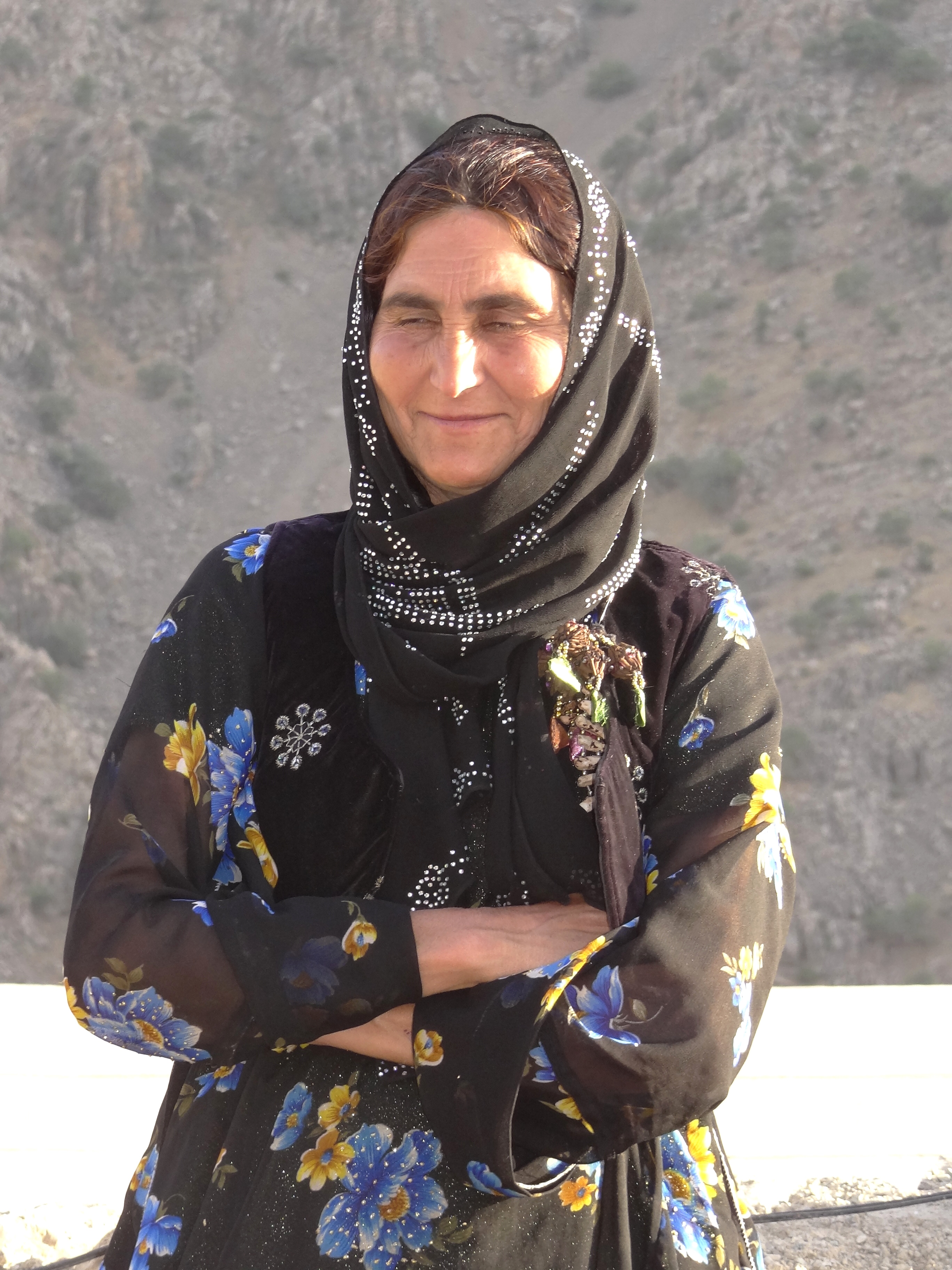
Hawrami life is shaped by steep mountains: villages such as Uraman Takht, Palangan and Dolaw rise in tiers up the slopes, with the flat roof of each house serving as the yard or lane of the one above. Families tend walnut, mulberry, pomegranate and fig gardens on stone terraces and move flocks to high summer pastures. Men wear felt jackets and the wide Kurdish trousers with white klash shoes, and women wear long layered dresses and headscarves. Hawrami song is sung without instruments: siyaw chemane, a melancholic, melismatic style in two to four voices thought to reach back to Zoroastrian times, and bazmi chapla, songs kept in time by clapping; the daf accompanies Sufi gatherings and dances. The Pir Shalyar wedding festival in Uraman Takht each winter, with walnuts carried to every household, communal sacrifice, a centuries-old porridge and three weeks of rites, is the region's great communal event.

Religious practices

Most Hawrami are Sunni Muslims of the Shafi'i school, and the Naqshbandi sheikhs of Tawella and Biyara on the Iraqi side of Hawraman have shaped religious life on both sides of the border for two centuries. The Pir Shalyar festival blends Islamic devotion, with Sufi singing at saints' tombs, and older traditions. The Gurani-speaking villagers near Gahvareh and at Zarda in Iran and the Kaka'i of Iraq follow Yarsan, for which Gorani is the sacred language: its kalam hymns are sung to the tanbur in jam ceremonies, and Zarda holds the tomb of Dawud, one of the faith's holiest sites.

Gospel access

A new Hawrami translation is being made from the Hebrew, Aramaic and Greek and published book by book, with text and audio, in the Horami Bible app (Kalaam Media, first released in 2020). By December 2025 it held the five books of Moses, Matthew, Mark, John, Acts and Romans, so Scripture exists in portions, not as a complete Bible. The full JESUS film, a video of the prophets' stories and Global Recordings Network audio Bible lessons are also available in Hawrami. Most speakers also understand Sorani or Southern Kurdish and Persian, which have complete Bibles and Christian media. Known believers are very few.

The Gurani villages of the Yarsan

Gurani proper, the dialect that gave the language its name, was once the speech of the powerful Guran tribe of Gahvareh, west of Kermanshah. The tribe itself had become Kurdish-speaking by the mid-20th century, and Gurani now survives in a handful of villages: Gawraju and its neighbours about 10 km from Gahvareh, Zarda near Kerend and Sarpol-e Zahab, and Kandula north of Kermanshah. Their people, at most about 1,500 speakers, are Yarsan (Ahl-e Haqq), and their speech is close to the Gorani of the Yarsan sacred hymns. Zarda, with 1,087 people in 2016, holds the tomb of Dawud, one of the holiest Yarsan sites, and was bombed with chemical weapons by Iraq on 22 July 1988. Gawraju is being emptied by a government dam that will flood it, and linguists who documented these villages expect the dialect to vanish within one or two generations.

The Kaka'i (Yarsan) of Iraq

The Kaka'i are Iraq's Yarsan community, estimated at 110,000-200,000 people, most of them in Daquq and the villages south-east of Kirkuk, in al-Hamdaniya on the Nineveh Plains, in Khanaqin and in Erbil and Sulaymaniyah. Their name is said to come from the Kurdish 'kaka', brother. Many speak a Gorani dialect called Macho, the language of their sacred kalam hymns, collected in the Saranjam and attributed to Sultan Sahak, the 14th-century founder of the faith; others speak Sorani, Arabic or Turkmen. They believe in one God who manifests himself in successive incarnations and in the reincarnation of souls toward purity, and they revere Imam Ali. Worship takes place in the jam khana, where initiates sing hymns to the tanbur and share sacrificial food (niyaz). Instead of Ramadan they keep a three-day winter fast, and they celebrate Nowruz, the Khawandkar feast and the Qoltas fast. Men traditionally leave their moustaches uncut. Leadership passes in hereditary sayyid families, and the Ibrahimi branch predominates in Iraq. The Ba'athist state displaced Kaka'i villages repeatedly between 1970 and 1987; the Islamic State threatened them with death and destroyed their shrines in 2014, and attacks on Daquq-area villages continued after 2017. Yarsan is not recognised in Iraq's constitution.

The Wedding of Pir Shalyar

Each year in mid-Bahman (late January to early February) the village of Uraman Takht holds the wedding of Pir Shalyar, a festival said locally to be more than 900 years old. Legend tells that Pir Shalyar, called the son of Jamasp, healed a deaf, mute and troubled princess, Shabaram Khatun, and her grateful father married her to him in the village; scholars debate whether he was a Sasanian-era Zoroastrian priest or a Sufi contemporary of Abd al-Qadir Gilani. The festival runs in three phases over three weeks. Elders announce it and walnuts from the gardens are carried to every household, which gives grain and flour in return; young men of the Charchi clan spread the news to neighbouring villages. Masked youths go door to door in kote kote pranks, sheep, goats and calves are sacrificed and the meat shared equally, and a sour herb stew, chashte tashe, is cooked with pomegranate syrup. Men dance in ecstatic circles to the daf with mystical poetry, and on the following Thursday pilgrims carry walnut bread and yoghurt to the saints' tombs. A second, spring round takes place in Ordibehesht.

At a glance

Language
Gurani
Language family
Indo-European
Affinity bloc
Central Asian Peoples
People cluster
Kurd
Primary religion
Islam - Shia
Bible status
Portions
Jesus Film
Yes
Audio recordings
Yes
Gospel recordings
Available
Radio broadcasts
Not Available
Religious school
Shafi'i

Religious breakdown

Religion % DenominationNotes
Islam~80% (est.)Sunni (Shafi'i)Hawrami of Hawraman in Iran and Iraq; Naqshbandi and Qadiri orders
Yarsan (Ahl-e Haqq)~15-20% (est.)Mostly the Gorani-speaking Kaka'i of Iraq; in Iran only a few thousand villagers near Gahvareh, Zarda and Kandula
Islamsmall minorityShiaBajalani and some Iraqi Gorani speakers
Christianity<0.1%

Presence by country

IranNativeVerified presence
Population
~150,000-235,000
Location
Hawraman (Uramanat) on the Iraqi border: Paveh, Nowsud and Nodsheh (Hawraman-e Lahun, Kermanshah); Uraman Takht and Sarvabad (Hawraman-e Takht, Kurdistan); Palangan and the Zhawarud valley (Kamyaran); migrants in Kermanshah city; Gurani-speaking Yarsan villages near Gahvareh and at Zarda (Dalahu)

The Hawrami are the mountain people of Hawraman, a deep valley country on the Iran-Iraq border whose stepped villages, built so that one family's roof is the next family's yard, were inscribed by UNESCO as a World Heritage cultural landscape in 2021. They speak Hawrami, the oldest-sounding form of Gorani, a Northwestern Iranian language that still marks masculine and feminine and stands apart from the Kurdish spoken around them; it was the court poetry language of the Ardalan princes, and its sister dialect Gurani, kept by a few Yarsan villages near Gahvareh, is the sacred language of Yarsan hymns. Almost all Hawrami in Iran are Sunni Muslims of the Shafi'i school with deep Naqshbandi and Qadiri Sufi roots, centred on Paveh, Nowsud and Uraman Takht. Every winter Uraman Takht celebrates the wedding of Pir Shalyar, a legendary healer, with walnuts carried from house to house, communal sacrifices and circle dances to the daf. Unemployment and water shortages are emptying many villages, and young people increasingly speak Persian and Sorani Kurdish.

IraqNativeVerified presence
Population
~100,000-120,000
Location
Iraqi Hawraman in Halabja governorate (Tawella, Byara and their villages); Gorani (Macho) speaking Kaka'i of Daquq and southeast Kirkuk, Khanaqin in Diyala, Erbil and Sulaymaniyah

In Iraq, Gorani is spoken by two quite different communities. The Hawrami of Tawella and Byara, mountain towns of walnut and pomegranate terraces on the Iranian border east of Halabja, are Sunni Muslims whose Naqshbandi sheikhs of Tawella and Byara shaped Sufi life across Kurdistan for two centuries. The Kaka'i, centred on Daquq south of Kirkuk and on Khanaqin near the Iranian border, speak a Gorani dialect they call Macho and follow Yarsan, a secretive faith of reincarnation, sacred hymns sung to the long-necked tanbur, and a winter fast instead of Ramadan; Kaka'i men are known by their uncut moustaches. Both communities consider themselves Kurds and also speak Sorani. The Kaka'i, whose villages lie in the territories disputed between Baghdad and the Kurdistan Region, were driven from many of them by the Islamic State and still face killings and shrine bombings.

Photos

Gurani, Hawrami
Gurani, Hawrami
The stepped village of Uraman Takht
Pir Shalyar's wedding festival in Uraman Takht, 2020 (Aryan Nasrollahi)
Pir Shalyar festival, 2019 (Aryan Nasrollahi)
Woman in traditional dress, Uramanat
Hawrami man in traditional clothing
Elderly Hawrami couple from Nodsheh
Tawella, a Hawrami village in Iraqi Hawraman, 2016 (Diyar Mohammed)
Tawella in Iraqi Hawraman, 2012
Kaka'i woman, 2025
Kaka'i woman, 2025

Videos

Sources

  1. Al-Monitor: Kurdish dialect of Hawrami struggles for survival (2020)
  2. Al-Saa: Kaka'i in Iraq, history, beliefs and religious identity (2026)
  3. AVROMANI — Encyclopaedia Iranica (D. N. MacKenzie, 1987)
  4. Cultural Landscape of Hawraman/Uramanat — UNESCO World Heritage Centre
  5. DOBES: Gorani documentation project
  6. Gorani — Glottolog
  7. Gorani language — Wikipedia
  8. GURĀN — Encyclopaedia Iranica (P. Oberling, 2002)
  9. GURĀNI — Encyclopaedia Iranica (D. N. MacKenzie, 2002)
  10. Hamshahri Online: Hawraman's historical identity is fading (2012)
  11. Hana Human Rights: kolbar killed at the Nowsud border (Mar 2024)
  12. Hawraman — Wikipedia
  13. Horami Bible — App Store (Kalaam Media Ltd)
  14. Human Rights Watch: Ansar al-Islam in Iraqi Kurdistan (2003)
  15. Joshua Project: Gurani, Hawrami in Iran
  16. Khaksar & Hassani, Hawrami text classification (arXiv, 2024)
  17. Kirkuk Now: Kaka'i leave another Daquq village (2020)
  18. KRG: Halabja's Pomegranate Festival draws over 400,000 visitors (2025)
  19. Mahmoudveysi & Bailey, The Gorani language of Zarda, a village of West Iran (2013)
  20. Minority Rights Group: Kaka'i
  21. Naghshbandi & Miraki, A short look at Hewrami Kirmashani (Journal of Kurdish Literature, 2019)
  22. Rudaw: award for Hawrami singer Osman Hawrami (2018)
  23. Rudaw: Hawraman residents say unemployment pushing youth to Europe (2020)
  24. Rudaw: Residents abandon picturesque Kurdish village with no water, services (Jan 2025)
  25. Scripture Earth: Kurdi, Hawrami (hac)
  26. Wikipedia: 2026 Kurdish–Iranian crisis
  27. Wikipedia: Byara District
  28. Wikipedia: Gahvareh
  29. Wikipedia: Kaka'i (tribe)
  30. Wikipedia: Palangan, Kurdistan
  31. Wikipedia: Paveh County
  32. Wikipedia: Sarvabad County
  33. Wikipedia: Tawella
  34. Wikipedia: Uraman Takht
  35. Wikipedia: Zardeh, Dalahu
  36. آیین و مراسم کهن در روستای اورامان تخت — EciEco (Nov 2025)
  37. اورامان — Persian Wikipedia
  38. پیر شالیار، جشن — Encyclopaedia of Iranian Folk Culture (CGIE)
  39. زبان هورامی — Persian Wikipedia
  40. شهرستان پاوه — Persian Wikipedia
  41. مراسم پیر شالیار — Mahbantour