- Population
- 36,400,000
- Language
- Arabic, Algerian
- Religion
- Islam - Sunni
- Location
- Throughout Algeria: the Tell coast and plains (Algiers, Oran, Constantine, Annaba, Blida, Tlemcen), the high plateaus (Sétif, Djelfa, Tiaret, M'Sila) and the Saharan towns
Algerian Arabs are the Arabic-speaking majority of Algeria, about 36 million people, living throughout the country from the Mediterranean coast to the oases of the Sahara. Most descend from the Amazigh (Berber) population that adopted Arabic over centuries, so their Arab identity is above all one of language and culture; their everyday speech, Darja, mixes Arabic with Berber, French and Turkish words. They are Sunni Muslims of the Maliki school, and visits to the domed tombs of local saints sit alongside a strong Salafi current among the young. Old town families of Algiers, Tlemcen and Constantine still carry Ottoman Turkish or Andalusian surnames from centuries past. Raï music from Oran, chaâbi from the Casbah of Algiers and the Friday couscous are shared across the country, while high youth unemployment drives many to dream of crossing to Europe.
Read more- Population
- 6,700,000
- Language
- Kabyle
- Religion
- Islam - Folk
- Location
- Kabylia (Tizi Ouzou, Béjaïa, Bouira and parts of Boumerdès, Bordj Bou Arréridj, Sétif and Jijel wilayas) and the cities of the north, above all Algiers
The Kabyles are the largest Amazigh (Berber) people of Algeria, about 6.7 million people from the mountains of Kabylia east of Algiers, with many more in Algiers and in France. They speak Kabyle (Taqbaylit), and their hilltop villages still govern themselves through a village assembly and committee that runs water, roads and festivals and competes each year for the title of cleanest village. Kabylia led the struggle for recognition of the Berber language, from the 'Berber Spring' of 1980 to its official status in 2016, and its secular-minded politics often set it against the state. It is also home to the largest community of Christians from a Muslim background in North Africa, tens of thousands of believers who have met in homes since the authorities sealed their churches from 2017. Olive groves, enamelled silver jewellery and the songs of Idir and Matoub Lounès are symbols of Kabyle identity.
Read more- Population
- 2,700,000
- Language
- Tachawit
- Religion
- Islam - Sunni
- Location
- The Aurès and Belezma mountains and the high plains of north-eastern Algeria: Batna, Khenchela, Oum El Bouaghi, Tébessa (Nemencha), southern Sétif, Souk Ahras and northern Biskra wilayas
The Chaouis are the Amazigh (Berber) people of the Aurès mountains of north-eastern Algeria, about 2.7 million speakers of the Tacawit language and the second-largest Berber-speaking people in the country after the Kabyles. Their cliffside villages such as Ghoufi, with fortified communal granaries, and their rahaba wedding songs with drums, flutes and rifle shots belong to a land that resisted Rome and the Arab conquest under Queen Dihya and where the War of Independence began on 1 November 1954. Many Chaouis in the cities have shifted to Arabic, and the identity has long been played down; Islam here, Sunni with strong marabout and Sufi traditions, is more conservative than in Kabylia, and no Christian community is known among them.
Read more- Population
- ~200,000 (est. 150,000-300,000)
- Language
- Tumzabt
- Religion
- Islam - Ibadi
- Location
- The seven M'zab towns of Ghardaia Province (Ghardaia, Melika, Beni Isguen, Bounoura, El Atteuf, Berriane, El Guerrara); merchant families in Algiers, Oran, Blida and other northern cities; an Ibadi community in Ouargla
The Mozabites are a Berber people of about 200,000 whose seven fortified towns in the M'zab valley, 600 km south of Algiers, have been their home since Ibadi refugees settled there in 1012. They follow Ibadi Islam, a school that is neither Sunni nor Shia, and speak their own Berber language, Tumzabt, setting them apart from the Sunni Arab majority around them. Each town rises in rings of equal-height houses around a hilltop mosque, and councils of clerics still regulate building, water, wedding costs and dress; married women go out wrapped in a white veil showing a single eye. Mozabite shopkeepers trade in nearly every Algerian city while their families stay in the valley. Clashes with Arab neighbours over land and housing killed more than 20 people in 2013-2015.
Read more- Population
- 150,000-225,000
- Language
- Arabic, Algerian
- Religion
- Islam - Sunni
- Location
- The Souf oases of El Oued wilaya (El Oued, Guemar, Debila, Robbah, Kouinine, Taleb Larbi) and the Grand Erg Oriental to the Tunisian border
The Suafa are the tribal Arabs of the Souf, the oases around El Oued in the great eastern sand sea near the Tunisian border, descended from Berber oasis farmers and from nomad tribes such as the Troud who arrived from Libya six centuries ago. A third of the Souf still lived in tents in the 1950s; today most are settled, but families keep camel herds on the dunes, and the Rebaïa herders still cross the open erg into Tunisia with their dromedaries and goats. Their palm gardens are craters dug by hand into the dunes down to the water table, and their towns of domed gypsum houses earned El Oued the name city of a thousand domes. Souafa traders run shops and wholesale businesses across Algeria.
Read more- Population
- ~90,000-100,000
- Language
- Arabic, Algerian
- Religion
- Islam - Sunni
- Location
- Northern Sahara: Metlili and Zelfana (Ghardaïa), El Menia, Ouargla, El Oued; western Chaamba in the Gourara (Timimoun) and Béni Abbès
The Chaamba are the Arab camel tribe of the northern Algerian Sahara, about 90,000 to 100,000 people whose clans are spread from Metlili and El Menia to Ouargla, El Oued and the oases of the Grand Erg Occidental. Once the warriors and caravan guides of the desert, they were recruited by France for its camel corps and later went into the oil fields, the army and trade, and most now live in town houses while family camel herds still graze the plateaus around Metlili and Zelfana. Metlili, seat of the Chaamba Berazga, is their spiritual home, a town of Maliki Sunni Islam that holds a spring festival of the méhari, the riding camel, with races. Their long coexistence with the Ibadi Mozabites of the M'zab valley turned violent in 2013-2015, when clashes in Ghardaïa killed more than two dozen people.
Read more- Population
- 22,000-145,000
- Language
- Arabic, Algerian Saharan
- Religion
- Islam - Sunni
- Location
- El Bayadh and El Abiodh Sidi Cheikh wilayas: El Bayadh, El Abiodh Sidi Cheikh, Brezina, Bougtob and the steppe and pre-Saharan pastures of the Ksour Range
The Sidi Bedouin are the Ouled Sidi Cheikh, a holy-lineage Arab confederation of Algeria's southwest that traces its line to the 16th-century Sufi saint Sidi Cheikh and through him to the caliph Abu Bakr. Herders of sheep and camels between the Saharan Atlas and the desert pastures, they once held authority over client tribes and Berber oasis villages, and their 1864 revolt halted the French advance south of Oran. Every year at the end of June the tribes gather at the saint's mausoleum in El Abiodh Sidi Cheikh for three days of Koran recitation, praise songs and horse charges by hundreds of riders, a pilgrimage now on UNESCO's heritage list. Most now live settled in El Bayadh and the steppe towns, many still keeping flocks.
Read more- Population
- 80,000
- Language
- Algerian Sign Language
- Religion
- Sunni Islam (Maliki school)
- Location
- Throughout Algeria, mostly in the northern cities around schools for the deaf and associations
Algeria's Deaf community, about 80,000 people, shares Algerian Sign Language, a language of the French Sign Language family that grew up in schools for the deaf, the first opened in Algiers in 1972, and that Algeria's 2002 disability law recognises. Deaf Algerians come from Arab, Kabyle, Chaoui, Mozabite and Tuareg families alike and meet in clubs, cafés and associations under a national federation. Their sign language varies from region to region and has no published dictionary, only a few hundred interpreters serve the whole country, and most of their teachers are hearing people with little signing. The state has trained over 800 teachers of the deaf and in 2025 began rendering the Quran in sign language.
Read more- Population
- ~61,000 (2008)
- Language
- Central Atlas Tamazight
- Religion
- Islam - Sunni
- Location
- Ksour of the Ksour Mountains (Naâma: Tiout, Sfissifa, Moghrar, Asla; El Bayadh: Boussemghoun, Chellala) and the Saoura and border oases (Béchar: Igli, Mazzer, Boukaïs, Lahmar, Ouakda)
The Ksour Berbers live in some twenty walled oasis villages strung along the Saharan Atlas and the Saoura valley in western Algeria, from Asla and Tiout near Aïn Sefra down to Igli beside the great sand sea. About 60,000 still speak tacelhit, a Berber language shared with the Moroccan oasis of Figuig across a border closed since 1994, while the Arab tribes around them speak Arabic. Each ksar keeps its own council, its palm grove of dozens of date varieties and its water shared by turns, and the cliffs around Tiout and Moghrar carry prehistoric engravings of antelope and ostriches. Boussemghoun is the birthplace of the Tijaniyya, one of Africa's largest Sufi orders, and Moghrar was the base of Cheikh Bouamama's rising against France in 1881.
Read more- Population
- ~50,000-61,000
- Language
- Central Atlas Tamazight
- Religion
- Islam - Sunni
- Location
- Mountains south and west of Cherchell: Menaceur, Sidi Semiane, Messelmoun, Gouraya, Larhat, Aghbal, Damous, Beni Milleuk (Tipaza), toward Mount Zaccar (Aïn Defla)
The Beni Menacer are a Berber tribe of the wooded hills behind Cherchell, on the coast west of Algiers, whose name lives on in the town of Menaceur. Around 50,000 to 60,000 of them still speak their own variety of Chenoua Berber at home while using Arabic in the market. They were among Emir Abdelkader's staunchest allies, defeating French columns at Mount Zaccar in 1842 and rising again in 1871. Their villages of olive and fig orchards kept the jemaa, the assembly of the men, and a deep regard for the blessing of saints, though many hill hamlets emptied during the violence of the 1990s.
Read more- Population
- ~50,000 (estimate, 40,000-60,000)
- Language
- Tamahaq, Tahaggart (thv)
- Religion
- Islam - Sunni (with pre-Islamic folk practices)
- Location
- Tamanrasset wilaya (Tamanrasset, Abalessa, In Amguel, Idelès, Tazrouk, the Hoggar and Assekrem), In Guezzam wilaya, and the Algerian Adagh (Tinzaouatine, Timiaouine) in Bordj Badji Mokhtar wilaya
The Algerian Tuareg are the Kel Ahaggar of the Hoggar mountains in Algeria's far south, with their kin along the Malian and Nigerien borders. They speak Tamahaq, a Berber language written in the ancient Tifinagh letters, and set themselves apart from Arabic-speaking Algeria by matrilineal descent, women who own the tent and go unveiled, and men who wear the indigo veil. Their chief, the amenokal, still descends through the female line from Tin Hinan, the founding queen whose tomb stands at Abalessa. Once camel herders and caravan traders, most now live in Tamanrasset and the garden villages of the Hoggar, where northern migrants and Sahelian newcomers have made them a minority in their own homeland.
Read more- Population
- 42,000
- Language
- Arabic, Algerian
- Religion
- Islam - Sunni
- Location
- Steppe and Ouled Nail Range of Djelfa province (Djelfa, Messaad, Faidh El Botma, Hassi Bahbah, Charef), Bou Saâda (M'Sila); winter pastures towards Ghardaïa
The Ouled Nail are the great Arab tribal confederation of Algeria's high steppe, descendants of the 16th-century holy man Sidi Nail; about 42,000 of them still live as herding families, moving sheep between the alfa-grass plains around Djelfa and Saharan pastures to the south. Djelfa province holds more sheep than any other in Algeria, and herders now move their flocks by truck and buy feed through the dry months. Many more Algerians in Djelfa and Bou Saâda still call themselves Ouled Nail, proud of the Naili dance performed at weddings, the camel-hair burnous of Messaad and the silver jewellery of their women. Their Sunni Islam is coloured by Sufi brotherhoods and by reverence for their founder's lineage.
Read more- Population
- 26,000
- Language
- Taznatit
- Religion
- Islam - Sunni
- Location
- Gourara oases around Timimoun (Timimoun, Ouled Said, Charouine, Aougrout, Talmine, Metarfa), Timimoun province
The Gourara Amazigh are the Zenete Berbers of the Gourara, a chain of about a hundred palm oases around Timimoun on the edge of the Grand Erg Occidental, far in Algeria's southwestern Sahara. About 26,000 still speak Taznatit, a Zenati Berber language kept for home and the palm gardens while Arabic serves the market and school, and many young people now prefer Arabic. They live in ksour of red mud brick, which give Timimoun its name of the Red Oasis, watered by foggaras, underground channels whose flow is shared among owners by measured rights. Their great art is the ahellil, an all-night sung poetry with flute and drums performed at saints' festivals and the Prophet's birthday, which UNESCO lists as world heritage.
Read more- Population
- ~15,000-30,000
- Language
- Chenoua
- Religion
- Islam - Sunni
- Location
- Mount Chenoua and the coast between Tipaza and Cherchell (Tipaza); Djebel Bissa and Beni Haoua (Chlef); Tacheta (Aïn Defla)
The Chenoua are the Berbers of Mount Chenoua, the steep coastal mountain between the Roman ruins of Tipaza and the old port of Cherchell, west of Algiers, with smaller pockets around Beni Haoua and the Bissa hills further west. Somewhere between 15,000 and 30,000 still speak Chenoui, a Berber language close to Chaoui that sets them apart from the Arabic-speaking towns around them; the neighbouring Beni Menacer tribe speaks another variety of the same language. Their villages of olive and fig orchards hold on to saints' shrines and fig-harvest rites, and their women's lives and songs were filmed by the novelist Assia Djebar in 1977. Parents increasingly raise their children in Arabic, and the language is fading among the young.
Read more- Population
- ~20,000-25,000
- Language
- Tagargrent
- Religion
- Islam - Sunni
- Location
- The old ksar of Ouargla (Beni Brahim, Beni Sissine and Beni Ouagguine quarters), Ouargli families in the newer city, and the N'Goussa oasis 20 km north, Ouargla Province
The Ouarglis are a Berber people of some 20,000-25,000, the original inhabitants of the Saharan oasis town of Ouargla, most of them dark-skinned descendants of Zenata Berbers and of Africans brought by the caravan trade. They speak Tagargrent, a Berber language close to that of the M'zab, which grandparents still use at home while parents increasingly speak Arabic to their children. Their old mud-brick ksar is divided into three tribal quarters, each with its own mosque, Qur'an school, meeting place, cemetery and palm grove, and keeps both a Maliki and an Ibadi great mosque. Around them Ouargla has grown into an oil city of more than 130,000, in which the Ouarglis are a small minority.
Read more- Population
- ~12,000 (estimate, 10,000-15,000)
- Language
- Tahaggart Tamahaq
- Religion
- Islam - Sunni
- Location
- Djanet wilaya (Djanet, Bordj El Haouas, the Tassili n'Ajjer and Tadrart), Illizi wilaya (Illizi, Iherir, Bordj Omar Driss / Temassinine)
The Kel Ajjer are the Tuareg of the Tassili n'Ajjer, a sandstone plateau in Algeria's far south-east whose cliffs hold thousands of prehistoric rock paintings. They speak Tamahaq, keep the Tuareg matrilineal customs and indigo veils, and share their confederation with the Tuareg of Ghat across the Libyan border, a split made by the colonial frontier after Sultan Amoud's resistance ended in 1920. In Djanet, their main town, two quarters meet every Ashura in the Sebiba, a sword-and-song contest renewing an ancient peace. Most now live in Djanet and Illizi, combining public jobs with gardens, camels and work as guides for the Tassili's returning visitors.
Read more- Population
- ~4,000-4,500
- Language
- Arabic, Algerian
- Religion
- Islam
- Location
- Berber-speaking villages of the Oued Righ near Touggourt: Blidet Amor (with Goug) south of the town, and Old Megarine and Ghamra to its north, Touggourt Province
The Berbers of Tougourt are a few thousand oasis villagers of the Oued Righ valley, mainly in Blidet Amor south of Touggourt, who still speak the valley's old Berber language while almost everyone around them speaks Arabic. Their speech, which they call chelha, is close to the languages of the M'zab and Ouargla, and is now passed on less and less: parents speak Arabic to their small children to prepare them for school. They tend date palms watered by artesian wells along a chain of oases between salt flats, and their faith is shaped by the Tijaniyya Sufi order, whose great zawiya stands in neighbouring Tamellaht.
Read more- Population
- ~4,000-4,500
- Language
- Tamazight, Temacine
- Religion
- Islam
- Location
- Temacine commune, Touggourt Province: the old ksar of Temacine and the village of Tamellaht, south of Touggourt
The Temacine Berbers are a few thousand villagers of Temacine and Tamellaht, south of Touggourt, who still speak the Oued Righ's old Berber language, a close relative of the speech of the M'zab and Ouargla, while their children grow up more and more in Arabic. Their old mud-brick ksar stands beside a salt lake amid date palms watered by artesian wells. Tamellaht is home to one of the two great Algerian centres of the Tijaniyya Sufi order, whose zawiya, built around the tomb of its 19th-century founder, draws disciples from across Algeria and West Africa and shapes the village's faith and pride.
Read more- Population
- ~4,000 (3,500-5,000)
- Language
- Korandje
- Religion
- Islam - Sunni
- Location
- Tabelbala oasis (villages of Kwara, Ifrenyu and Yami), Béni Abbès Province, with families in Tindouf, Béchar and Oran
The Belbali are the people of Tabelbala, a remote palm oasis between Béchar and Tindouf, and the only community in Algeria whose mother tongue is neither Arabic nor Berber: they speak Korandje, a Songhay language stranded more than 1,000 kilometres north of its relatives on the Niger River. Their ancestors farmed the oasis as a stopover on the medieval caravan route between Morocco and Timbuktu, and families of Arab, Berber and Black African descent all came to speak the village's language. About 4,000 people live in the Korandje-speaking villages of Kwara, Ifrenyu and Yami and in families that have moved to Tindouf and Béchar, growing dates watered by underground foggara channels. Korandje is fading: everyone over 35 speaks it, but most parents now raise their children in Arabic, and no book has ever been printed in it.
Read more- Population
- 1,000
- Language
- Tamazight, Tidikelt
- Religion
- Islam - Sunni
- Location
- Tidikelt oases: In Salah (In Salah province), Aoulef, Tit and Akabli (Adrar province), In Ghar
The Tidikelt Berbers are the last Berber-speaking families of the Tidikelt, a string of palm oases around In Salah and Aoulef in the heart of the Algerian Sahara, where Arabic has long replaced Berber in daily life. About a thousand people are counted among them, and their language, Tidikelt Tamazight, now lives mainly among elders in In Salah and the nearby villages of Tit, Aoulef and Akabli, so that linguists have hurried to record its tales, songs and riddles before it falls silent. The oases they share with Arabs and Haratin depend on foggaras, underground channels running for kilometres beneath the sand that feed some quarter of a million date palms. In Salah is also the hub of a gas field, and in 2015 its people led Algeria's protests against shale gas drilling, fearing for the water their oases live on.
Read more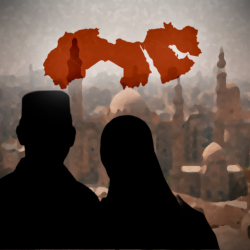
- Population
- no count (no source counts Arabic-speaking Black Algerians)
- Language
- Arabic, Algerian
- Religion
- Sunni Islam (Maliki school)
- Location
- Saharan oases (Oued Righ and Touggourt, Ouargla, Ghardaïa, Adrar and the Touat-Gourara, Béchar and the Saoura, Tamanrasset) and quarters of Algiers and Oran
Afro-Algerians are Black Algerians whose mother tongue is Arabic, most of them in the Saharan oases from Touggourt and Ouargla to Adrar, Timimoun and Béchar, with smaller communities in Algiers and Oran. Many descend from the Haratin, the oasis sharecroppers who tended the palm gardens and underground water channels for landowning families, and others from Africans brought across the Sahara as slaves before 1848. They share their neighbours' Arabic and Sunni Islam, but slurs such as 'abd ('slave'), police checks in the north, a ceiling in jobs and the refusal of marriage by other families keep them apart. Their diwan brotherhoods of Sidi Bilal keep a night-long trance music of gumbri lute and iron castanets that has become part of Algeria's national heritage. No one has counted them.
Read more