People groups
Bedouin, Chaamba

Bedouin, Chaamba

JPIMBGRN
Countries
1
Language
Arabic, Algerian
Religion
Islam - Sunni
Bible status
New Testament

Locations

Identity

The Chaamba (Arabic الشعانبة, also Chaanba, Chaâmba, Sha'anba) are an Arab tribal federation of the northern Algerian Sahara. Historians link them to the Hilalian Arabs of the 11th century, through the Hamyan of the Zoghba or the Banu Sulaym; local genealogists derive the Metlili founders from the Banu Riyah and an ancestor, Thameur, whose shrine stands at Metlili. The name is attested only from 1602. The federation has no paramount chief: each clan elects its own representative and counts as the equal of the others. In the early 20th century it formed five units, Metlili, El Goléa (El Menia), Ouargla, El Oued and the Grand Erg Occidental with the Gourara and Béni Abbès, in two leagues (çof), an eastern one under El Goléa and a western one under the Grand Erg. Known branches include the Chaamba Berazga of Metlili, the Mouadhi of El Menia and the Bou Rouba of Ouargla (Ouled Smail, Ouled Hab er-Rih); families spread to Tindouf, Tamanrasset and Djanet, and some who settled in the Hoggar married Tuareg women. The Chaamba were the camel warriors of the northern Sahara, rivals of the Tuareg, and from 1893 the French recruited them for their méhariste camel corps. They speak a Bedouin Arabic dialect of the Hilalian type.

Culture & traditions

Chaamba society ranked camel-owning clans above client groups: lesser clans, religious families the tribe supported, and descendants of slaves. They disdained farming, pruning palms, irrigation, barbering, butchery and carpentry. Western clans lived in black tents and eastern clans in white ones. The méhari, the riding camel, is the emblem of the tribe, and Metlili holds a spring méhari festival with camel races. Hospitality, tea, horsemanship, oral poetry about tribal history and the honour of lineage remain central. Most Chaamba now live in houses in the oasis towns, and camel herding continues as a family business alongside wage work.

Religious practices

The Chaamba are Maliki Sunni Muslims, and Metlili is their spiritual and emotional centre, described by the ethnographer Marceau Gast as 'a holy city of Saharan Malikism'. Part of the tribe paid annual dues to the Ouled Sidi Cheikh marabouts while refusing them political lordship. Saint shrines, Sufi lodges (zaouias), Quranic healing and protective amulets are part of everyday religion. The Maliki-Ibadi difference with their Mozabite neighbours gives local disputes a religious edge.

Gospel access

The Algerian Arabic New Testament, the Jesus Film and Arabic audio recordings exist, and portions have been published in Algerian Saharan Arabic. No known believers or outreach among the Chaamba; JP lists them as Frontier (Level 1a) and IMB as unengaged.

Chaamba and Mozabites in the M'zab

The Chaamba and the Ibadi Mozabite Berbers have shared the M'zab since at least 1317, when the Chaamba of Metlili and the Mozabites of Mélika exchanged families to end a feud. From the 1960s state policy settled Bedouin in districts of the Mozabite towns, and competition for land, housing and jobs grew, with a Maliki-Ibadi religious edge. Clashes broke out in 1984, in Berriane in 2008, and from December 2013 to July 2015 across Ghardaïa province, where at least 22 people died in July 2015 alone and the army was sent in. A 2014 reconciliation brought twelve Chaamba and twelve Mozabite representatives together with the prime minister without lasting result.

At a glance

Language
Arabic, Algerian
Language family
Afro-Asiatic
Affinity bloc
Northern African and Middle Eastern Peoples
People cluster
Bedouin, Saharan
Primary religion
Islam - Sunni
Bible status
New Testament
Jesus Film
Yes
Audio recordings
Yes
Gospel recordings
Available
Radio broadcasts
Available
Religious school
Maliki

Religious breakdown

Religion % DenominationNotes
Islam~99.9%Sunni (Maliki)Metlili is their spiritual centre, 'a holy city of Saharan Malikism'
Islam (folk)widespread, not measuredSaint veneration, Sufi lodgesPart of the tribe paid dues to the Ouled Sidi Cheikh marabouts
Christianity<0.1%No known believers

Presence by country

AlgeriaNativeVerified presence
Population
~90,000-100,000
Location
Northern Sahara: Metlili and Zelfana (Ghardaïa), El Menia, Ouargla, El Oued; western Chaamba in the Gourara (Timimoun) and Béni Abbès

The Chaamba are the Arab camel tribe of the northern Algerian Sahara, about 90,000 to 100,000 people whose clans are spread from Metlili and El Menia to Ouargla, El Oued and the oases of the Grand Erg Occidental. Once the warriors and caravan guides of the desert, they were recruited by France for its camel corps and later went into the oil fields, the army and trade, and most now live in town houses while family camel herds still graze the plateaus around Metlili and Zelfana. Metlili, seat of the Chaamba Berazga, is their spiritual home, a town of Maliki Sunni Islam that holds a spring festival of the méhari, the riding camel, with races. Their long coexistence with the Ibadi Mozabites of the M'zab valley turned violent in 2013-2015, when clashes in Ghardaïa killed more than two dozen people.

Photos

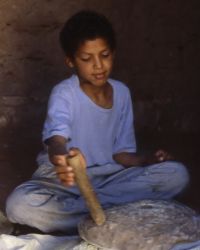
Chaamba Bedouin
Chaamba Bedouin
Metlili Chaanba town hall, 2016
Metlili, 2013
Metlili, 2013
Chaamba camel rider, 1934

Sources

  1. Al Jazeera, Clashes in Algeria's Ghardaia signal lasting conflict (2015)
  2. Al Jazeera, Renewed tensions grip Algeria's Ghardaia (2015)
  3. Chaamba, Wikipedia
  4. Chaânba, Encyclopédie berbère vol. 12 (M. Gast, 1993)
  5. Dine, Al-Usur al-Jadida 13(1), 2023
  6. Dine, Herodotus journal 7(3), 2023
  7. IMB, Bedouin, Chamba
  8. Joshua Project, Bedouin, Chaamba
  9. OPVM, The ksar of Metlili
  10. Senoussi et al., Revue des BioRessources 15(1), December 2025