People groups
Turk

Turk

JPIMBGRNDiscovery
Population in the Middle East and North Africa
1,500
Countries
41
Language
Turkish
Religion
Islam - Sunni
Bible status
Complete Bible

Locations

Identity

Turks are the Turkish-speaking people of Türkiye, about 60-63 million there and roughly 80 million worldwide, and the heirs of the Seljuk and Ottoman states. Oghuz Turkic tribes from Central Asia entered Anatolia after the Seljuk victory at Manzikert in 1071; over the following centuries Anatolia's Greek-, Armenian- and Kurdish-speaking Christians and others were absorbed through settlement, intermarriage and conversion, and from the 1850s to 1989 millions of Muslim refugees (muhacir) from the Balkans, Crimea and the Caucasus added to the nation. The name Türk is first recorded for the Göktürk empire of the 6th century and is often glossed 'strong'. Regional identities remain strong: Anatolian villagers, Black Sea Turks, Yörük and Turkmen tribal descendants, Rumelian (Balkan) Turks and Cretan Muslims. Turkish-speaking Alevis, Meskhetian Turks, Yörük and the Turkmen of Iraq, Syria and Lebanon are listed as separate groups. Abroad, this group covers two kinds of community: millions of labour migrants and their descendants in Western Europe since the 1960s, and in the former Ottoman Arab lands the descendants of Ottoman soldiers and officials (Libya's Kouloughlis, Egypt's Turkish-descended families) who have mostly lost Turkish, beside modern Turkish expatriates on contracts.

Culture & traditions

Turkish life centres on family, hospitality and food. Guests are offered black tea in tulip glasses or Turkish coffee; breakfast is a spread of white cheese, olives, tomatoes, eggs and simit; regional dishes include kebabs, börek, mantı, gözleme and baklava, with ayran. Weddings last several days and begin with the bride's henna night (kına gecesi); boys' circumcision (sünnet) is a family celebration; funerals follow Islamic custom with a mevlit recitation. Ramazan and Kurban Bayramı bring family visits and the sacrifice of sheep, and spring is greeted at Hıdırellez. Folk tradition includes the aşık minstrels with the bağlama lute, türkü folk songs, zeybek and horon dances, Karagöz shadow plays, the tales of Nasreddin Hoca and Keloğlan and the Dede Korkut epics; carpets, kilims and Iznik tiles are classic crafts, and Edirne's Kırkpınar oil wrestling has run since 1362. Football is the national passion. Abroad, Turkish culture is most visible in restaurants, bakeries, barbershops and mosques run by Diyanet-linked associations, and in the former Ottoman lands in loanwords, baklava, coffee and Ottoman-era mosques.

Religious practices

Turks are Sunni Muslims of the Hanafi school, the Ottoman state's doctrine; in Türkiye the state Presidency of Religious Affairs (Diyanet) appoints every imam and writes the Friday sermon, and its organisations abroad run many diaspora mosques. A 2013 Diyanet survey found 42.5% of citizens prayed five times a day and 83.5% fasted in Ramadan. Sufi orders, banned in 1925 but thriving informally (Naqshbandi branches such as İsmailağa and Menzil, the Süleymancı and Nur movements), shape devout life. Popular religion blends with Islam: visits to saints' tombs (türbe) such as Eyüp Sultan in Istanbul to ask for healing or children, blue nazar beads and written amulets against the evil eye, and vows (adak). Practice varies sharply by region and generation: conservative central Anatolia and the east versus secular Aegean and Thracian cities; KONDA surveys show the share calling themselves 'religious' falling and atheists rising from 1% to 3% (2008-2018), especially among the young. Ottoman-descended families in Arab countries have mostly adopted the local school, in Libya the Maliki.

Gospel access

  • Bible translation: Full Bible in Turkish since 1827 (the Bobowski translation, revised as the 1941 Kitab-ı Mukaddes); modern translation (Kutsal Kitap Yeni Çeviri) published by the Bible Society in Turkey and online at bible.com. Ottoman-descended families in Arab countries mostly speak the local Arabic and use Arabic Scripture.
  • Jesus Film: Available in Turkish.
  • Audio and media: GRN Turkish recordings; SAT-7 TÜRK broadcasts 24/7 on Türkiye's Türksat 4A satellite since 2015.
  • Christian presence: c. 8,000 Protestants in Türkiye, mostly Turks of Muslim background, in c. 186-214 congregations (Istanbul, Ankara, Izmir and growing in Anatolian cities); historic Armenian, Greek and Syriac churches are separate peoples.
  • Barriers: Strong equation of Turkish identity with Islam; social and family pressure on converts; churches without legal status; expulsions of foreign Christian workers since 2019; no Christian community among Turkish-descended families in the Arab world.
  • Diaspora: Turkish-speaking churches and ministries exist in Germany, the Netherlands and other European countries.

At a glance

Language
Turkish
Language family
Turkic
Affinity bloc
Central Asian Peoples
People cluster
Turkic
Primary religion
Islam - Sunni
Bible status
Complete Bible
Jesus Film
Yes
Audio recordings
Yes
Gospel recordings
Available
Radio broadcasts
Not Available
Religious school
Hanafi

Religious breakdown

Religion % DenominationNotes
Islamc. 90-95%Sunni (Hanafi)In Türkiye administered by the Diyanet; Ottoman-descended families in Arab countries have largely adopted the local school (Maliki in Libya)
Islam (nominal / secular)large minorityCultural SunniSecular, Kemalist-influenced practice in western Türkiye, among urban Turks and among expatriates
Non-religious / atheist3-7%Rising among the young in Türkiye
Christianity<0.02%Protestantc. 8,000 Turkish Protestants in Türkiye; none known among Turkish communities in the Arab world

Presence by country

Türkiye (Turkey)NativeVerified presence
Population
~60-63 million
Location
Throughout Türkiye; majority in every region except the Kurdish-majority south-east and east

Turks are the Turkish-speaking majority of Türkiye, descended from the Oghuz Turkic tribes who entered Anatolia after the Seljuk victory at Manzikert in 1071 and from the Greek, Armenian, Balkan and Caucasian peoples who joined them over nine centuries. They make up about three-quarters of the country's 86 million people, from Istanbul's megacity to Black Sea tea villages and the wheat plains of central Anatolia. Most are Sunni Muslims of the Hanafi school, served by state-appointed imams, yet daily life mixes mosque prayer with visits to saints' tombs, blue nazar beads against the evil eye and a growing secular streak among the young. Family life turns on hospitality: guests are pressed with glass after glass of black tea, and weddings run over several days, opening with the bride's henna night.

BahrainDiasporaVerified presence
Population
1,500
Location
Manama (Seef, Juffair, Adliya), Muharraq and Riffa; mostly urban professionals

Turks in Bahrain are a small community of about 2,000 citizens of Türkiye who arrived mainly since the 2000s as doctors, nurses, engineers, academics, contractors and business owners, alongside cooks and barbers who run the island's many Turkish restaurants and grooming salons. Unlike the large South Asian labour communities, they are mostly middle-class families on professional contracts, and they share the Sunni Muslim faith of their Bahraini hosts while practising it in the relaxed, often secular style of urban Türkiye. The Yunus Emre Institute and Turkish courses at the University of Bahrain teach their language to Bahrainis. When Iranian missiles closed Bahrain's airspace in March 2026, the Turkish embassy organised buses across the King Fahd Causeway to Riyadh for citizens who wanted to leave.

EgyptDiasporaVerified presence
Population
~6,000 (est. 5,000-8,000)
Location
Cairo and Alexandria; Turkish factories in 10th of Ramadan City, Sadat City, Ismailia and the Suez Canal Economic Zone

Turks in Egypt today are a community of about 6,000 Turkish citizens: managers, engineers and technicians of the some 1,700 Turkish companies, including about 200 textile, garment and chemical factories that moved production to Egypt's industrial cities, along with diplomats, traders, teachers and their families in Cairo and Alexandria. Their numbers fell after the 2013 break between the two governments and have grown again since relations were restored in 2021-2023, as rising costs at home pushed Turkish clothing makers to 10th of Ramadan City, Sadat City and the Suez Canal zone. They speak Turkish at home, keep Hanafi Sunni Islam and gather around the embassy, the Alexandria consulate and the Yunus Emre Institute, which teaches Turkish to thousands of Egyptians. They live among the legacy of four centuries of Ottoman rule: Egyptian Arabic is full of Turkish words such as pasha and bey, and many Egyptian families descend from Ottoman officials, soldiers and Cretan Muslims, though those descendants now speak Arabic and call themselves Egyptians.

KuwaitDiasporaVerified presence
Population
~3,000-4,000
Location
Kuwait City, Salmiya and Hawalli; construction sites of Turkish contractors

Turks in Kuwait are a small professional community of a few thousand: engineers and workers with the Turkish construction firms that have built major projects such as airport and infrastructure works, doctors, teachers, barbers, restaurateurs and businesspeople. They come on fixed contracts rather than to settle, and the Turkish embassy draws them together for national days, religious holidays and cultural festivals such as the 2023 'Turkish Village' at the Hunting and Equestrian Club, with Ottoman mehter music, folk dance and mounted archery. Like their Kuwaiti hosts they are Sunni Muslims, but they follow the Hanafi school rather than the Maliki and Hanbali traditions of Kuwait, and speak Turkish at home.

QatarDiasporaVerified presence
Population
~12,000-16,000
Location
Doha (West Bay, Lusail, Al Sadd, Al Waab) and Al Rayyan; Turkish troops at a base south of Doha

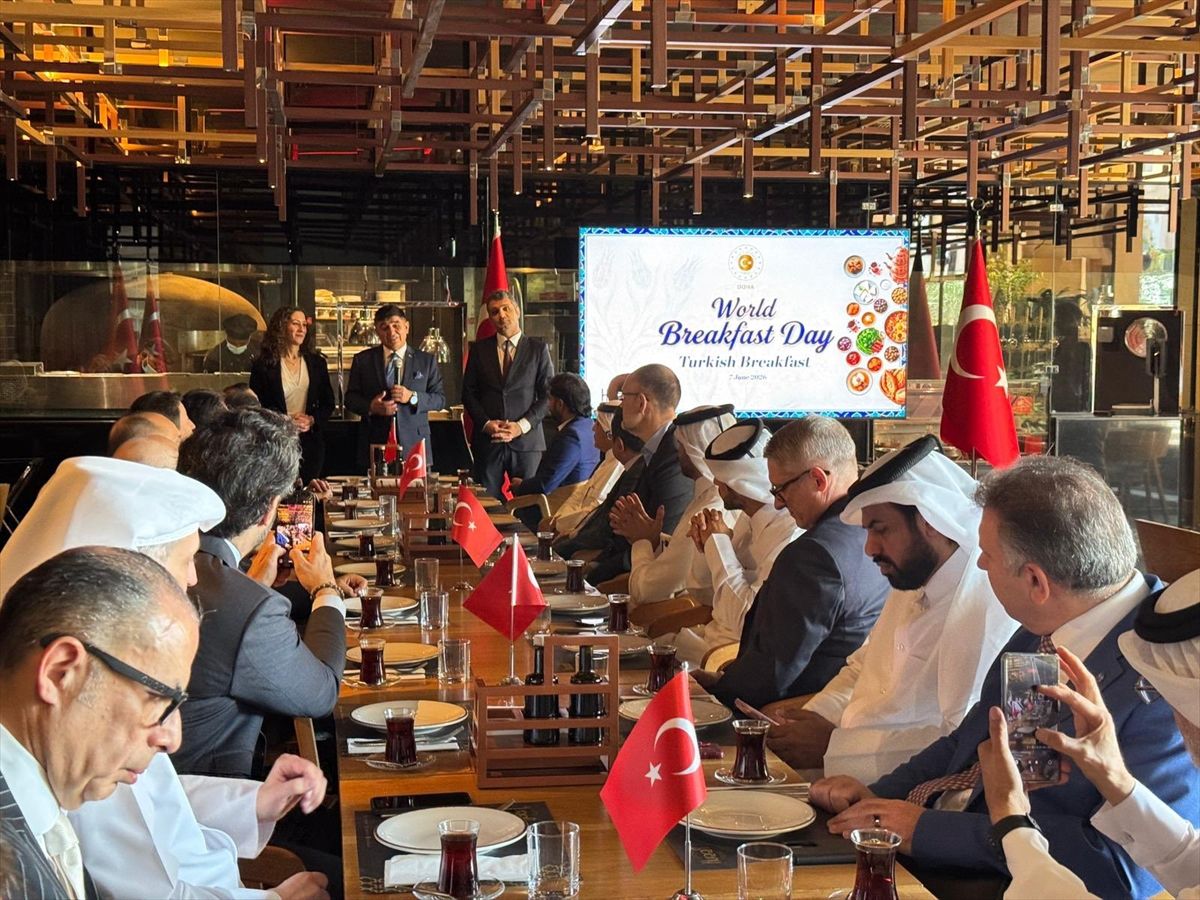
Turks first came to Qatar in the mid-1970s with Turkish construction companies and stayed a community of engineers and managers until the 2017-2021 blockade of Qatar drew the two countries close. Turkish troops, contractors, doctors, teachers, bankers and a working-class wave of barbers and döner makers from Hatay province followed, and the number of adult Turkish citizens registered to vote in Qatar tripled between 2018 and 2023. They have their own embassy school, now being replaced by a campus for 800 pupils, a Turkish hospital and a Yunus Emre cultural centre in Doha. Most are Sunni Muslims of the Hanafi school, from devout to secular, with an Alevi minority, and families keep long Turkish Sunday breakfasts, Ramadan pide and holiday customs.

Saudi ArabiaDiasporaVerified presence
Population
~30,000 (est. 26,000-35,000)
Location
Riyadh, Jeddah, Mecca, Dammam, with smaller groups in Tabuk, Taif and Abha

Turks in Saudi Arabia are about 30,000 Turkish citizens who came to work, most of them since construction firms from Türkiye arrived in the 1970s: contractors and engineers, barbers, bakers, restaurant and furniture-shop owners, doctors and teachers, many with their families, Kurds and Zazas from eastern Türkiye among them. Their children studied at a network of Turkish international schools in Riyadh, Jeddah, Mecca, Dammam, Tabuk, Taif and Abha, eight of which Saudi Arabia closed in 2021 during a diplomatic rift before Ankara announced their reopening in 2022. The Hejaz was Ottoman for four centuries, and many Saudi families descend from Ottoman officials, soldiers and pilgrims, among them Queen Iffat, wife of King Faisal; those families speak Arabic and live as Saudis. Voting from Saudi Arabia in Türkiye's elections, the community has split between a more conservative Jeddah and a more secular-leaning Riyadh.

TunisiaDiasporaVerified presence
Population
~400-1,000
Location
Tunis and Ariana; staff of Turkish firms elsewhere, including the Monastir and Enfidha airports

Turkish citizens in Tunisia are a small expatriate community of a few hundred to about a thousand: diplomats, teachers, managers and engineers of Turkish companies, small traders and Turkish spouses of Tunisians, most of them in Tunis. They gather around their embassy, where families meet after the Eid prayer at the Zitouna Mosque for a Turkish breakfast, and around the Turkish Maarif school in Ariana and the Yunus Emre cultural institute, which teaches Turkish to Tunisians. Their presence echoes three centuries of Ottoman rule, when Turkish soldiers and officials settled in Tunis and the coastal towns; the descendants of those Turks, hundreds of thousands of Tunisians with Turkish family names and Hanafi religious tradition, now speak Arabic and are Tunisians. Today's Turks are mostly Sunni Muslims of the Hanafi school, from devout to secular.

United Arab EmiratesDiasporaVerified presence
Population
~40,000 (est. 25,000-60,000)
Location
Dubai (over 85%: Dubai Marina, JLT, Business Bay, Downtown, Al Barsha, Jumeirah), Abu Dhabi, Sharjah and the northern emirates

Turks in the United Arab Emirates are a young community of professionals and entrepreneurs rather than labourers: engineers, bankers, architects, contractors, traders and restaurateurs, more than four in five of them in Dubai. Their numbers roughly tripled after 2010, and more than half of those in Dubai arrived in the five years before 2022, as Turkey's currency crisis and inflation pushed skilled people and capital abroad and thousands of Turkish firms opened offices in the city. Most are Sunni Muslims of the Hanafi school, but many live a secular, urban lifestyle, and in the 2023 election those registered in the UAE voted two to one for the secular opposition candidate. Community life runs through business councils, women's networks, weekend Turkish classes for children and celebrations of Republic Day each October.

Also found outside the Middle East and North Africa

Azerbaijan, Bosnia-Herzegovina, Bulgaria, Cyprus, Greece, Kosovo, North Macedonia, Romania, Afghanistan, Australia, Austria, Belgium, Brazil, Canada, Denmark, Finland, France, Germany, Italy, Kazakhstan, Kyrgyzstan, Liechtenstein, Netherlands, Norway, Pakistan, Russia, Sweden, Switzerland, Turkmenistan, United Kingdom, United States, Uzbekistan, Venezuela

Photos

Turk profile photo
Turk profile photo
Turkish Republic Day music evening at Katara, Doha (Oct 2025)
Jandarma mehter band at Katara, Doha (Dec 2025)
Turkish breakfast promotion in Doha (Jun 2026)

Sources

  1. 1953 demographic study (cited in secondary sources) — 25% of Tunisia/Algeria population of Turkish descent
  2. AA via Bengütürk: Tunus'ta Türk vatandaşları Büyükelçi Demircan ile bayramlaştı (21 Mar 2026)
  3. Al-Arab: الأناضول تخرج عن مواربتها السابقة: الكراغلة أتراك مصراتة
  4. Al Jazeera: Erdogan: Turkey-Qatar military base serves regional stability (25 Nov 2019)
  5. Al Jazeera: Turkey sends more troops to Qatar (27 Dec 2017)
  6. Anadolu Agency: Survey looks into Turkey's religious life profile
  7. Anadolu Agency: Turkish language blossoms in Tunisia
  8. Arabi21: من هم الكراغلة وما قصة انتشارهم
  9. Arabic Post: 100,000 descendants of Ottomans live in Libya (15 Jan 2020)
  10. Arabic Wikipedia: أتراك ليبيا
  11. Atalayar: Turkey to open consulate in Benghazi (Feb 2025)
  12. Bahrain This Month: Celebrating the 101st anniversary of the Republic of Türkiye (Oct 2024)
  13. Benguturk (28 Nov 2023): Turkish Village event in Kuwait
  14. Bengütürk: Katar'da mehter yürüyüşü ve bando konserine yoğun ilgi (12 Dec 2025)
  15. Bengu Turk: over 3,000 Egyptians a year learn Turkish at the Yunus Emre Institute
  16. Bianet: KONDA - religious share fell, atheists rose in 10 years
  17. Bible.com: Kutsal Kitap Yeni Çeviri
  18. Bibliotheca Alexandrina: A cuisine for all tastes (Alexandria)
  19. Britannica: Koulougli
  20. Business Today Egypt: Bony Textile $100 million plant in 10th of Ramadan
  21. Christian Post: Christians in Turkey face rise in hate crimes
  22. Daily Sabah: Haftar deliberately targeted Libya's Turkish diaspora (Jan 2020)
  23. Diken: Diyanet 'Türkiye'de Dini Hayat' survey
  24. Diken / Hürriyet: Foreign Ministry figures on Turkish citizens abroad by country (6 Feb 2019)
  25. Diken: Overseas voters by country (2023)
  26. Dispatch Risk: Türkiye's new visa system for Libyans (Sept 2025)
  27. Dubai Chambers: new foreign member companies 2024
  28. Dünya: Largest Turkish evacuation ever brings 5,000 home from Libya (2011)
  29. Edarabia: Tunisia Maarif Schools
  30. Ekonomi Gazetesi: return-from-Egypt claim (9 Mar 2026)
  31. Ekonomist (27 Apr 2023): overseas registered voters by country
  32. EnterpriseAM: Turkish companies invested around USD 500 mn in Egypt in 2025
  33. European Conservative: Turkey's persecution of Protestant Christians (2024)
  34. Facebook search cache
  35. GeoEPR 2021 (local)
  36. GLMM: Non-Kuwaiti population by migration status and country of citizenship (2012)
  37. GLMM: Saudi Arabia, non-Saudi population by nationality, census 2022 (non-Arab Asian countries)
  38. Google search cache
  39. GRN TS.json — lists "Turk" as people group for Tunisia (no population data)
  40. Grokipedia: Kouloughlis
  41. Grokipedia: Turks in Libya
  42. Gulf News: Turkish community group marks fourth anniversary (c. 2010)
  43. Gulf Times: A brand ambassador for all things Turkish (8 Aug 2013)
  44. Gulf Times: Qatar is growing market for Turkish contractors
  45. haber.aero: Dünyanın tahliyesi Katar'a kaldı (1 Apr 2020)
  46. haberler.com: Doha'da Türk kahvaltısı tanıtıldı (7 Jun 2026)
  47. Haberler.com: Turkish embassy organises Bahrain-Riyadh buses for citizens (6 Mar 2026)
  48. Haberturk/BBC: Turkish citizens by country of residence (Foreign Ministry, 7 Feb 2019)
  49. Habertürk: Turkish Embassy in Tehran security announcement for Turkish citizens in Iran (28 Feb 2026)
  50. Hurriyet: Evacuation support to 21 countries (Oct 2024)
  51. IARI: Turkey's strategy towards Libya (May 2025)
  52. IFC: TAV Tunisia project disclosure
  53. IOM DTM Lebanon Migrant Presence Monitoring, Round 3 dataset (2023)
  54. İstiklal: İşte Türkiye'nin Katar'daki o üssü (8 Jun 2017)
  55. Joshua Project: Turk in Iran
  56. Joshua Project: Turk in Libya
  57. Karar: Turkish voters in Egypt at the ballot box (9 Apr 2017)
  58. Khaleej Times: Just like home (Feb 2022)
  59. Kuwait Times (7 May 2024): Kuwait-Turkey six decades of cooperation
  60. Managers.tn: Zoom sur les échanges commerciaux entre la Tunisie et la Turquie (26 Jun 2024)
  61. MEB: Bakan Özer Katar'da öğretmenler ve Türk vatandaşlarla iftarda buluştu (11 Apr 2022)
  62. Medyascope: KONDA 2022 lifestyle survey
  63. Medyascope: Türkiye's population passed 86 million (Feb 2026)
  64. Noon Post: From Mardin to Tripoli, Turkey's new policy in Lebanon (21 Jul 2026)
  65. North Africa Post: Turkish airport operator TAV closes down Enfidha-Hammamet airport
  66. ORSAM Report 208: The Mardinite Community in Lebanon (2017)
  67. Posta (2021): Saudi Arabia to close 8 Turkish schools
  68. Qatar Tribune: Construction begins on Turkish school in Qatar to serve 800 students (Dec 2025)
  69. Qatar Tribune: Turkish nationals can cast votes at embassy premises (14 Jun 2018)
  70. Report.az: Turkish minister says Iran suspends citizens' exit toward Türkiye
  71. Republic of Türkiye Embassy in Tehran
  72. Riyad'da yaşayan Türkiyeliler: göç, eğitim ve kültürel değişme üzerine bir alan çalışması (Hatay Mustafa Kemal University, 2019)
  73. Sabah: Katar'da dostluk kazandı (14 Nov 2015)
  74. Sada El Balad: tribes of Turkish origin in Libya reject Turkish claims
  75. SAT-7 UK: SAT-7 TÜRK becomes first Christian channel on national satellite
  76. SWP Berlin: Invisible Occupation — Turkey and Russia in Libya
  77. Takvim: 14 May 2023 election results, Libya
  78. Takvim: 14 May 2023 election results, United Arab Emirates
  79. Takvim: Katar 14 Mayıs 2023 seçim sonuçları
  80. The New Arab (3 Aug 2022): Turkish schools to reopen in Saudi Arabia as relations improve
  81. The Peninsula: Katara hosts Turkish cultural music evening (28 Oct 2025)
  82. The Portal Center: Kouloughlis: Turkey's bridge to intervention in Libya (Jan 2020)
  83. Timeturk: Tunus'taki Türkler yurda döndü (15 Jan 2011)
  84. Tunisia _country.md — Ottoman period history, Turkish-descended population context, Hanafi jurisprudence note
  85. Turkish Embassy Doha: Al Raya interview with Ambassador Demirok (18 Mar 2014)
  86. Turkish Embassy Doha: Gulf Times interview with Ambassador Demirok (16 Apr 2015)
  87. Turkish Embassy in Doha: Announcements
  88. Turkish Embassy in Kuwait: ambassador's Ramadan Bayram message (2020)
  89. Turkish embassy in Tunis (website, Oct 2026)
  90. Turkish Minute: Turkish buyers spent record $2.4 bln on overseas property in 2025
  91. Turkish Wikipedia: Katar'daki Türkler
  92. Turkiye Gazetesi: overseas voters by country (26 Apr 2023)
  93. Wikidata Q15054526 ("Turks in Tunisia") — population 500,000 (likely Turkish-descended total)
  94. Wikipedia: Bible translations into Turkish
  95. Wikipedia: Culture of Turkey
  96. Wikipedia: Qatar-Turkey relations
  97. Wikipedia: Tunisia–Turkey relations
  98. Wikipedia: Turkish people
  99. Wikipedia: Turks in Egypt
  100. Wikipedia: Turks in Kuwait
  101. Wikipedia: Turks in Qatar
  102. Wikipedia: Turks in Saudi Arabia
  103. Wikipedia: "Turks in Tunisia"
  104. Yeni Şafak: Katar 2018 seçim sonuçları
  105. Yetkin Report: Escape from Lebanon (10 Oct 2024)
  106. Yetkin Report: How many Kurds, Sunnis and Alevis live in Turkey (Nov 2019)