People groups
Talysh

Talysh

JPIMB
Population in the Middle East and North Africa
500,000
Countries
3
Language
Talysh
Religion
Islam - Sunni (Shafi'i) and Shia
Bible status
New Testament

Locations

Identity

The Talysh (Tolysh, Taleshi; Persian تالش) are an Iranian people native to Talish, the mountains and coastal plain on the southwestern shore of the Caspian Sea, which the treaties of Gulistan (1813) and Turkmenchay (1828) divided between Persia and Russia along the Astara river. Their northern half, centred on Lankaran, Lerik, Astara, Masally and Yardymli, is now in Azerbaijan; the southern half lies in Iran's Gilan and Ardabil provinces. They are often linked to the ancient Cadusii, and the region was later known as Taylisan or Talestan. The Talysh Khanate (18th-19th centuries) ruled from Lankaran. Talysh is a Northwestern Iranian language with northern, central and southern dialects, related to Tati and Zaza and written in Latin and Cyrillic in the former Soviet space and in Persian script in Iran. Soviet census-taking all but erased the Talysh (from 77,300 in 1926 to 85 in 1959), and Azerbaijan's 2009 census counted 112,000, while experts estimate several times more. In Iran estimates range from 340,000 to 700,000. The brief Talysh-Mughan Autonomous Republic (1993) and the imprisonment of Talysh scholars in Azerbaijan made Talysh identity politically sensitive there, while in Iran it is secondary to a broader Iranian identity.

Culture & traditions

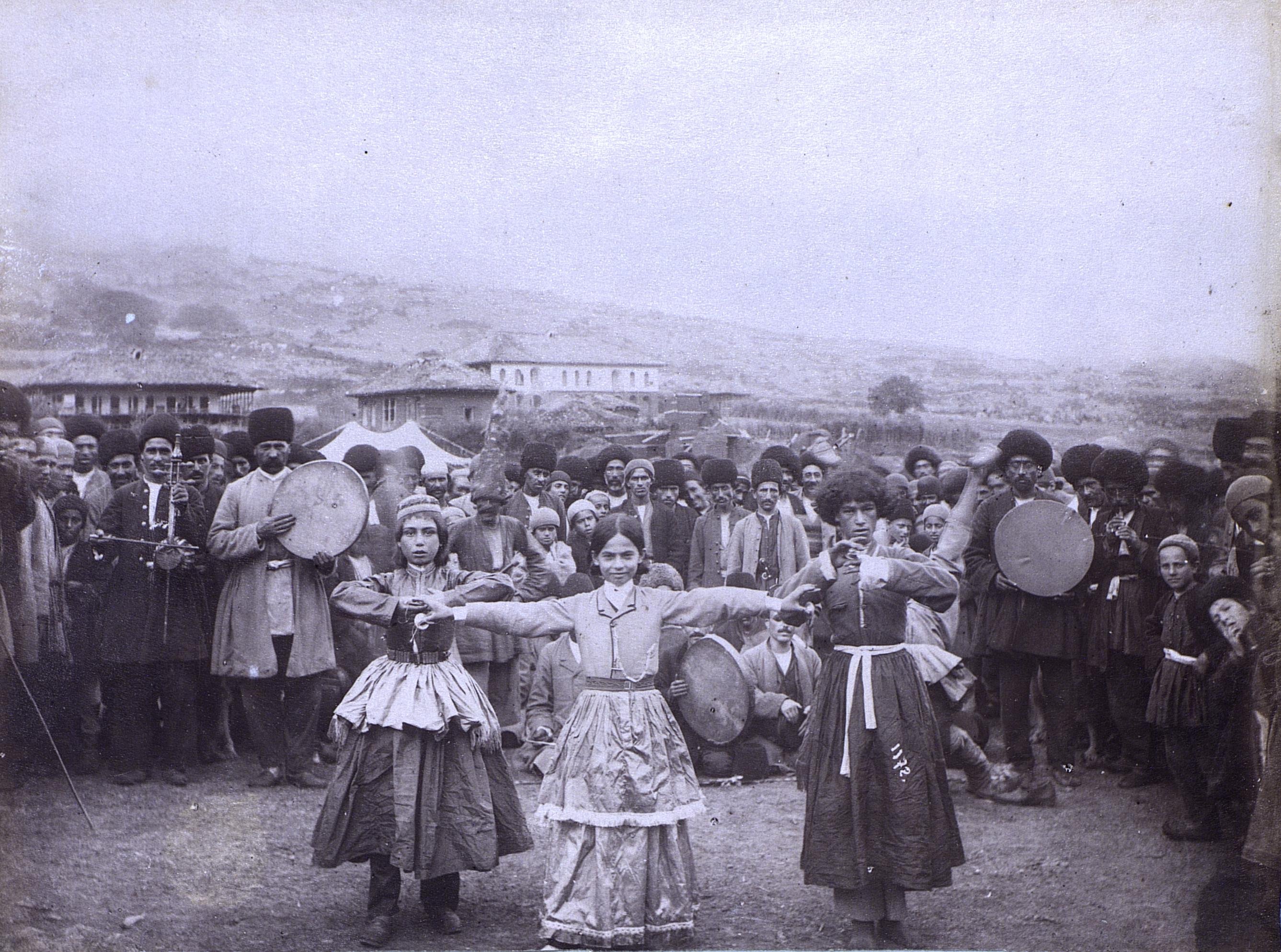
Talysh traditionally divide into highlanders, who raised cattle and sheep with seasonal moves between lowland winter quarters and mountain summer pastures, and lowlanders who grow rice, tea and citrus and fish the Caspian. Villages are built of timber and stone in the Hyrcanian forest, and the terraced village of Masuleh, where the roofs of one row of houses are the streets of the next, is the most famous Talysh-speaking settlement. The Talysh of Azerbaijan are renowned for longevity and centenarians. Weddings with dances, the zurna and drum, and wrestling, and Nowruz festivities are central social events; Talysh folk music and dance ensembles are active on both sides of the border. Families are patrilineal and close-knit, and hospitality and honour codes are strong. Most Talysh are bilingual or trilingual (Talysh with Persian and Gilaki in Iran, Azerbaijani and Russian in Azerbaijan), and the language is rated vulnerable by UNESCO.

Religious practices

Talysh Islam differs by side of the border. In Azerbaijan most are Twelver Shia, with about 25 Sunni villages in the mountains near Iran. In Iran sources differ on the balance: several describe the northern and central Talysh around Hashtpar, Asalem and Lisar as largely Sunni Shafi'i, many tied to the Naqshbandi Sufi order, with Shia mainly in Shanderman, Masal and Masuleh, while Iranian reference works call Shia dominant overall; both sects worship side by side in Hashtpar. Underneath both lies a strong substrate of pre-Islamic belief: Siyah Galesh (the Black Herdsman) is guardian of livestock, Khidr Nabi of water and greenery, and beech, oak and plane trees are venerated in sacred groves (odjah), where people light candles, tie cloth and leave coins with their wishes. Lunar eclipses were once answered with noise and gunfire to free the moon from devils. Southern Iranian Talysh are said to preserve this substrate most fully.

Gospel access

A New Testament for the Talysh of Iran, in Persian script, was translated by Korpu and dedicated in January 2024 among 12 new minority-language New Testaments; Scripture portions and the Jesus Film also exist in Talysh, and Global Recordings Network has audio. Resources from Azerbaijan use Latin script and the northern dialect, which Iranian Talysh read with difficulty. No Talysh-speaking church is known in Iran, and in Azerbaijan Christian activity is closely controlled by the state.

At a glance

Language
Talysh
Language family
Indo-European
Affinity bloc
Central Asian Peoples
People cluster
Talysh-Tati
Primary religion
Islam - Sunni (Shafi'i) and Shia
Bible status
New Testament
Jesus Film
Yes
Audio recordings
No
Gospel recordings
Not Available
Radio broadcasts
Not Available
Religious school
Ja'fari (Shia); Shafi'i (Sunni)

Religious breakdown

Religion % DenominationNotes
Islammajority in Azerbaijan; c. 40-60% in IranShia (Twelver)Most Talysh of Azerbaijan; southern Talysh of Iran (Masal, Shanderman, Masuleh)
Islamc. 40-60% in Iran; 25 villages in AzerbaijanSunni (Shafi'i), Naqshbandi SufiNorthern and central Talysh of Iran (Hashtpar, Asalem, Lisar); mountain villages near the border in Azerbaijan
Folk religionwidespreadsyncreticSiyah Galesh, sacred groves, peri and div

Presence by country

IranNativeVerified presence
Population
500,000
Location
Northwestern Gilan (Talesh, Rezvanshahr, Masal, Astara and Fuman counties, incl. Masuleh) and the adjoining highlands of Ardabil province (Namin and Anbaran)

The Talysh of Iran live in the forested Talysh mountains and coastal plain of northwestern Gilan, the southern half of a homeland that Russia and Persia split along the Astara river in 1813-1828. They speak Talysh, a Northwestern Iranian language related to Tati and Zaza, and number around half a million, far more than on the Azerbaijani side's official count. Unlike most of their neighbours they are religiously divided: northern and central Talysh around Hashtpar, Asalem and Lisar are largely Sunni Muslims of the Shafi'i school, many tied to Naqshbandi Sufism, while southern Talysh of Masal, Shanderman and Masuleh are Twelver Shia. Mountain villages still move cattle and sheep between lowland winter quarters and summer pastures, and old beliefs in Siyah Galesh, the black herdsman who guards the flocks, survive alongside Islam.

Also found outside the Middle East and North Africa

Azerbaijan, Russia

Photos

Talysh people
Talysh people
Talysh people in Iran
Dances of Talysh people in Iran
Talysh people near their house
Terraced village of Masuleh, Fuman county
Lisar, Talesh county
Nanalar folk ensemble at Nowruz (Azerbaijan)

Videos

Sources

  1. Gilan province - Wikipedia
  2. Hashtpar mosques and sects - golshn12.blogfa.com (Persian)
  3. Hashtpar - Wikipedia
  4. Iran Bible translation - Christianity Today, January 2024
  5. Talesh, Gilan protests, January 2026 - VahidOnline video (Wikimedia Commons)
  6. Talysh - Daneshnameh-ye Jahan-e Eslam vol. 1 p. 3177 (Persian)
  7. Talysh language - Wikipedia
  8. Talysh mythology - Wikipedia
  9. Talysh people - Wikipedia
  10. The Talyshis: An Iranian people divided by the Araxes - V. Arakelova, Kulturni studia 1/2024