People groups
Nayini

Nayini

JPGRNDiscovery
Population in the Middle East and North Africa
10,000
Countries
1
Language
Nayini
Religion
Islam
Bible status
Unspecified

Locations

Identity

The Nayinis are the native people of Nain (Na'in), an ancient desert town on the western edge of the Dasht-e Kavir, about 150 km east of Isfahan, and of nearby villages such as Mohammadiyeh, Bafran and Benvid, the oasis town of Anarak 50 miles to the northeast, and the Tudeshk-Mashkenan area to the southwest. Their dialect, Nayini, belongs to the southeastern branch of the Central Plateau ('Median') dialects of Northwestern Iranian. It is closely related to Anaraki and to the Dari of the Zoroastrians of Yazd and Kerman, and Glottolog places it in a Yazdi-Kermani-Nayini subgroup. Oskar Mann collected Nayini texts extensively in 1901-07, and the dialect has a modern published grammar (2024). Estimates of speakers vary widely, from about 7,000 to 24,000 (2022). By the early 1970s the dialect in Nain town was used mainly by older and poorer residents, though community media still call it the town's language and claim it for 'all Nayini speakers of the world'.

Culture & traditions

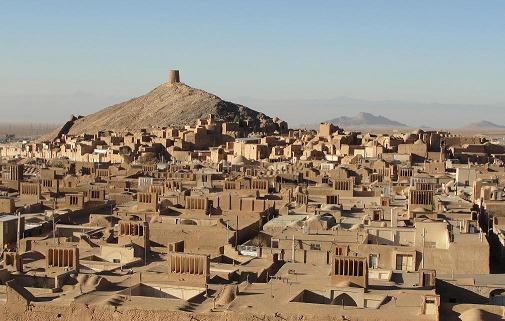
Nain is a mud-brick desert town of qanats, wind-catchers and covered lanes. Its fortifications were already famous in the Middle Ages, and the Sasanian-era Narin Qal'eh citadel still towers over the old town. The 10th-century Buyid Jameh mosque, with its carved stucco mihrab and minbar, is one of the oldest mosques in Iran. Nain's name is known worldwide through its fine wool-and-silk Nain carpets, and its old bazaar is still in use. People are proud of their dialect: a local radio-style program, 'Moj-e Nain', is made 'for all Nayini speakers of the world', there are songs and poetry readings in Nayini (including poetry nights in Anarak), and Instagram users joke that when two Nayinis talk, outsiders cannot tell whether they are quarrelling or reciting poetry. Anarak, an old mining and caravan town at the desert edge with a ruined castle, has its own closely related dialect.

Religious practices

Nayinis are Twelver Shia Muslims. Religious life centres on the ancient Jameh mosque, local Imamzadehs, Muharram mourning ceremonies and Ramadan. Their dialect's close kinship with Zoroastrian Dari reflects the region's pre-Islamic past, when the edges of the Kavir between Nain and Yazd were Zoroastrian heartland, but no Zoroastrian community lives in Nain today. No information was found on folk practices or religious minorities specific to Nayini speakers.

Gospel access

There is no Scripture or Jesus Film in Nayini. Global Recordings Network has Nayini recordings (MP3 and MP4 slideshow downloads), with separate variety pages for Anarak and Khuri, and the Katartizo channel has published a 40-minute recording in the Nayini, Anarak, Khur and Mehrjan speech. Nayinis use Persian for all written purposes and can access Persian Scripture and media. No outreach is known.

At a glance

Language
Nayini
Language family
Indo-European (Iranian, Northwestern, Central Plateau: Yazdi-Kermani-Nayini)
Affinity bloc
Persian-Median
People cluster
Persian
Primary religion
Islam
Bible status
Unspecified
Jesus Film
No
Audio recordings
Yes
Gospel recordings
No
Radio broadcasts
No
Religious school
Ja'fari

Religious breakdown

Religion % DenominationNotes
Islam~99%Shia (Twelver)Nain's 10th-century Jameh mosque is one of the oldest in Iran
Non-religious / secularunknownNational trend
Christianity<0.1%None documented

Presence by country

IranNativeVerified presence
Population
10,000
Location
Nain town and nearby villages (Mohammadiyeh, Bafran, Benvid), Anarak, and the Tudeshk-Mashkenan area, Isfahan province

The Nayinis are the people of Nain, an ancient mud-brick town on the western edge of Iran's Great Salt Desert, and of nearby oases such as Anarak. They speak Nayini, one of the old 'Median' dialects of the central plateau and a close cousin of the Dari spoken by the Zoroastrians of Yazd, so different from Persian that, as locals joke, outsiders cannot tell whether two Nayinis are arguing or reciting poetry. Nain's 10th-century mosque is one of the oldest in Iran, its Sasanian citadel still towers over the old town, and its name is known worldwide for fine wool-and-silk carpets. Nayinis are Twelver Shia Muslims, and their dialect is now spoken mainly by older people as the young shift to Persian.

Photos

Young girl in a doorway, Nain
The 10th-century Jameh mosque of Nain
Circular Nain rug
Circular Nain rug
Historic town of Anarak

Videos

Sources

  1. Borjian, H. 2007. Isfahan xx. Geography of the Median Dialects of Isfahan (Encyclopaedia Iranica)
  2. Encyclopaedia Iranica - ANARAKI (Windfuhr 1985)
  3. EveryTongue - Iran
  4. Glottolog - Nayinic (nayi1242)
  5. GRN - Nayini language page
  6. Nain, Iran - Wikipedia
  7. Nayini language - Wikipedia
  8. زبان نایینی: ساختمان دستوری و جمله‌سازی (book, 2024) - literaturelib