People groups
Natanzi

Natanzi

JPGRNDiscovery
Population in the Middle East and North Africa
7,000
Countries
1
Language
Natanzi
Religion
Islam
Bible status
Translation needed

Locations

Identity

The Natanzis are the speakers of the Natanzic dialects of the Central Plateau ('Median') group of Northwestern Iranian, spoken in the town of Natanz and in the villages on the eastern side of the Karkas mountains between Kashan and Natanz, Isfahan province. Glottolog groups Natanzi proper with the dialects of Badrud (Badrudi, locally ozun dei 'village language'), Abyaneh (Abyane'i), Hanjan, Yarand, Farizand, Bidhand and Bad. The dialects of Tarq, Tar and Kesheh to the south of Karkas are close relatives in the Soic group. In Natanz town itself the dialect, locally called Rassa or Rasse, has been retreating before Persian since the 1930s and is now spoken by a small, mostly elderly group in the old quarter. It is better preserved in the villages, especially Badrud and the Barzrud valley. Ethnologue's figure of about 7,000 speakers (2000) is an estimate. Badrud alone had 14,723 people in 2016, but the number who still speak the dialect is unknown. Abyaneh, the best-known Natanzic village, is famous for its red-ochre houses, distinctive dress and memories of a late conversion from Zoroastrianism.

Culture & traditions

The Natanzic villages are mountain and desert-edge oases watered by qanats and the Barz river. People grow pears, apples, plums, pomegranates, figs, grapes, walnuts and saffron, keep goats and sheep, and weave carpets. Badrud once had about 1,000 carpet looms. Abyaneh, at 2,100 m in the Barzrud valley, is a living museum of the old culture. Its three- and four-storey red-clay houses have latticed wooden windows. Women still wear long pleated skirts, slit blouses and white or floral square kerchiefs, and men wear very loose black trousers. Literacy and girls' education have long been valued, and communal solidarity is strong. Customs include a three-day Nowruz with an open sofra for visitors ('renewing salt'), Chaharshanbe Suri with water jugs thrown from rooftops into the bonfire, and elaborate weddings. Natanz town is known for its pears, its 14th-century Ilkhanid shrine complex of Sheikh Abd al-Samad, and today for the nearby uranium-enrichment plant. Many young people have moved to Kashan, Isfahan, Qom and Tehran, and Natanzic villages such as Abyaneh and Hanjan now have only a few hundred mostly older residents. Tarqi migrants form a community in Qom.

Religious practices

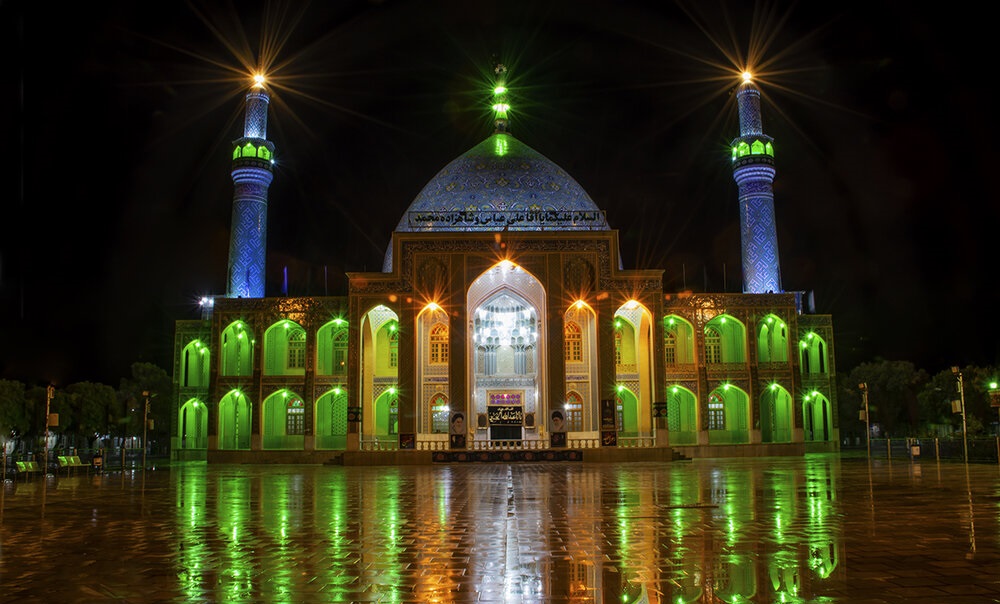
Natanzis are Twelver Shia Muslims. Natanz grew around the Sufi shrine of Sheikh Abd al-Samad, a Sufi master of the Suhrawardi order who died around 1300,, and the region has many Imamzadehs, including the twin shrine of Yahya and Isa in Abyaneh and the pilgrimage shrine of Agha Ali Abbas near Badrud. Abyaneh is known for traces of its Zoroastrian past. A Sasanian fire temple (Harpak) stands in the village, villagers remember that funeral and Feast of Fitr prayers were once said facing a different direction, and Zoroastrian-style customs survive: food offerings for the dead on Friday eves and in Muharram and Ramadan, braziers of embers in houses of mourning and at Nowruz, reluctance to wash the dead in running water, and adding the five 'Gatha days' to the calendar after the month of Bahman. These folk customs coexist with orthodox Shia observance. As across Iran, younger, urban Natanzis are increasingly secular.

Gospel access

There is no Scripture, Jesus Film or known audio recording in Natanzi, and no GRN page was found. Natanzis are bilingual or Persian-dominant and can use Persian Bibles and media. No outreach is known. The area's link to Iran's nuclear programme means heavy security and surveillance.

Abyaneh: A Village Between Two Faiths

Abyaneh, at the head of the Barzrud valley, is the most studied Natanzic community. Ehsan Yarshater, who recorded its dialect in 1969, described a cohesive, literate village whose old Zoroastrian heritage still shows in daily life: the ruined Sasanian Harpak fire temple at its centre, the memory of prayers once said facing another direction, food offerings for the dead on Friday eves, braziers in houses of mourning, a reluctance to pollute running water by washing the dead, and the five 'Gatha' days added after Bahman rather than at the end of the year. At the same time Abyaneh has an 11th-century Friday mosque with a carved wooden mihrab dated 1084-85 and an Imamzadeh with a blue-tiled dome. Today the village has about 300 mostly elderly residents and is one of Iran's most visited heritage sites.

At a glance

Language
Natanzi
Language family
Indo-European (Iranian, Northwestern, Central Plateau: Kashanic)
Affinity bloc
Persian-Median
People cluster
Persian
Primary religion
Islam
Bible status
Translation needed
Jesus Film
No
Audio recordings
No
Gospel recordings
No
Radio broadcasts
No
Religious school
Ja'fari

Religious breakdown

Religion % DenominationNotes
Islam~99%Shia (Twelver)Shrine of Sheikh Abd al-Samad in Natanz; Imamzadeh of Yahya and Isa in Abyaneh; pilgrimage shrine of Agha Ali Abbas near Badrud
Folk / Zoroastrian-derived customspractised by many alongside IslamAbyaneh keeps customs from late conversion: food offerings for the dead, braziers during mourning, a five-day calendar intercalation after Bahman
Christianity<0.1%None documented

Presence by country

IranNativeVerified presence
Population
7,000
Location
Natanz County, Isfahan province: Badrud and its hamlets, Barzrud valley (Hanjan, Yarand, Abyaneh, Tara), Bidhand, Farizand, and the old quarter of Natanz

The Natanzis are the people of Natanz and the Karkas mountain villages between Kashan and Isfahan who still speak Natanzic, one of the ancient 'Median' dialects of the central plateau. In Natanz town only a few elderly people still speak the old dialect, but it survives in Badrud on the desert edge and in mountain villages such as Abyaneh, Hanjan and Yarand. Abyaneh is famous for its red-clay houses and its women's long pleated skirts and flowered headscarves. It also keeps traces of a late conversion from Zoroastrianism, such as offerings of food for the dead and a Sasanian fire temple in the middle of the village. The Natanzis are Twelver Shia, and their orchards of pears and pomegranates lie close to Iran's main uranium-enrichment site, which was bombed in 2025 and 2026.

Photos

Women of Abyaneh in traditional long pleated skirts and floral headscarves
Woman in traditional dress, Abyaneh
Red-clay houses of Abyaneh, 2016
Badrud, Natanz County
Shrine complex of Sheikh Abd al-Samad, Natanz

Sources

  1. Abyaneh - Wikipedia
  2. Borjian, H. 2007. Isfahan xx. Geography of the Median Dialects of Isfahan (Encyclopaedia Iranica)
  3. CGIE Encyclopaedia of Iranian Languages and Dialects - نطنزی (Esmaili, updated 1404/2026)
  4. Encyclopaedia Iranica - ABYANA (Yarshater 1983)
  5. Encyclopaedia Iranica - BADRUDI (Yarshater 1988)
  6. EveryTongue - Iran
  7. Glottolog - Natanzic (nata1252)
  8. IAEA confirms damage at Natanz (March 2026), via Livemint
  9. Natanzi language - Wikipedia
  10. Natanz - Wikipedia