People groups
Khamseh Arabs

Khamseh Arabs

Discovery
Countries
1
Language
Khamseh Arabic
Religion
Shia Islam (Twelver)
Bible status
No Scripture in Khamseh Arabic; Bible available in Standard Arabic and Persian

Locations

Identity

The Khamseh Arabs are the Arabic-speaking tribe (Il-e Arab) of the Khamseh confederation of Fars. They are made up of two tribes, the Sheybani and the Jabbareh, with more than 45 sub-tribes such as the Labomohammadi, Ghani, Shirazi and Mazidi. Tradition holds that their ancestors came from Arabia (Najd, Yamama, Yemen and Oman) after the Islamic conquests; the Sheybani arrived first, settling in Khorasan before moving to Fars, while the Jabbareh claim descent from Jabir ibn Abd Allah, a companion of the Prophet, through Sheikh Jinaah, who married into the Sheybani. In 1861-62 they were joined with the Basseri and the Turkic Inallu, Baharlu and Nafar in the Khamseh ('five') confederation under the Qavam ol-Molk of Shiraz. Their Arabic is an old Bedouin-type dialect that has absorbed much Persian, Turkish and Luri vocabulary and is hard for other Arabs to follow. English sources relate it to the Central Asian Arabic of Uzbekistan and Khorasan; Persian sources call it a Gulf Arabic dialect. They are distinct from the Arabs of Khuzestan and of the Gulf coast in dialect, region, Shia faith and pastoral way of life.

Culture & traditions

The Khamseh Arabs were long-range pastoral nomads, herding sheep, goats and camels between summer pastures in the uplands of Bavanat, Khorrambid and Sarchahan in north-eastern Fars and winter pastures around Sarvestan, Fasa, Darab, Jahrom and Larestan, some reaching Rudan and Ahmadi in northern Hormozgan. They lived in black goat-hair tents. Most have settled since the 1962 land reform and the 1979 revolution, though some families still migrate. Arab women are the most prolific weavers of Fars: about 40% of the province's hand-woven carpets come from Arab weavers, with Sarchahan a major centre, and Khamseh rugs are known for their many birds. They have become strongly Iranianised, celebrating Nowruz and sharing southern Iranian customs such as carved stone lions on graves. Tribal kinship, clan endogamy and hospitality structure social life.

Religious practices

The Khamseh Arabs are Twelver Shia. Muharram mourning, vows at imamzadeh shrines and pilgrimage to Shiraz and Mashhad are central; folk beliefs about the evil eye and saints' intercession are common. Their Shiism ties them to the Persian majority and separates them from the Sunni Arabs of the Gulf coast.

Gospel access

There is no Scripture, film or audio in Khamseh Arabic, a dialect that other Arabs find hard to understand. Most Khamseh Arabs are fluent in Persian, so the Persian Bible, JESUS Film, satellite broadcasts and online Persian Christian media are the most accessible resources; Standard Arabic Scripture is of limited use. No known believers or outreach.

The Khamseh Confederation

Khamseh means 'the five'. In 1861-62 Naser al-Din Shah's government grouped five tribes of Fars, the Arab (Jabbareh and Sheybani), the Persian-speaking Basseri and the Turkic Inallu, Baharlu and Nafar, under the Qavam ol-Molk family of Shiraz to counter the Qashqai. The Arab tribe was the largest. The confederation lost its political role in the early 1930s, and most households settled after the 1962 land reform and the 1979 revolution.

At a glance

Language
Khamseh Arabic
Language family
Afro-Asiatic (Semitic)
Primary religion
Shia Islam (Twelver)
Bible status
No Scripture in Khamseh Arabic; Bible available in Standard Arabic and Persian
Jesus Film
No
Audio recordings
No
Religious school
Ja'fari

Religious breakdown

Religion % DenominationNotes
Islam98%+Shia (Twelver)Shia like their Persian and Turkic neighbours, unlike the Sunni Arabs of the Gulf coast
Islam (folk practice)widespreadShia folk religionShrine vows, Muharram mourning, protective charms; stone lion grave markers shared with other southern Iranian tribes
Christianity0%No known believers

Presence by country

IranNativeVerified presence
Population
~200,000-280,000 (tribal population)
Location
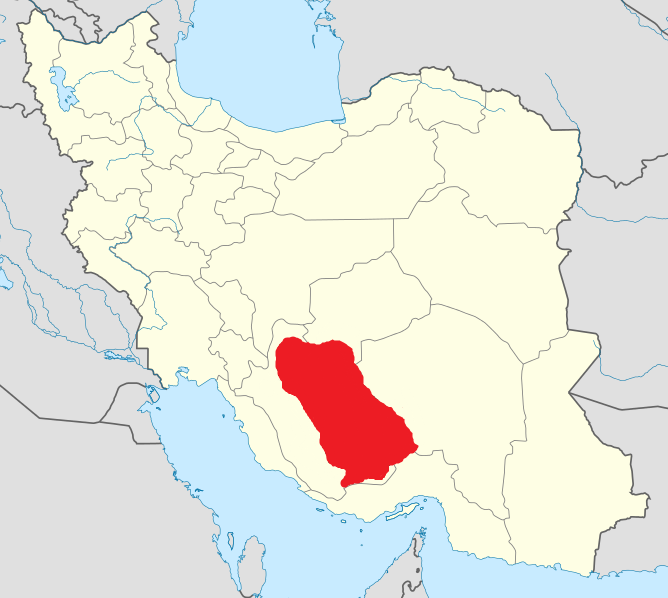
Eastern and south-eastern Fars (Sarvestan, Fasa, Darab, Neyriz, Kharameh, Jahrom, Larestan; summer pastures in Bavanat, Khorrambid, Sarchahan); northern Hormozgan

The Khamseh Arabs are Arabic-speaking tribes of eastern Fars, the Jabbareh and the Sheybani, whose ancestors came from Arabia in the early Islamic centuries and who form the Arab branch of the Khamseh confederation. Their Arabic dialect, laced with Persian, Turkish and Luri words, is so different from the Arabic of Khuzestan and the Gulf that other Arabs struggle to understand it, and unlike the Gulf-coast Arabs they are Shia. For generations they migrated with their flocks between the uplands of Bavanat and the warm plains of Fasa, Darab and Larestan, living in black goat-hair tents; most are now settled. Arab women weave about two in five of all hand-knotted carpets made in Fars.
Photos

Khamseh Arab children in a black goat-hair tent (Mehr News Agency)
Migration routes of the five Khamseh tribes of Fars (from Vaqaye-e Ilat-e Khamseh)
Khamseh 'chicken' (bird) rug, c. 1880

Sources

  1. Glottolog: Khamseh (kham1298, Gulf Arabic) and Khamse (kham1303, Khorasan Arabic)
  2. Glottolog: South Azerbaijani dialects (Aynallu ayna1239, Baharlu baha1255, Nafar nafa1255)
  3. Golcheh Carpet: role of the Inallu and Baharlu tribes in Fars tribal weaving
  4. Instagram @eil_baharlo: differences between the Baharlu, Nafar and Inallu tribes and the Qashqai (15 Dec 2025)
  5. Khamseh Arabs - Wikipedia
  6. Khamseh - Wikipedia
  7. Mehr News: Fars nomads with different languages and dress voted together (5 Jul 2024)
  8. Military Report on Persia, Vol. IV part II: Fars (1920s), Qatar Digital Library
  9. Persian Gulf University thesis: Arabic dialect of the Khamseh tribe of Neyriz
  10. Positions of the Khamseh tribes toward the South Persia Rifles in Neyriz, focusing on the Arab tribe (2023)
  11. Wikidata Q5950797
  12. Zare & Shir Hadaegh (2025), Typology of word order in the Arabic dialect of the Labu-mohammadi tribe of Khamseh, Linguistic Studies: Theory and Practice
  13. ایلات خمسه - Persian Wikipedia
  14. ایل عرب خمسه - Persian Wikipedia