People groups
Hazara

Hazara

JPGRN
Countries
9
Language
Hazaragi
Religion
Islam
Bible status
New Testament

Locations

Identity

The Hazaras are a Persian-speaking, mostly Shia people of central Afghanistan (Hazarajat: Bamyan, Daikundi, Ghor, Wardak and neighbouring provinces), about 9% of Afghanistan's population by common estimates (range 3-20%). The name comes from Persian hazar, 'thousand', probably a Mongol military unit; their self-name is Azra. Genetic and linguistic evidence points to mixed Turkic, Mongolic and Iranian ancestry, and their East Asian features set them apart from their neighbours. They speak Hazaragi, a Persian dialect with Turkic and Mongolic words, and became Twelver Shia under Safavid influence. Emir Abdur Rahman's conquest of Hazarajat in 1888-1893 killed a large part of the population (over 60% by some estimates), enslaved many and seized their land, driving the first exodus to Quetta and Mashhad; the Taliban killed thousands in 1998 and Islamic State attacks have targeted them since 2015. Large communities live in Pakistan (Quetta), Iran, the Gulf, Europe and Australia.

Culture & traditions

Hazaras of Hazarajat are farmers and herders in high, cold valleys, living in flat-roofed mud-brick villages; in exile they are labourers, traders and, increasingly, an educated urban class. The dambura, a two-stringed lute, accompanies sung poetry (dobaiti) and Hazaragi folk songs; Nowruz and Muharram are the high points of the year. Families are patrilineal, with tribal and clan affiliations (for example Dai Kundi, Dai Zangi, Jaghori, Behsud). Women have taken a prominent role in Hazara education and politics, and girls' schooling is valued highly.

Religious practices

Hazaras are mostly Twelver Shia. Muharram mourning for Imam Husayn, Ashura processions and passion rites, majlis gatherings at takiyakhana prayer halls, and pilgrimage to Mashhad, Qom and Karbala are central. Sayyids (Sadat) hold religious prestige, and many Hazaras follow marja' in Najaf or Qom. Folk practice includes vows, amulets and shrine visits. In Iran the Hazara second generation is shaped by Iranian Shia schooling and seminaries in Qom, while others have grown secular or critical of clerical rule; in Europe and Australia some Hazara refugees have converted to Christianity.

Gospel access

The New Testament is available in Hazaragi, with portions published 2008-2015, and the complete Bible in Dari is widely understood. The JESUS film and Global Recordings Network audio exist in Hazaragi. Persian-language Christian media reach Hazaras in Iran and Afghanistan. Hazara Christian fellowships exist mainly in Europe and Australia; in Afghanistan open witness is impossible under the Taliban.

The Khawari: Iran's century-old Hazaras

Hazara migration to Iranian Khorasan began before the modern refugee era. In 1850 about 5,000 Hazara families settled in Jam and Bakharz, and many more fled Emir Abdur Rahman's subjugation of Hazarajat in the 1890s. Iranians first called them Barbari; in 1937 Reza Shah ordered the less insulting name Khawari, 'people of the east'. Persian-speaking and Shia, they integrated faster than any other Afghan group, and some later moved on to Iraq and Syria, with many expelled from Iraq in the 1970s returning to Mashhad. Today they are Iranian citizens, but officials often treat them as Afghans and neighbours judge them by their features, so many keep apart from newly arrived Afghan Hazaras in the same Mashhad districts.

At a glance

Language
Hazaragi
Language family
Indo-European
Affinity bloc
Central Asian Peoples
People cluster
Aimaq
Primary religion
Islam
Bible status
New Testament
Jesus Film
Yes
Audio recordings
Yes
Gospel recordings
Available
Radio broadcasts
Available
Religious school
Ja'fari

Religious breakdown

Religion % DenominationNotes
Islam~85-90%Shia (Twelver)Adopted in the Safavid period (late 16th-early 17th century)
Islam~5-10%IsmailiMainly in Baghlan and around Bamyan
Islam~3-5%Sunni (Hanafi)Sunni Hazara communities in the north and east
Christianity<0.1%EvangelicalSmall numbers, mostly in Western diaspora

Presence by country

IranDiasporaVerified presence
Population
~1,500,000-2,000,000
Location
Mashhad (Golshahr and other eastern districts), Tehran and Karaj, Qom (Shahrak-e Qaem), Isfahan, Torbat-e Jam; Iranian-citizen Khawari mainly around Mashhad

The Hazaras are the largest Afghan community in Iran, Shia Muslims whose faith and Persian speech drew them to Mashhad and Qom, the shrine cities of Imam Reza and Fatima Masumeh. Their presence is old: Hazaras fleeing the massacres of Emir Abdur Rahman in the 1890s settled around Mashhad and became Iranian citizens known as Khawari, 'people of the east', while a far larger wave has arrived since 1979. Their East Asian features make them the most visible Afghans in Iran and frequent targets of street racism, and tens of thousands of young Hazara men were recruited by the Revolutionary Guards into the Fatemiyoun Division to fight in Syria in return for promises of residency. Many fear going back to Taliban rule, yet the deportation drive of 2025-26 has reached Hazara families too.
Also found outside the Middle East and North Africa

Afghanistan, Pakistan, Australia, Austria, Canada, Indonesia, Sweden, United States

Photos

Hazara
Hazara
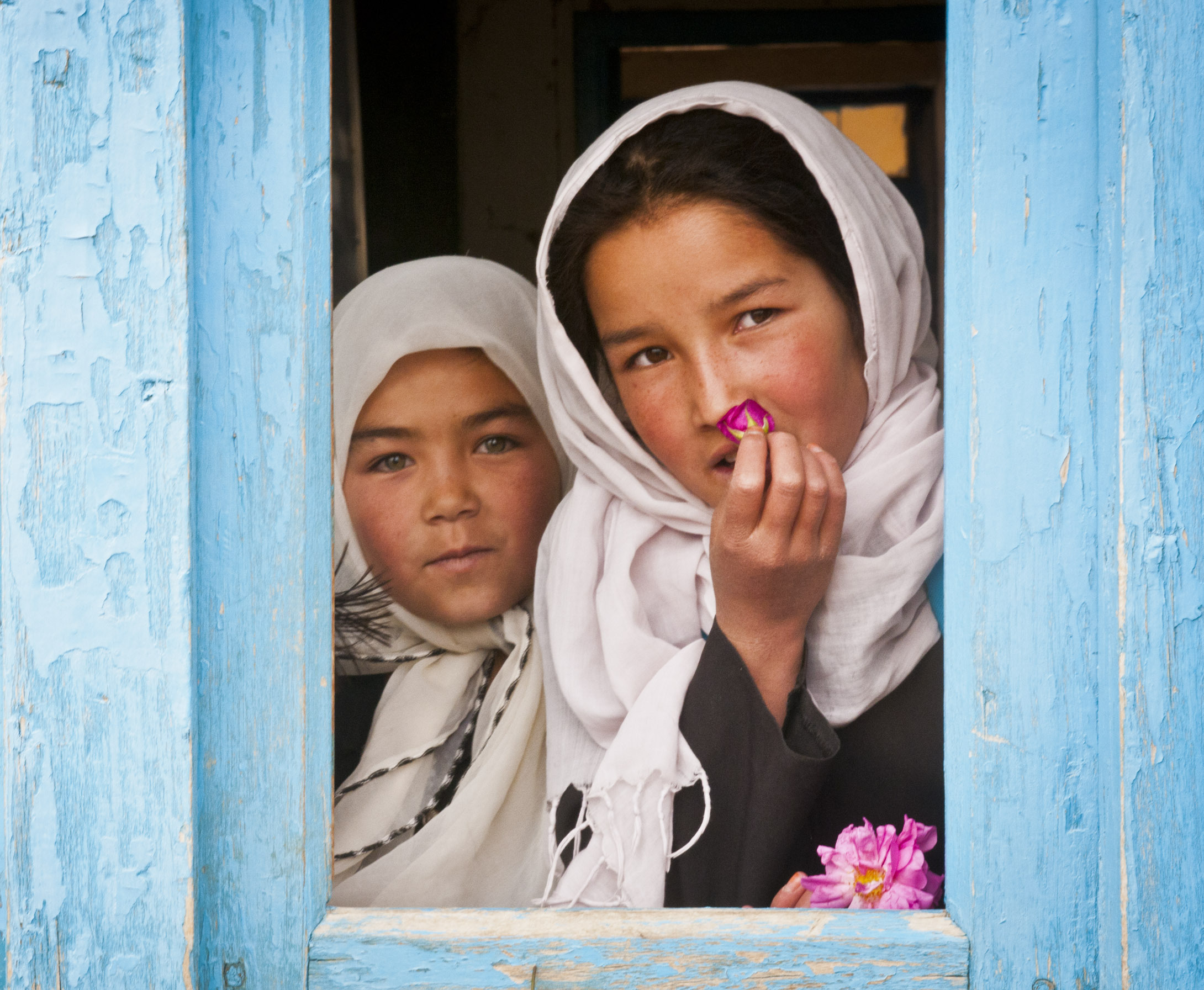
Hazara schoolgirls in Bamyan, Afghanistan
Afghans recruited in Iran to fight in Syria (BBC)

Videos

Sources

  1. Afghanistan Analysts Network: Afghan Exodus - smuggling networks, migration and settlement patterns in Turkey (2016)
  2. Anewz: More than 1.2 million Afghans return from Iran, Pakistan in 2026 (5 Oct 2026)
  3. Asriran: five provinces with the most Afghan nationals (4 Jul 2020, Persian)
  4. BBC: Syria war: The Afghans sent by Iran to fight for Assad
  5. Global Detention Project: UAE targeting of Shia nationals for deportation (June 2026)
  6. Gulf News: Afghan city reflects expats' trust, says envoy (2018)
  7. Harekact (bordermonitoring.eu): The Evolution of Afghan Migration in Istanbul (2017)
  8. Human Rights Watch: Turkey pushes Afghans back at Iran border (Nov 2022)
  9. IranWire: Afghan immigrants barred from 16 Iranian provinces
  10. Joshua Project: Hazara in Iran
  11. Kabul Now: HRW says UAE detained nearly 2,700 Afghan refugees (2023)
  12. Karadağ and Sert, '(Non-)deport to Discipline: The Daily Life of Afghans in Turkey', Journal of Refugee Studies 36(3), 2023
  13. Khaleej Times: UAE is our haven: the Afghan community (2016)
  14. METU thesis: Bridging borders from Asia to Europe - a case study on Uyghur and Hazara migration to Turkey
  15. Mirzaei 2022: An anthropological study of economic strategies of Afghan immigrants (IHCS, Persian)
  16. Mixed Migration Centre, 'Destination Unknown' (2020)
  17. Mixed Migration Centre: Iran's Afghan expulsion (2025)
  18. NPR: His family fled Afghanistan; in Turkey other Afghans help them (20 Sept 2021)
  19. NPR: Pakistani workers say their faith cost them their jobs in the UAE (June 2026)
  20. Otoukesh et al. 2012, A retrospective study of demographic parameters ... among Afghan refugees in Iran (Int J Equity Health)
  21. Presidency of Migration Management: residence permits by nationality (8 October 2026)
  22. Swiss Refugee Council (SFH): Iran: Khawari/Barbari (11 Feb 2015)
  23. Tabnak: over 400,000 authorised migrants in Razavi Khorasan (3 Nov 2023, Persian)
  24. UBC Centre for Migration Studies: Baran Fakhri profile
  25. UNHCR Türkiye country fact sheet, September 2026
  26. Wikipedia: 2025 Afghan deportation from Iran
  27. Wikipedia: Afghans in Iran
  28. Wikipedia: Hazaras