People groups
Arab, Jordanian

Arab, Jordanian

JPIMBGRN
Population in the Middle East and North Africa
5,167,000
Countries
10
Language
Standard Arabic
Religion
Islam - Sunni
Bible status
Complete Bible

Locations

Identity

Jordanian Arabs, also called East Bank Jordanians or Transjordanians, are the families rooted east of the Jordan River before 1948: settled peasant clans of the highlands, old towns such as Salt, Karak and Irbid, and tribes of Bedouin origin that settled earlier. Clan and tribe ('ashira) still organise marriage, elections and dispute settlement; well-known lineages include the Majali of Karak, the 'Adwan of the Balqa and the Bani Hasan of the north. The emirate (1921) and kingdom (1946) were built on these communities, which staff the army, security services and civil service, while Jordanians of Palestinian origin dominate the private sector. The 1970 civil war and fears of Jordan becoming an 'alternative homeland' for Palestinians sharpened a 'Jordan first' East Bank identity, though intermarriage has softened the divide. Arab Christian clans, among the oldest Christian communities anywhere, are a full part of this tribal society. Jordanians abroad, mostly in the Gulf, send home about USD 4.5 billion a year.

Culture & traditions

Jordanian culture centres on hospitality (karam) and honour: every clan keeps a diwan, a guest hall for weddings, funerals and reconciliations. Mansaf, lamb cooked in jameed (dried fermented yoghurt) and served over rice and thin shrak bread from a common tray, is the national dish of every major occasion, followed by bitter cardamom coffee. Men wear the red-and-white shemagh with the black agal; village women wear embroidered thobes. Weddings bring henna nights, car convoys, dabke and sahjeh dancing and tribal poetry. Families are large and patrilineal, cousin marriage is common, and family reputation and women's honour are closely guarded. Tribal truces ('atwa), delegations (jaha) and blood money still run alongside the courts. Compulsory national service, suspended in 1991, resumed in 2026.

Religious practices

Most Jordanian Arabs are Sunni Muslims practising a state-supervised mainstream Islam; the 2004 Amman Message promotes moderation, and the Ministry of Awqaf appoints imams and sets sermon themes. Friday prayer, Ramadan and pilgrimage are widely kept, and popular piety includes visits to the shrines of the Prophet's companions in the Jordan Valley, protective Qur'anic amulets and fear of the evil eye. Islamist movements are strong among urban and some tribal youth: the Islamic Action Front won the largest bloc in 2024 before the Muslim Brotherhood was banned in 2025. Christian Jordanians, mostly Greek Orthodox with Catholic and Protestant churches, share tribal customs with Muslim neighbours, and Muslim-Christian clan alliances are common in Karak and Madaba; their share of the population is falling through emigration.

Gospel access

The full Bible, the JESUS film, audio recordings and Christian television and online media are all available in Arabic, including Levantine Arabic. An indigenous Arab church (Greek Orthodox, Catholic and evangelical) runs churches, schools and hospitals in Jordan. Evangelising Muslims is prohibited, and converts face sharia-court penalties, family violence and security questioning; Muslim-background believers meet discreetly.

At a glance

Language
Standard Arabic
Language family
Afro-Asiatic
Affinity bloc
Northern African and Middle Eastern Peoples
People cluster
Arab, Levant
Primary religion
Islam - Sunni
Bible status
Complete Bible
Jesus Film
Yes
Audio recordings
Yes
Gospel recordings
Available
Radio broadcasts
Not Available
Religious school
Shafi'i (Hanafi in personal-status law)

Religious breakdown

Religion % DenominationNotes
Islam~96%SunniState-supervised mainstream practice; Islamist and Salafi currents significant
Christianity~3-4%Greek Orthodox, Latin and Melkite Catholic, ProtestantIndigenous Arab Christian clans of Karak, Madaba, Salt, Fuheis, Ajloun and Al-Husn

Presence by country

JordanNativeVerified presence
Population
4,890,000
Location
Countrywide; heartland in the highland towns (Irbid, Ajloun, Jerash, Salt, Madaba, Karak, Tafilah, Ma'an) and Amman

East Bank Jordanians are the families whose roots lie east of the Jordan River before 1948, the highland villagers and townspeople and the Bedouin tribes, now nearly all settled, around whom the Hashemite kingdom was built; they number about 4.9 million, beside some 3 million Jordanians of Palestinian origin. Clan loyalty still shapes marriage, elections and even justice, with tribal truces and blood-money settlements running alongside the courts, and East Bankers fill most posts in the army, security services and civil service. Life revolves around the clan guest hall, where mansaf, lamb in dried yoghurt sauce over rice, is served to guests at every wedding and funeral. Most are Sunni Muslims, but the group also includes some of the world's oldest Arab Christian communities, in towns such as Karak, Madaba, Salt and Fuheis.

KuwaitDiasporaVerified presence
Population
~15,000-25,000
Location
Hawalli, Salmiya, Farwaniya, Jabriya and Kuwait City

East Bank Jordanians in Kuwait are a modest professional community of teachers, doctors, engineers and accountants, part of the 33,000 to 40,000 Jordanian passport holders in the country, many of whom are of Palestinian origin. Jordanians once formed, together with Palestinians, one of Kuwait's largest communities, some 500,000 people in the late 1980s, until Jordan's sympathy for Iraq in 1990 led to mass departures and a long freeze. Relations recovered, and Kuwait began hiring Jordanian teachers again around 2010. They speak Jordanian Levantine Arabic, are overwhelmingly Sunni Muslim with a small Christian minority, and keep strong clan ties to towns such as Irbid, Salt and Karak. Like other expatriates they live in rented apartments and depend on employer sponsorship.

OmanDiasporaVerified presence
Population
12,000
Location
Mainly Muscat; university and school staff in Nizwa, Sohar, Salalah and other towns

Jordanians in Oman are a small, settled community of about 12,000 people, half of them working professionals and the rest their families. They are teachers and university lecturers, about a thousand of them, engineers, trainers, accountants, bankers and managers in Omani companies, banks and factories, and many have spent decades in the sultanate. Jordan and Oman have been close since the 1970s, when Jordanian troops helped Sultan Qaboos end the Dhofar rebellion, and Jordanian doctors, dentists and teachers remain familiar figures in Muscat. Their Levantine Arabic, mansaf on family occasions and strong ties to hometowns such as Irbid, Salt and Karak set them apart from the Gulf Arabs around them; many Jordanian passport holders are of Palestinian origin.

QatarDiasporaVerified presence
Population
45,000
Location
Doha and Al Rayyan; Al Wakrah

Jordanians are one of Qatar's fastest-growing Arab communities: about 75,000 Jordanian workers lived in the country in 2024, up from some 40,000 Jordanians a decade earlier, after Qatar pledged 20,000 jobs for young Jordanians when the two countries restored full relations in 2019. Roughly half are East Bank Jordanians, perhaps 45,000 people with their families, the rest being Jordanians of Palestinian origin. Most work as teachers, doctors and nurses in government and private schools and hospitals, or in banking, construction, hospitality and IT, and they keep close clan ties to towns such as Irbid, Salt and Karak, where mansaf still marks every family occasion. They are overwhelmingly Sunni Muslims with a small Orthodox and Catholic Christian minority.

Saudi ArabiaDiasporaVerified presence
Population
100,000
Location
Riyadh, Jeddah, the Eastern Province, Mecca and Medina, and the northern border regions

East Bank Jordanians in Saudi Arabia number about 100,000, half of the roughly 200,000 Jordanian passport holders in the kingdom, the rest being Jordanians of Palestinian origin. Saudi Arabia has long been the first destination of Jordanians working abroad: since the oil boom of the 1970s Jordanian teachers, doctors, engineers, accountants and military advisers have staffed its schools, hospitals and ministries, and their remittances keep many families in Irbid, Salt, Karak and Ma'an. Tribes such as the Howeitat, Shammar, Anizzah and Sirhan live on both sides of the border, so some Jordanians in Tabuk and al-Jawf visit cousins rather than strangers. The community has shrunk since monthly fees on expatriates' dependants began in 2017, which sent thousands of families home. They speak Jordanian Levantine Arabic, are Sunni Muslims with a small Orthodox and Catholic minority, and gather over mansaf, lamb in dried-yoghurt sauce on rice, at weddings and family gatherings.

Türkiye (Turkey)DiasporaVerified presence
Population
~23,000 (20,000-25,000)
Location
Istanbul; smaller numbers in Ankara and Alanya; students in university cities

Jordanians in Türkiye number roughly 23,000, most of them in Istanbul, with smaller groups in Ankara and the Mediterranean resort town of Alanya. Many arrived in the 2010s, leaving behind high prices and taxes at home or rising residence fees in Saudi Arabia, and some bought property worth enough to qualify for Turkish citizenship; in 2020 Jordanians were the fourth-largest group of foreign home buyers. About 5,000 are university students, which puts Jordan among the leading countries sending students to Turkish universities, and many families place their children in Arabic-language schools in Istanbul. They speak Levantine Arabic and are almost all Sunni Muslims, with a small Christian minority.

United Arab EmiratesDiasporaVerified presence
Population
120,000
Location
Dubai and Abu Dhabi; Sharjah, Al Ain, Ras al-Khaimah

Jordanians have helped run the United Arab Emirates since its founding in 1971, when Jordanian and Palestinian teachers, doctors, engineers and officials staffed the new federation's schools, hospitals and ministries. Today more than 200,000 Jordanian passport holders live in the country, about half of them East Bank Jordanians with roots in towns such as Irbid, Salt and Karak, the rest Jordanians of Palestinian origin. They are among the best-educated Arab communities in the Emirates, working as professors, bankers, doctors, engineers and managers in Dubai and Abu Dhabi, and the Emirates is now the largest source of the money Jordanians abroad send home. Jordanian social clubs in Dubai and Ras al-Khaimah gather families for Independence Day on 25 May, where mansaf, lamb cooked in dried yoghurt and served over rice, is the centrepiece. Most are Sunni Muslims, with a small Orthodox and Catholic Christian minority.

Also found outside the Middle East and North Africa

Canada, France, United States

Photos

Jordanian Arabs
Jordanian Arabs
Mansaf, Jordan's national dish, in Amman
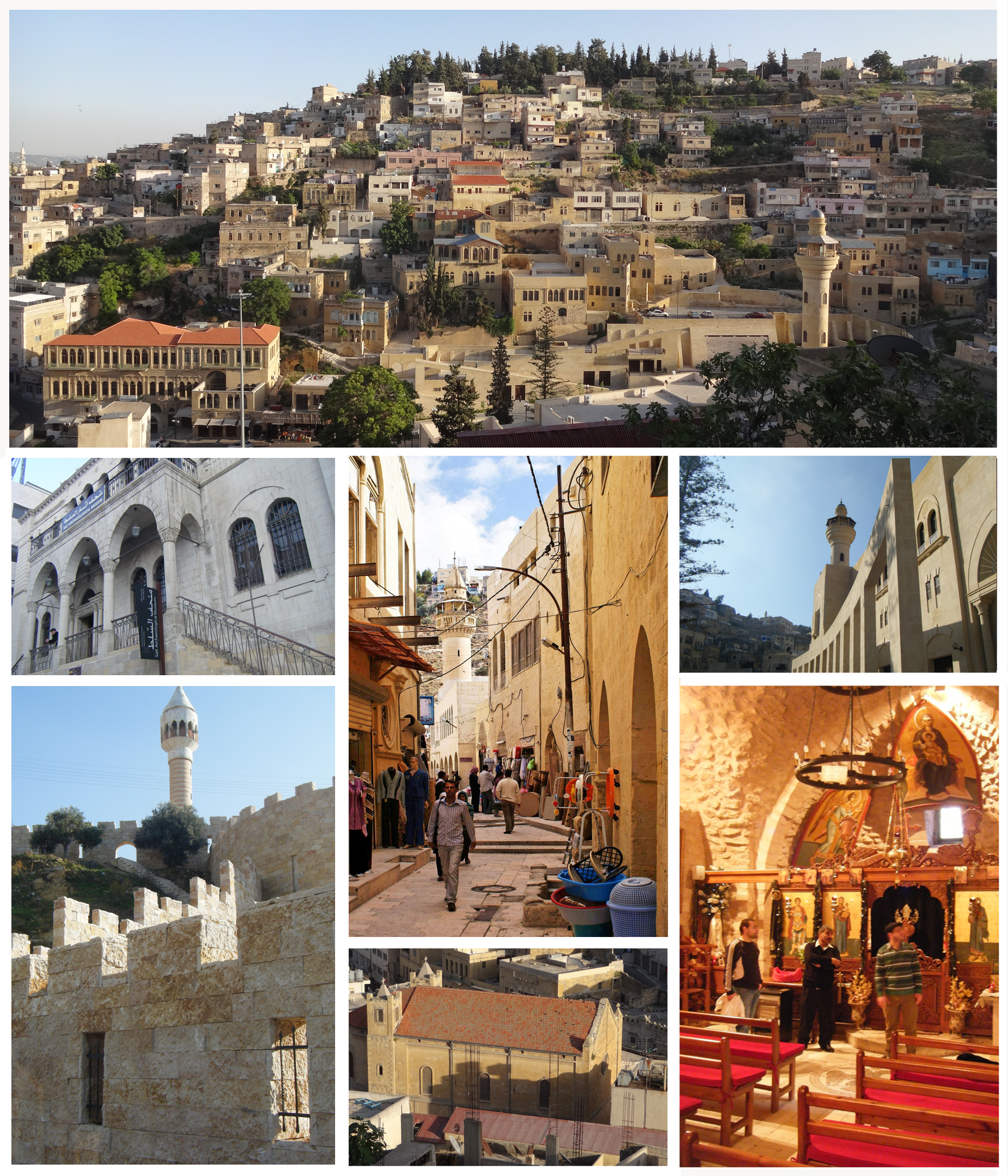
As-Salt, an old highland town of East Bank Jordanians

Sources

  1. Al Jazeera Net: Jordan resumes national service (15 Feb 2026)
  2. Almamlaka: Jordanian MFA on Jordanians in Syria
  3. Al Mamlaka TV: Jordan and Oman, diplomatic relations for half a century and more than 30 cooperation agreements (May 2024)
  4. Al Mamlaka TV: More than 25 agreements between Jordan and Oman
  5. Al Mamlaka TV: Qatar ready to increase the number of Jordanian workers (Oct 2019, Arabic)
  6. Al-Quds al-Arabi: nearly 300,000 Jordanians visited Turkey (Feb 2019)
  7. Ammon News: Half of Jordanian expatriates in Saudi Arabia
  8. Anadolu Agency: Foreigners in Saudi Arabia by nationality (2023)
  9. Arabic Post: future of Jordanian expatriates returning from Saudi Arabia (Sep 2018)
  10. Argaam: Saudi Arabia to implement new expat fees (2018)
  11. Crown Prince Al Hussein meets Jordanian expats in Kuwait (7 Jun 2022)
  12. Ehsaeyat: Arab Communities in Saudi Arabia
  13. Erem Business: Jordanian expatriates in the Gulf (Jordan Strategy Forum, 2020)
  14. Fanack: Jordan's Christians, small in number, big in faith
  15. Georgetown Journal of International Affairs: The Future of Jordan amidst the Palestinian Crisis (Sean Yom, 18 Jan 2026)
  16. GLMM: Estimates of foreign residents in Qatar by country of citizenship
  17. GLMM: Saudi Arabia, Arab population by country of citizenship and sex (census 2022)
  18. Gulf News: 7 nationalities make up 90% of foreigners in Kuwait (Sep 2018)
  19. Habertürk: residence-permit holders by nationality (13 March 2025)
  20. Jordan News: Evacuation of 83 Jordanian citizens and their companions from Suwayda (2025)
  21. Jordan News: Jordanian expatriate remittances rise 4.5% in 2025
  22. Jordan News: Jordanian expatriates' remittances in Qatar at $250mln in 6 months (Jul 2024)
  23. Jordan News: Jordanian Social Club Dubai Independence Day, June 2024
  24. Jordan News: Jordan ranks 7th in number of students in Turkish universities (Aug 2022)
  25. Jordan News: Remittances by Jordanian expats in Qatar surged to JD440m in 2022
  26. Jordan News: 'Thousands' of Jordanians stranded in Syria as crossing remains closed (2021)
  27. Jordan News: Turkish Embassy addresses Jordanian concerns over racism (Aug 2023)
  28. Jordan Strategy Forum: Jordanian Expatriates in the Gulf
  29. Jordan Times: Jordanian workers in Saudi Arabia (2018)
  30. Jordan Times: Jordan's population surpasses 12 million, DoS says
  31. Joshua Project: Arab, Jordanian in Jordan
  32. Maspero: two Jordanians injured in the UAE by Iranian attacks, 9 Mar 2026
  33. MERIP: We are all Jordan... but who is we? (2010)
  34. Petra: Inbound remittances to Jordan up to USD 4.472 billion in 2025 (CBJ)
  35. Roya News: Foreign Ministry on Jordanians in the UAE, 17 Apr 2024
  36. US State Department 2023 Report on International Religious Freedom: Jordan
  37. Wikipedia: Expatriates in Kuwait
  38. Wikipedia: Jordanians in the United Arab Emirates