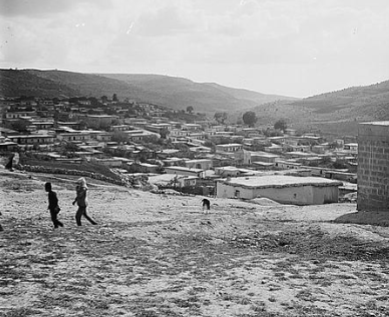
People groups
Adyghe

Adyghe

JPIMBGRN
Population in the Middle East and North Africa
104,800
Countries
7
Language
Adyghe
Religion
Islam - Sunni
Bible status
New Testament

Locations

Identity

The Adyghe (West Circassian) are the largest branch of the Circassian people, indigenous to the northwestern Caucasus. The Adyghe language (ISO 639-3: ady) belongs to the Northwest Caucasian language family with approximately 610,000 speakers worldwide, classified as 'vulnerable' by UNESCO. The term 'Circassian' is often used broadly to encompass Adyghe, Kabardian, and related peoples. The Circassians suffered a genocide at the hands of Imperial Russia in the 1860s, which displaced the majority of the population to the Ottoman Empire and its successor states. In the Middle East, Circassian communities exist in Turkey, Jordan, Syria, Israel, and Egypt. The Adyghe Xabze, a traditional code of conduct governing hospitality, honor, and social relations, is central to Circassian identity worldwide, though its practice varies significantly between homeland and diaspora communities.

Culture & traditions

Adyghe culture is distinguished by the Adyghe Xabze, an elaborate code of honor, etiquette, and conflict resolution. Traditional music features distinctive instruments and polyphonic singing. The Circassian wedding dance (Islamey/Kafa) is iconic. Cuisine includes traditional dishes and strong tea culture. Physical beauty, especially of Circassian women, has been noted across centuries of historical accounts. In diaspora communities, cultural preservation varies widely: Jordan and Israel maintain relatively strong cultural institutions, while Egyptian Circassians are almost entirely assimilated.

Religious practices

The Adyghe converted to Islam gradually between the 16th and 19th centuries under Ottoman influence and are Sunni Muslims. In the Caucasus homeland, Islam coexists with elements of the Adyghe Xabze and some pre-Islamic spiritual traditions. In the diaspora, practice ranges from communities that keep Xabze customs alongside Islam to fully Arabized descendants whose practice is indistinguishable from their Sunni neighbours'; many Circassians in Türkiye are secular.

Gospel access

Scripture portions exist in the Adyghe language. The Jesus Film and GRN audio recordings are available in Adyghe. Many Circassians in the diaspora speak their host country's language first, so Arabic- or Turkish-language resources are often more relevant. In the Caucasus homeland, religious freedom is constrained by Russian federal and regional policies. Evangelical outreach among Circassians globally is minimal.

At a glance

Language
Adyghe
Language family
Abkhaz-Adyge
Affinity bloc
Central Asian Peoples
People cluster
Caucasus
Primary religion
Islam - Sunni
Bible status
New Testament
Jesus Film
Yes
Audio recordings
Yes
Gospel recordings
Available
Radio broadcasts
Not Available

Religious breakdown

Religion % DenominationNotes
Islam~95%SunniDominant; converted during Mamluk/Ottoman period
Christianity~3%Orthodox (in homeland)Small Christian minority in Caucasus homeland; negligible in diaspora
Adyghe Xabze/Traditional~2%Traditional Circassian beliefsSome retention of pre-Islamic customs in homeland; absent in Egypt

Presence by country

IsraelNativeVerified presence
Population
4,800
Location
Kfar Kama (Lower Galilee, near Mount Tabor) and Rehaniya (Upper Galilee, north of Safed), with a few families in Israeli cities

Israel's Circassians are about 4,800 descendants of Adyghe refugees from the north-west Caucasus whom the Ottoman Empire settled in the Galilee in the 1870s, after Russia drove the Circassians from their homeland. They live in two villages, Kfar Kama, of Shapsug families, and Rehaniya, of Abzakh families, where children learn Adyghe at school alongside Hebrew, Arabic and English. Sunni Muslims who are neither Arab nor Jewish, they are the only Muslims in Israel whose men are conscripted into the army, and many serve in the police and border police. Their life follows the Adyghe Khabze code of honour, restraint and hospitality, and Kfar Kama, with its heritage centre, dances and Circassian cheese, was named one of the world's best tourism villages in 2022.
JordanNativeVerified presence
Population
100,000
Location
Amman (downtown, Wadi al-Seer, Sweileh, Na'ur), Zarqa, Russeifa, Jerash, Sukhneh

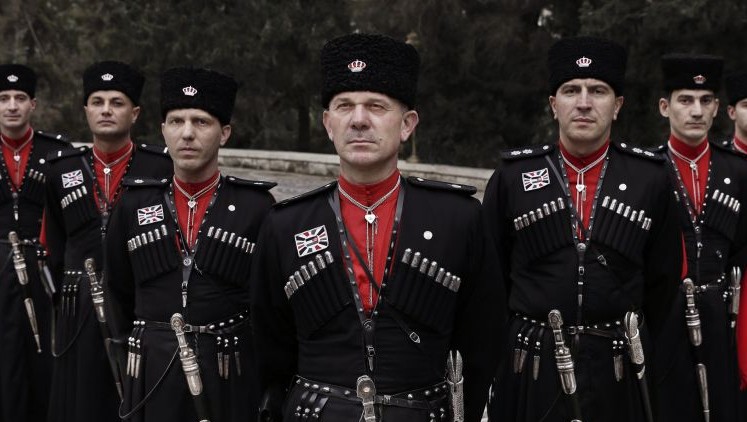
The Circassians of Jordan descend from Muslim refugees of the Russian conquest of the northwest Caucasus whom the Ottomans settled in the empty ruins of Amman in 1878, making them the founders of the modern capital. Families of the Shapsugh, Abzakh, Bzhedugh and Kabardian tribes make up one community of about 100,000 that lives in Amman, Wadi al-Seer, Na'ur, Sweileh, Zarqa, Russeifa and Jerash. Circassian horsemen in black cherkeska coats have guarded Jordan's kings since the 1920s, and the community holds reserved seats in parliament. Most now speak Arabic as their first language and only about one in six still speaks Circassian, but the Adyghe Xabze code of honour, folk dance and song, and community associations founded as early as 1932 keep a distinct identity alive.

SyriaNativeVerified presence
Population
~75,000-150,000
Location
Damascus (Rukn al-Din, Muhajireen), Qudsaya, Marj al-Sultan; Golan villages Bir Ajam and Bariqa (Quneitra); Ayn al-Niser and other villages north-east of Homs; Aleppo, Manbij and Khanasir

Syria's Circassians descend from Muslim refugees driven out of the north-western Caucasus by Russia after 1864, whom the Ottoman authorities settled in the 1870s on the Golan, around Damascus and Homs and along the Euphrates frontier as a buffer against Bedouin raids. Families of the Abzakh, Shapsugh, Bzhedugh and Kabardian tribes make up one community of perhaps 75,000 to 150,000 that founded Quneitra and Marj al-Sultan, lost their Golan villages when Israel took the plateau in 1967, and now live mostly in the Rukn al-Din quarter of Damascus, where their charity association has kept dance, language classes and the Adyghe Khabze code of honour alive since 1948. Sunni Muslims who speak mainly Arabic today, they trace belonging through the father and encourage marriage within the community, and some families still refuse to eat Black Sea fish in memory of those who drowned in the exodus. Only Bir Ajam and Bariqa remain of the Golan villages, now under Israeli patrols, and many families have emigrated to Turkiye, Europe, North America and the Caucasus since 2011.

Also found outside the Middle East and North Africa

Russia, Germany, Serbia, United States

Photos

Adyghe people group photo
Circassian guard of Jordan (photo Nariman El-Mofty)
Circassian house built in the 1920s on Amman's Citadel Hill, photographed 1948
Circassian village of Wadi al-Seer near Amman, c. 1900
Members and guests of the Circassian Charity Association, Russeifa, Jordan, mid-1980s
The Circassian play The Exile, Al-Jeel Al-Jadeed Club, Amman, 1954
The Circassian village of Kfar Kama, Lower Galilee, Israel
Traditional clothing, Circassian Heritage Center, Kfar Kama, Israel
The Caucasian-style mosque in Rehaniya, Israel
Circassian dance by young people in traditional dress, Bandırma, Türkiye
Turkish citizen of Circassian origin in the traditional chokha coat
Map of Circassian settlement in Türkiye (after Lingvarium)
The Uzunyayla plateau, Kayseri, in December 2022

Videos

Sources

  1. Al Jazeera Arabic: الشركس في مصر
  2. Asharq Al-Awsat: Golan Circassians hold on to their Syrian citizenship (June 2026, Arabic)
  3. Bianet: Çerkesler; Biz Kimiz? (Haldun Dağlı, 2006)
  4. CBS 2024 locality populations (Wikipedia Template:Israel populations)
  5. Circassians in Egypt - Wikipedia
  6. Circassians in Israel — Wikipedia
  7. Circassian World: Qaddafi Tries to Secure Loyalty of Circassians of Misrata
  8. Emarat Al Youm: Circassians in two Galilee villages (1 Apr 2018, Arabic)
  9. Enab Baladi: How Syria's Circassians preserved their cultural heritage (2020)
  10. Fanack: Circassians of Syria, a history of migration (2023)
  11. Forker (2022), Caucasian diasporas in Jordan, Jena Caucasus blog issue 6
  12. GeoCurrents: The Circassian Mystique and Its Historical Roots (2012)
  13. Gulf News: Circassian diaspora is fiercely protective of its dance, music and language
  14. Hebrew Wikipedia: כפר כמא (CBS locality data)
  15. Hebrew Wikipedia: ריחאניה (CBS locality data)
  16. IBT: Adyghe language
  17. Iraq Business News: Iraq's Caucasus tribes demand formal recognition (Dec 2016)
  18. Israel21c: In the Galilee, a tiny Circassian community keeps its heritage alive (14 Jul 2022)
  19. Jamestown Foundation: Qaddafi tries to secure loyalty of Circassians of Misrata (2011)
  20. Jamestown Foundation: Qaddafi Tries to Secure Loyalty of Circassians of Misrata (March 2011)
  21. Joshua Project — Adyghe in Egypt
  22. Joshua Project: Adyghe in Jordan
  23. Joshua Project: Adyghe in Türkiye
  24. JPost: Israel's Kfar Kama makes UN list of best villages for tourism (Dec 2022)
  25. Kreindler, Bensoussan, Avinor, Bram: Circassian Israelis: Multilingualism as a Way of Life (c. 1995)
  26. Libyan Heritage House: Christianity in Libya
  27. Meiqari: The Circassian Heritage in Syria within the Context of Multiple Displacements (Aleppo Project, 2019)
  28. New Lines: Syria's Circassian Community Is Finding Its Voice (Jan 2026)
  29. Obeid (2024), Circassian Language Revitalization Efforts in Jordan, MA thesis, Middle East University
  30. ORSAM: Iraqi Circassians (Nov 2012)
  31. Shorouk News: minorities add diversity to Jordanian national identity (19 Sep 2023)
  32. Sky News Arabia: Circassian candidate in Iraq's elections (29 Sep 2021)
  33. Topçu, M., Kayseri ilinde Çerkescenin durumuna ilişkin saha çalışması raporu (Minority Rights Group, 2023)
  34. Wikipedia: Abzakhs
  35. Wikipedia: Adyghe language
  36. Wikipedia: Beer Ajam; Bariqa; Ayn al-Niser; Khanasir; Marj al-Sultan
  37. Wikipedia: Circassian diaspora
  38. Wikipedia: Circassians in Iraq
  39. Wikipedia: Circassians in Jordan
  40. Wikipedia: Circassians in Libya
  41. Wikipedia: Circassians in Syria
  42. Wikipedia: Circassians in Turkey
  43. צ'רקסים בישראל — Hebrew Wikipedia
  44. أجمل وجوه السينما المصرية من أصول شركسية - Annahar