People groups
Soninke

Soninke

JPIMBGRN
Countries
11
Language
Soninke
Religion
Islam - Sunni
Bible status
Portions

Locations

Identity

The Soninke are a Mande people of the western Sahel who founded the Ghana empire (Wagadu), the first great West African state, which flourished from about the 8th to the 11th century around its capital Koumbi Saleh. After its fall they spread along the trade routes, and Soninke clerics and merchants (the Wangara and Jakhanke traditions) carried Islam and trade across West Africa. Today about 3.5 million live mainly in Mali's Kayes region (their largest home), in southern Mauritania's Guidimakha, eastern Senegal, the Gambia and Côte d'Ivoire, with large communities in France. They call themselves Soninko; the French called them Sarakolé, and the Bambara Marka. Society is ranked by birth: free nobles (hooro), among them ruling and clerical lineages, artisans and griots (nyaxamalo), and descendants of slaves (komo), a rank that still governs marriage and village office.

Culture & traditions

Soninke villages are compact, with clay or cement houses inside walled family compounds round a central mosque and public square. The extended family (ka) under its eldest man works common fields and pools money from migrant sons. Marriage involves bridewealth and is mostly within one's rank; polygamy is common. Soninke are famed travellers: since the 19th century young men have left as traders, sailors and labourers, and a stay abroad is a rite of passage; village associations in France build mosques, schools and clinics at home. Griots keep genealogies and the epic of Wagadu and the serpent Bida. Women dye cloth with indigo, and the Soninke are known for elaborate hairstyles and gold jewellery.

Religious practices

The Soninke were among the first West Africans to accept Islam, and clerical lineages (moodini) run Qur'anic schools and lead prayers; most follow the Tijaniyya or Qadiriyya Sufi orders, and some follow reformist teaching brought home by migrants. Faith is practised strictly in public, with the five prayers, Ramadan and the two feasts, while protective amulets, healing by marabouts and beliefs in spirits of the land remain common, which IMB records as folk Islam. Migrant remittances pay for ever larger village mosques.

Gospel access

Soninke Scripture portions have appeared since 2001 (Genesis, Matthew, Acts and others, online at asawan.org), and a New Testament translation is in final revision. The JESUS film, Global Recordings audio and oral Bible stories (One Story, StoryRunners) exist in Soninke. Believers are very few, mostly in Mali, Senegal and France, and converts face rejection by their families and villages. Radio and audio in Soninke are seen as the main way to reach a people where many cannot read their language.

Rank by Birth and the Ganbanaaxu Movement

Soninke villages divide their people by birth into nobles (hooro), artisans and griots (nyaxamalo) and descendants of slaves (komo). Slave descendants may be barred from village chieftaincy, from speaking first in village councils, from owning land and from marrying nobles, and are expected to serve at ceremonies. From 2016 Soninke in France launched the Ganbanaaxun Fedde ('equality association'), and its activists in Mali's Kayes region, Guidimakha, Senegal and the Gambia urged slave descendants to refuse these roles. Thousands did, and in Mali's Kayes region more than 2,000 were forced to flee their villages after attacks and boycotts from 2017; in Mauritania anti-slavery activists reported cases in Guidimakha villages in 2019 and land disputes between nobles and slave descendants have resurfaced.

At a glance

Language
Soninke
Language family
Mande
Affinity bloc
Sub-Saharan African Peoples
People cluster
Soninke
Primary religion
Islam - Sunni
Bible status
Portions
Jesus Film
Yes
Audio recordings
Yes
Gospel recordings
Available
Radio broadcasts
Not Available
Religious school
Maliki

Religious breakdown

Religion % DenominationNotes
Islam~98%Sunni (Maliki), Sufi orders (Tijaniyya, Qadiriyya)Old clerical traditions; folk practices alongside
Ethnic religion~2%Traditional practicesJP's figure across all countries
Christianity<0.2%Evangelical, CatholicMostly in Mali, Senegal and France

Presence by country

MauritaniaNativeVerified presence
Population
~150,000 (estimate)
Location
Guidimakha (Sélibaby, Ghabou-Gouraye, Ould Yengé, Wompou), Gorgol (Maghama, Kaédi), Nouakchott, Nouadhibou

The Soninke, heirs of the ancient Ghana empire whose capital Koumbi Saleh lay in what is now south-eastern Mauritania, are a Mande-speaking people of the Guidimakha hills and the Senegal River's upper reaches around Sélibaby and Gouraye. Their compact villages of clay and cement houses gather round a central mosque, and many are kept alive by men working in France: for a century Guidimakha has sent workers to Marseille and Paris, whose money builds village mosques, schools and wells. Soninke society is ranked by birth into noble, artisan and slave-descended families, and in the last decade descendants of slaves have organised under the Ganbanaaxu ('equality') movement to refuse that status, at the cost of boycotts and land disputes. Most are devout Sunni Muslims, and their clerics are among the most respected in the valley.
Also found outside the Middle East and North Africa

Gambia, Guinea, Guinea-Bissau, Mali, Senegal, Canada, Côte d'Ivoire, France, Gabon, United States

Photos

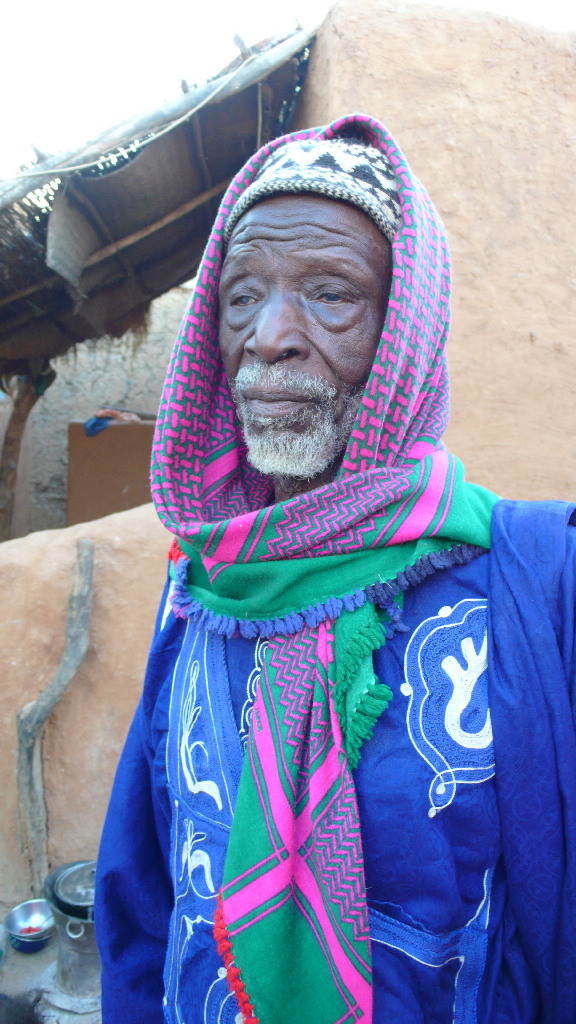
Soninke (Joshua Project profile photo)
Elderly Soninke man at the market of Sélibaby, Guidimakha, Mauritania (2007)
Soninke woman and girl, Sélibaby, Guidimakha, Mauritania (2007)
Commercial street in Sélibaby, Guidimakha (2009)

Sources

  1. African Arguments: Gambana anti-slavery movement
  2. ANSADE, RGPH 2023 leaflet
  3. Asawan.org: Soninke Scripture portions
  4. Avant Ministries: The Bible in my language
  5. CEFAN, Université Laval: Mauritanie
  6. Enquête démographique et de santé Mauritanie 2000-2001 (DHS FR127)
  7. GRDR: profil migratoire de la commune de Sélibaby
  8. Joshua Project: Soninke in Mauritania
  9. Koaci: Mauritanie, cas d'esclavage signalé dans la communauté noire soninké (Dec 2019)
  10. Le360 Afrique: peul, soninké, wolof à l'école (2024)
  11. MICS Mauritanie 2015, rapport final (ONS/UNICEF, 2017)
  12. Minpaku repository: Soninke emigration to France (KH 21-1)
  13. Saxo Institute: Ganbanaaxun Fedde, a transnational anti-slavery movement (film)
  14. Wikipedia: Soninke people
  15. Worthy News via Christians in Crisis (April 2025)