People groups
Kabardian

Kabardian

JPIMBGRN
Countries
5
Language
Kabardian
Religion
Islam - Sunni
Bible status
New Testament

Locations

Identity

The Kabardians (Adyghe: Къэбэрдей адыгэхэр) are the largest of the twelve Circassian tribes, indigenous to the North Caucasus region of the Russian Federation, specifically the Kabardino-Balkaria Republic. They belong to the broader Circassian (Adyghe) people, a Northwest Caucasian ethnic group whose diaspora numbers 5-6 million worldwide. The Circassians experienced one of the 19th century's most devastating ethnic cleansings during the Russo-Circassian War (1763-1864), when approximately 90% of their population was expelled from the Caucasus. The Ottoman Empire resettled hundreds of thousands across its territories, creating diaspora communities from the Balkans to the Arabian Peninsula. Kabardians are distinguished from the western Adyghe subgroups by their dialect, though the two Circassian languages are mutually intelligible. In the Middle East, the broader label 'Circassian' (Arabic: شركسي/Cherkessi) is used more commonly than the tribal designation 'Kabardian.' Historically, Circassians played a pivotal role in Islamic civilization: the Mamluk Burji dynasty (1382-1517) that ruled Egypt and the Levant was explicitly Circassian, giving the people an enduring prestige in the Arab-Islamic world.

Culture & traditions

Circassian culture is governed by the Adyghe Xabze, a traditional code of honor and etiquette that regulates hospitality, elder respect, family relationships, and conflict resolution. The host-guest relationship is considered sacred: a host must protect their guest at all costs. Traditional celebrations feature the distinctive Circassian dance (Qafe/Wuj), characterized by upright posture and graceful movements for women, athletic leaps and sword techniques for men. The cherkeska (long coat with cartridge holders) is the iconic male garment. Cuisine centers on dishes like chicken in walnut sauce (shyps), cheese-filled breads, and various dumplings (halame). Circassian society is organized by patrilineal clans, and marriage within the same clan was traditionally forbidden. Weddings remain the primary occasion for cultural expression in the diaspora, with elaborate ceremonies including symbolic bride-carrying traditions.

Religious practices

Before Islamization, Circassians practiced Habze, a traditional polytheistic religion centered on a supreme deity (Tha) and nature spirits. Christianity had a presence from the 6th-13th centuries. Widespread conversion to Sunni Islam began after Sultan Ahmed III ordered the Crimean Khans to spread Islam among Circassians in 1717. The Kabardians adopted the Hanafi school of jurisprudence, which they carried into exile. In diaspora communities, Islam is practiced alongside residual elements of Xabze ethics, though the folk-religious layer (sacred groves, nature veneration) found in the Caucasus homeland has disappeared in the Middle Eastern diaspora. In Saudi Arabia specifically, the strict Wahhabi/Hanbali environment has further homogenized religious practice, and Circassians worship at local mosques with no distinct religious institutions.

Gospel access

The Kabardian New Testament was published in 2011. Audio recordings of biblical books (Luke, Ruth, Jonah, Proverbs) are available. The JESUS Film has been translated into Kabardian. GRN has recordings in Kabardian. Despite these resources, the Kabardian community is classified as unreached (JP Scale 1) with IMB designating them as 'Unengaged.' No known Christian outreach specifically targets Kabardians in any Middle Eastern country. The strong linkage between Circassian ethnic identity and Muslim identity, combined with Saudi Arabia's severe legal restrictions on non-Muslim practice and conversion from Islam, creates formidable barriers to gospel access.

At a glance

Language
Kabardian
Language family
Abkhaz-Adyge
Affinity bloc
Central Asian Peoples
People cluster
Caucasus
Primary religion
Islam - Sunni
Bible status
New Testament
Jesus Film
Yes
Audio recordings
Yes
Gospel recordings
Available
Radio broadcasts
Not Available
Religious school
Hanafi

Religious breakdown

Religion % DenominationNotes
Islam98%Sunni (Hanafi historically; Hanbali influence in Saudi Arabia)Kabardians converted progressively from the 15th-19th centuries; in Saudi Arabia they practice normative Sunni Islam
Christianity~1.5%VariousJP global estimate; likely near zero in Saudi Arabia given legal prohibition of non-Muslim practice

Presence by country

Türkiye (Turkey)NativeVerified presence
Population
~150,000-300,000
Location
Uzunyayla plateau (Pınarbaşı and Sarız in Kayseri, Şarkışla and Kangal in Sivas); villages in Tokat, Samsun, Çorum, Düzce, Eskişehir and Balıkesir; most now in Kayseri, Ankara and Istanbul

The Kabardians are the eastern branch of the Circassians, driven from the North Caucasus by Russia's conquest in the 1860s and settled by the Ottomans on empty land across Anatolia. Their heartland is the Uzunyayla, a cold high plateau between Kayseri and Sivas with some sixty Circassian villages, where the Kabardian language held on longer than anywhere else in the country and still serves as the common tongue even for villages of other Circassian tribes. Uzunyayla was once famous for breeding horses for the Ottoman and Turkish cavalry, a way of life that ended with mechanisation after 1950 and sent families to the cities. Some 400,000 to a million Turks have Kabardian ancestors, but most speak only Turkish and count as Turks; about 150,000-300,000 still speak Kabardian and keep the identity. Most now live in Kayseri, Ankara and Istanbul and are Sunni Muslims, and associations keep alive Circassian dance, the Xabze code of honour and hospitality, and the memory of the 1864 exile.
Also found outside the Middle East and North Africa

Russia, Germany, United States, Uzbekistan

Photos

Kabardian people group photo
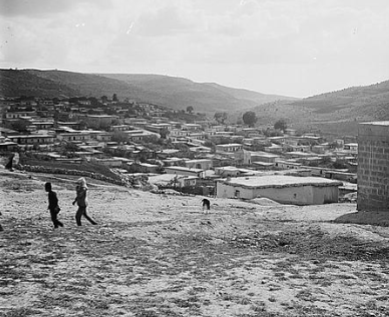
Circassian village of Wadi al-Seer, Jordan, c. 1900

Videos

Sources

  1. Arabic Wikipedia: الشركس في السعودية
  2. Caucasian Knot: Ochag reports on tight situation faced by Syrian Circassians in Kabardino-Balkaria
  3. Ege University: The society that lost its horse (Milli Folklor 2019)
  4. ELDP: Documentation and Analysis of Kabardian as Spoken in Turkey
  5. Endangered Language Alliance: Kabardian
  6. Endangered Languages Alliance: Kabardian
  7. Forker, D. (2022) The Circassians of Jordan, Jena Caucasus blog 6
  8. Joshua Project: Kabardian in Jordan
  9. Joshua Project: Kabardian in Saudi Arabia
  10. Kushkhabiev, A. V. (2022) Cooperation of Kabardino-Balkaria with Circassian diasporas, Kavkazologiya
  11. Medyascope (2021): KAFFED president Ümit Dinçer on Circassian identity and language
  12. Minority Rights Group: Topçu, M. (2023) Kayseri ilinde Çerkesçenin durumuna ilişkin saha çalışması raporu
  13. New Lines: Syria's Circassian Community Is Finding Its Voice (Jan 2026)
  14. RWTH Aachen: Uzunyayla rural research
  15. steelradar: Adığece seçmeli dersine en çok talep Kayseri'de
  16. Wikipedia: Ayn al-Niser
  17. Wikipedia: Beer Ajam
  18. Wikipedia: Circassian diaspora
  19. Wikipedia: Circassians
  20. Wikipedia: Circassians in Jordan
  21. Wikipedia: Circassians in Saudi Arabia
  22. Wikipedia: Circassians in Syria
  23. Wikipedia: Circassians in Turkey
  24. Wikipedia: Kabardian language